Showing posts with label aiartist. Show all posts

Sunday, November 1, 2026

Ultimate Claude AI Prompt Vault With 100% Built In-House Exclusive Prompts

Ultimate Claude AI Prompt Vault is a collection of 3,000 prompts created specifically around Claude, organized into six marketing categories. Each category contains 500 prompts. The six included areas are Content Marketing, Social Media Marketing, Email Marketing, SEO and Organic Search, Copywriting and Sales Pages, and Paid Advertising. The prompts are structured around practical marketing tasks rather than being a random collection of generic questions.

The package also includes Private Label Rights. That changes the product considerably. You are not limited to opening the vault and using the prompts personally. Within the supplied licence terms, you can rebrand the material, customize it, split the niches into smaller products, bundle prompts with other offers, use them for client work, or resell packaged versions. That means the vault can function both as a productivity resource and as the foundation for a digital-product business.

  • Content Marketing: Blog posts, 30-day content calendars, hooks, and content repurposing
  • Social Media Marketing: Posts, captions, Reels, short-video scripts, and engagement ideas
  • Email Marketing: Welcome and nurture sequences, subject lines, newsletters, and cart-recovery emails
  • SEO and Organic Search: Keyword clusters, topic maps, content outlines, meta tags, and content refreshes
  • Copywriting and Sales Pages: Headlines, full sales pages, offers, bonus stacks, and objection-handling copy
  • Paid Advertising: Ad copy for multiple platforms, audience ideas, split-test variations, and retargeting angles

The Content Marketing section contains 500 prompts built around tasks such as blog posts, longer articles, content calendars, hooks, headlines, and repurposing. This is one of the easiest niches to understand because content creation is already a recurring problem for businesses. A blogger needs new topics. A coach needs educational content. An affiliate marketer needs article ideas. A business owner may need a 30-day calendar without spending hours planning it.

The value of a prompt library is not that Claude suddenly becomes capable of writing. Claude can already write. The benefit is reducing the blank-page problem and providing more structured instructions for recurring tasks. Instead of repeatedly asking yourself how to phrase the request, you start with a prepared framework and customize it.

The Social Media Marketing library includes another 500 prompts. The material covers areas such as social posts, captions, short-video scripts, community-building ideas, and engagement content. This section could easily be positioned as a standalone digital product. A small business owner does not necessarily want 3,000 prompts spanning six marketing disciplines.

They may simply want help with Instagram, Facebook, TikTok, or another social platform. That creates an important lesson from the vault. More is not always the only selling point. Sometimes a focused 500-prompt pack can be easier to explain and market than a huge bundle. The larger vault then becomes the logical upgrade.

The Email Marketing section contains 500 prompts around welcome sequences, nurture emails, newsletters, subject lines, cart-recovery messages, and related email tasks. I found this category particularly practical because email marketing is rarely a one-time job. Businesses need new campaigns continually. They need subject-line variations. They need product launches. They need follow-up sequences. They need newsletters.

A reusable prompt collection can therefore support repeated work rather than one isolated project. For freelancers and agencies, the prompts can also become internal workflow tools for creating initial drafts more efficiently. The final email should still be reviewed for accuracy, tone, claims, and brand voice.

The product’s advertised collection of 3,000 prompts is intended to reduce the time needed to build a prompt library from scratch. For someone creating marketing resources, having organized starting points may be more convenient than writing every prompt individually. The actual usefulness will depend on prompt quality, organization, relevance, and how much editing is required.

The six categories cover content marketing, social media, email marketing, SEO, copywriting, and paid advertising. This variety may help buyers explore different audiences or select one niche for a more focused product. For example, a freelance content writer might prioritize the content and SEO collections, while an email marketing consultant could focus on the email prompts.

Source: Ultimate Claude AI Prompt Vault with PLR

.

ClaudeAIPrompt ,AIPrompts ,ArtificialIntelligence ,TechInnovation ,DigitalCreativity ,AIArtist ,TechSavvy ,InnovationInTech,AIFuture ,CreativeAIPrompts ,Automation ,SmartTechnology ,AIEmpowerment ,FutureOfAI ,MindsOfAI ,Innovation ,MachineLearning

Tuesday, December 30, 2025

The Only Way To Stop AI Art In 2026 Is To Make It Uncool

Cole Kan/CNET/Getty Images

A hill I’m willing to die on: I don’t consider content created entirely by an AI image or video generator “art.” This rule — made by me, for me — has occupied a lot of my brain space in 2025. Over the course of the year, we’ve gone from clunky, hallucination-ridden AI videos to clips that can be virtually indistinguishable from real videos. This year might seem like it’s gone on forever, but the pace at which AI video has improved over the past seven months is truly frenetic…….Continue reading….

By: Katelyn Chedraoui

Source:  CNET

.

Critics:

A machine learning model is a type of mathematical model that, after being “trained” on a given dataset, can be used to make predictions or classifications on new data. During training, a learning algorithm iteratively adjusts the model’s internal parameters to minimize errors in its predictions.

By extension, the term “model” can refer to several levels of specificity, from a general class of models and their associated learning algorithms to a fully trained model with all its internal parameters tuned. Various types of models have been used and researched for machine learning systems, picking the best model for a task is called model selection.

As a scientific endeavor, machine learning grew out of the quest for artificial intelligence (AI). In the early days of AI as an academic discipline, some researchers were interested in having machines learn from data. They attempted to approach the problem with various symbolic methods, as well as what were then termed “neural networks”; these were mostly perceptrons and other models that were later found to be reinventions of the generalized linear models of statistics.

Probabilistic reasoning was also employed, especially in automated medical diagnosis. However, an increasing emphasis on the logical, knowledge-based approach caused a rift between AI and machine learning. Probabilistic systems were plagued by theoretical and practical problems of data acquisition and representation.  By 1980, expert systems had come to dominate AI, and statistics was out of favor.

Work on symbolic/knowledge-based learning did continue within AI, leading to inductive logic programming(ILP), but the more statistical line of research was now outside the field of AI proper, in pattern recognition and information retrieval.  Neural networks research had been abandoned by AI and computer science around the same time. This line, too, was continued outside the AI/CS field, as “connectionism”, by researchers from other disciplines including John Hopfield, David Rumelhart, and Geoffrey Hinton. Their main success came in the mid-1980s with the reinvention of backpropagation.

Machine learning (ML), reorganized and recognized as its own field, started to flourish in the 1990s. The field changed its goal from achieving artificial intelligence to tackling solvable problems of a practical nature. It shifted focus away from the symbolic approaches it had inherited from AI, and toward methods and models borrowed from statistics, fuzzy logic, and probability theory. This section is an excerpt from Data compression Machine learning.

There is a close connection between machine learning and compression. A system that predicts the posterior probabilities of a sequence given its entire history can be used for optimal data compression (by using arithmetic coding on the output distribution). Conversely, an optimal compressor can be used for prediction (by finding the symbol that compresses best, given the previous history). This equivalence has been used as a justification for using data compression as a benchmark for “general intelligence”.

An alternative view can show compression algorithms implicitly map strings into implicit feature space vectors, and compression-based similarity measures compute similarity within these feature spaces. For each compressor C(.) we define an associated vector space ℵ, such that C(.) maps an input string x, corresponding to the vector norm ||~x||. An exhaustive examination of the feature spaces underlying all compression algorithms is precluded by space; instead, feature vectors chooses to examine three representative lossless compression methods, LZW, LZ77, and PPM.

According to AIXI theory, a connection more directly explained in Hutter Prize, the best possible compression of x is the smallest possible software that generates x. For example, in that model, a zip file’s compressed size includes both the zip file and the unzipping software, since you can not unzip it without both, but there may be an even smaller combined form.

Examples of AI-powered audio/video compression software include NVIDIA Maxine, AIVC. Examples of software that can perform AI-powered image compression include OpenCV, TensorFlow, MATLAB’s Image Processing Toolbox (IPT) and High-Fidelity Generative Image Compression. In unsupervised machine learning, k-means clustering can be utilized to compress data by grouping similar data points into clusters.

This technique simplifies handling extensive datasets that lack predefined labels and finds widespread use in fields such as image compression. Data compression aims to reduce the size of data files, enhancing storage efficiency and speeding up data transmission. K-means clustering, an unsupervised machine learning algorithm, is employed to partition a dataset into a specified number of clusters, k, each represented by the centroid of its points.

This process condenses extensive datasets into a more compact set of representative points. Particularly beneficial in image and signal processing, k-means clustering aids in data reduction by replacing groups of data points with their centroids, thereby preserving the core information of the original data while significantly decreasing the required storage space.

Large language models (LLMs) are also capable of lossless data compression, as demonstrated by DeepMind’s research with the Chinchilla 70B model. Developed by DeepMind, Chinchilla 70B effectively compressed data, outperforming conventional methods such as Portable Network Graphics (PNG) for images and Free Lossless Audio Codec (FLAC) for audio.

It achieved compression of image and audio data to 43.4% and 16.4% of their original sizes, respectively. Machine learning and data mining often employ the same methods and overlap significantly, but while machine learning focuses on prediction, based on known properties learned from the training data, data mining focuses on the discovery of (previously) unknown properties in the data (this is the analysis step of knowledge discovery in databases).

Data mining uses many machine learning methods, but with different goals; on the other hand, machine learning also employs data mining methods as “unsupervised learning” or as a preprocessing step to improve learner accuracy. Much of the confusion between these two research communities (which do often have separate conferences and separate journals, ECML PKDD being a major exception) comes from the basic assumptions they work with:

In machine learning, performance is usually evaluated with respect to the ability to reproduce known knowledge, while in knowledge discovery and data mining (KDD) the key task is the discovery of previously unknown knowledge. Evaluated with respect to known knowledge, an uninformed (unsupervised) method will easily be outperformed by other supervised methods, while in a typical KDD task, supervised methods cannot be used due to the unavailability of training data.

Machine learning also has intimate ties to optimization: Many learning problems are formulated as minimization of some loss function on a training set of examples. Loss functions express the discrepancy between the predictions of the model being trained and the actual problem instances (for example, in classification, one wants to assign a label to instances, and models are trained to correctly predict the preassigned labels of a set of examples).

Characterizing the generalization of various learning algorithms is an active topic of current research, especially for deep learning algorithms. Machine learning and statistics are closely related fields in terms of methods, but distinct in their principal goal: statistics draws population inferences from a sample, while machine learning finds generalizable predictive patterns. 

According to Michael I. Jordan, the ideas of machine learning, from methodological principles to theoretical tools, have had a long pre-history in statistics. He also suggested the term data science as a placeholder to call the overall field. Conventional statistical analyses require the a priori selection of a model most suitable for the study data set. In addition, only significant or theoretically relevant variables based on previous experience are included for analysis.

In contrast, machine learning is not built on a pre-structured model; rather, the data shape the model by detecting underlying patterns. The more variables (input) used to train the model, the more accurate the ultimate model will be. Leo Breiman distinguished two statistical modeling paradigms: data model and algorithmic model, wherein “algorithmic model” means more or less the machine learning algorithms like Random Forest.

Some statisticians have adopted methods from machine learning, leading to a combined field that they call statistical learning. Analytical and computational techniques derived from deep-rooted physics of disordered systems can be extended to large-scale problems, including machine learning, e.g., to analyze the weight space of deep neural networks. Statistical physics is thus finding applications in the area of medical diagnostics.

Machine learning approaches are traditionally divided into three broad categories, which correspond to learning paradigms, depending on the nature of the “signal” or “feedback” available to the learning system:

  • Supervised learning: The computer is presented with example inputs and their desired outputs, given by a “teacher”, and the goal is to learn a general rule that maps inputs to outputs.
  • Unsupervised learning: No labels are given to the learning algorithm, leaving it on its own to find structure in its input. Unsupervised learning can be a goal in itself (discovering hidden patterns in data) or a means towards an end (feature learning).
  • Reinforcement learning: A computer program interacts with a dynamic environment in which it must perform a certain goal (such as driving a vehicle or playing a game against an opponent). As it navigates its problem space, the program is provided feedback that’s analogous to rewards, which it tries to maximize.

Although each algorithm has advantages and limitations, no single algorithm works for all problems.

Leave a Reply

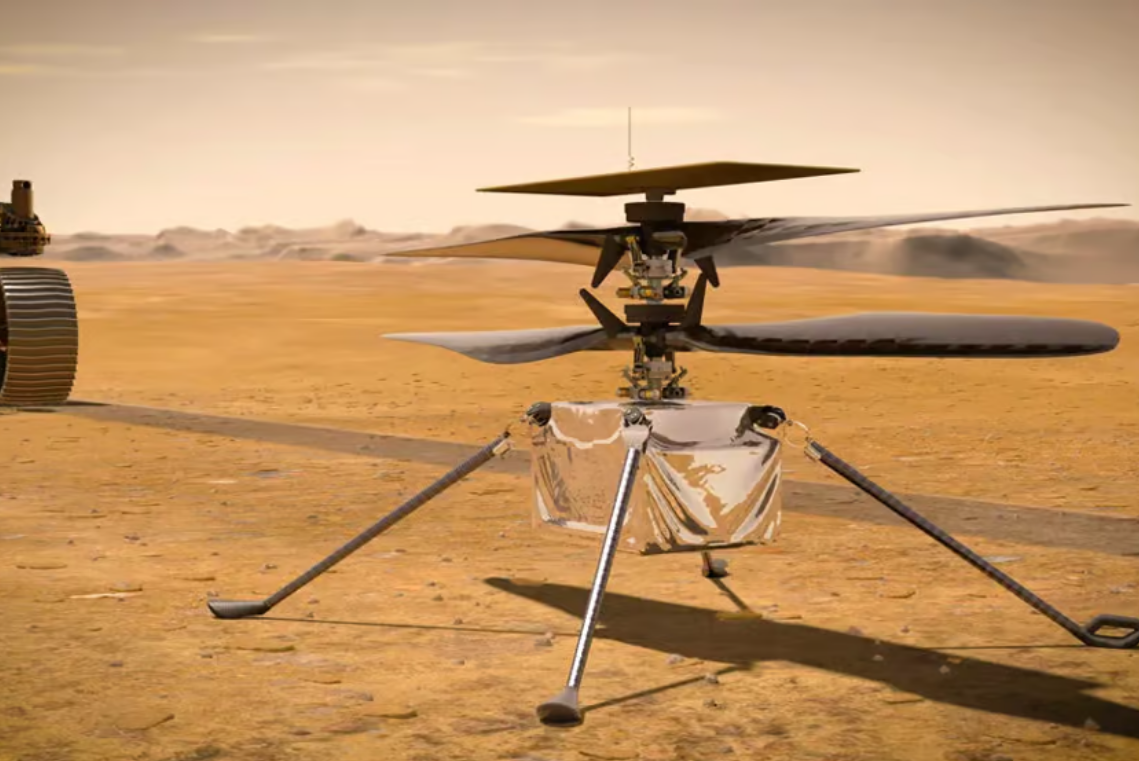
Better Rotors, Higher Heights Thanks To NASA’s Dual Planet Presence

NASA/JPL-Caltech There aren’t any organizations other than NASA that can claim they are operating on two different planets (at least none we...