Showing posts with label DesignTrends. Show all posts

Monday, November 23, 2026

Quiet Modernism Is The Defining Design Movement For 2026

Sensory overload defines our current digital existence. Screens constantly demand attention with vibrant notifications. Consequently, visual noise accumulates in our daily lives. Quiet modernism emerges as the necessary antidote to this chaos. This aesthetic movement does not merely strip away decoration. Instead, it intentionally creates space for thought and breath. Designers currently prioritize this refined simplicity over loud expression. Therefore, the trend represents a sophisticated evolution of minimalist principles….….Continue reading…..

By: Dirk Petzold

Source: We & The Colour

.

Critics:

In visual arts, music, and other media, minimalism is an art movement that emerged in the post-war era in western art. It is often interpreted as a reaction to abstract expressionism and modernism. The movement anticipated various post-minimalist practices contemporary act, which extend or critically reflect on minimalism’s original objectives.

Minimalism’s key objectives were to strip away conventional characterizations of art by bringing the importance of the object or the experience a viewer has for the object with minimal mediation from the artist. Prominent artists associated with minimalism include Donald Judd, Agnes Martin, Dan Flavin, Carl Andre, Robert Morris, Anne Truitt, and Frank Stella.

Minimalism in music features methods such as repetition and gradual variation, such as the works of La Monte Young, Terry Riley, Steve Reich, Philip Glass, Julius Eastman, and John Adams. The term is sometimes used to describe the plays and novels of Samuel Beckett, the films of Robert Bresson, the stories of Raymond Carver, and the automobile designs of Colin Chapman.

In recent years, minimalism has come to refer to anything or anyone that is spare or stripped to its essentials. In a more general sense, minimalism as a visual strategy can be found in the geometric abstractions of painters associated with the Bauhaus movement, in the works of Kazimir Malevich, Piet Mondrian, and other artists associated with the De Stijl movement, the Russian Constructivist movement, and in the work of the Romanian sculptor Constantin Brâncuși.

Minimalism as a formal strategy has been deployed in the paintings of Barnett Newman, Ad Reinhardt, Josef Albers, and the works of artists as diverse as Pablo Picasso, Yayoi Kusama, Giorgio Morandi, and others. Yves Klein had painted monochromes as early as 1949, and held the first private exhibition of this work in 1950—but his first public showing was the publication of the Artist’s book Yves: Peintures in November 1954.

Michael Fried called the minimalist artists literalists, and used literalism as a pejorative due to his position that the art should deliver transcendental experience with metaphors, symbolism, and stylization. Per Fried’s (controversial) view, the literalist art needs a spectator to validate it as art: an “object in a situation” only becomes art in the eyes of an observer. For example, for a regular sculpture its physical location is irrelevant, and its status as a work of art remains even when unseen. 

Donald Judd’s pieces (see photo), on the other hand, are just objects sitting in the desert sun waiting for a visitor to discover them and accept them as art. The term minimalism is also used to describe a trend in design and architecture, wherein the subject is reduced to its necessary elements. Minimalist architectural designers focus on effectively using vacant space, neutral colors, and eliminating decoration, emphasizing materiality, tactility, texture, weight, and density.

Minimalist architecture became popular in the late 1980s in London and New York, whereby architects and fashion designers worked together in the boutiques to achieve simplicity, using white elements, cold lighting, and large spaces with minimal furniture and few decorative elements. The works of De Stijl artists are a major reference: De Stijl expanded the ideas of expression by meticulously organizing basic elements such as lines and planes.

In 1924, The Rietveld Schroder House was commissioned by Truus Schröder-Schräder, a precursor to minimalism. The house emphasizes its slabs, beams and posts reflecting De Stijl’s philosophy on the relationship between form and function. With regard to home design, more attractive “minimalistic” designs are not truly minimalistic because they are larger, and use more expensive building materials and finishes.

Minimalistic design has been highly influenced by Japanese traditional design and architecture. There are observers who describe the emergence of minimalism as a response to the brashness and chaos of urban life. For example, minimalist architecture began to gain traction in 1980s Japan as a result of the country’s rising population and rapid expansion of cities. The design was considered an antidote to the “overpowering presence of traffic, advertising, jumbled building scales, and imposing roadways.”

The chaotic environment was not only driven by urbanization, industrialization, and technology but also the Japanese experience of constantly having to demolish structures on account of the destruction wrought by World War II and the earthquakes, including the calamities it entails such as fire. The minimalist design philosophy did not arrive in Japan by way of another country, as it was already part of the Japanese culture rooted on the Zen philosophy.

There are those who specifically attribute the design movement to Japan’s spirituality and view of nature.The concept of minimalist architecture is to strip everything down to its essential quality and achieve simplicity. The idea is not completely without ornamentation, but that all parts, details, and joinery are considered as reduced to a stage where no one can remove anything further to improve the design. The considerations for ‘essences’ are light, form, detail of material, space, place, and human condition.

Minimalist architects not only consider the physical qualities of the building. They consider the spiritual dimension and the invisible, by listening to the figure and paying attention to details, people, space, nature, and materials, believing this reveals the abstract quality of something that is invisible and aids the search for the essence of those invisible qualities such as natural light, sky, earth, and air. In addition, they “open a dialogue” with the surrounding environment to decide the most essential materials for the construction and create relationships between buildings and sites.

In minimalist architecture, design elements strive to convey the message of simplicity. The basic geometric forms, elements without decoration, simple materials, and the repetitions of structures represent a sense of order and essential quality. The movement of natural light in buildings reveals simple and clean spaces. In the late 19th century as the arts and crafts movement became popular in Britain, people valued the attitude of ‘truth to materials’ with respect to the profound and innate characteristics of materials.

Minimalist architects humbly ‘listen to figure’, seeking essence and simplicity by rediscovering the valuable qualities in simple and common materials. The core purpose of minimalist architecture is to declutter a space, while making it more functional and adding a sense of calmness and serenity to it, making it visually harmonious. The three principles that architects tend to follow while designing minimalist spaces are one in, one out rule, zone wise organisation, and the 90/90 rule.

The capsule wardrobe is an example of minimalism in fashion. Constructed of only a few staple pieces that do not go out of style, and generally dominated by only one or two colors, capsule wardrobes are meant to be light, flexible, and adaptable, and can be paired with seasonal pieces when the situation calls for them. The modern idea of a capsule wardrobe dates back to the 1970s, and is credited to London boutique owner Susie Faux. The concept was further popularized in the next decade by American fashion designer Donna Karan, who designed a seminal collection of capsule workwear pieces in 1985.

Dell Pro 14 Premium Laptop Review: A Case Study In MinimalismHotHardware 22:20 Tue, 09 Sep

.

QuietModernism ,ModernArchitecture ,DesignInspiration ,Minimalism ,ContemporaryDesign ,ArchitecturalDesign ,InteriorDesign ,SustainableArchitecture ,DesignTrends ,CleanLines ,ElegantSpaces ,ArtOfSimplicity ,FunctionalDesign ,SpaceHarmony ,TranquilLiving ,StylishInteriors ,DesignAesthetics ,SereneSpaces ,CohesiveDesign 

Thursday, November 5, 2026

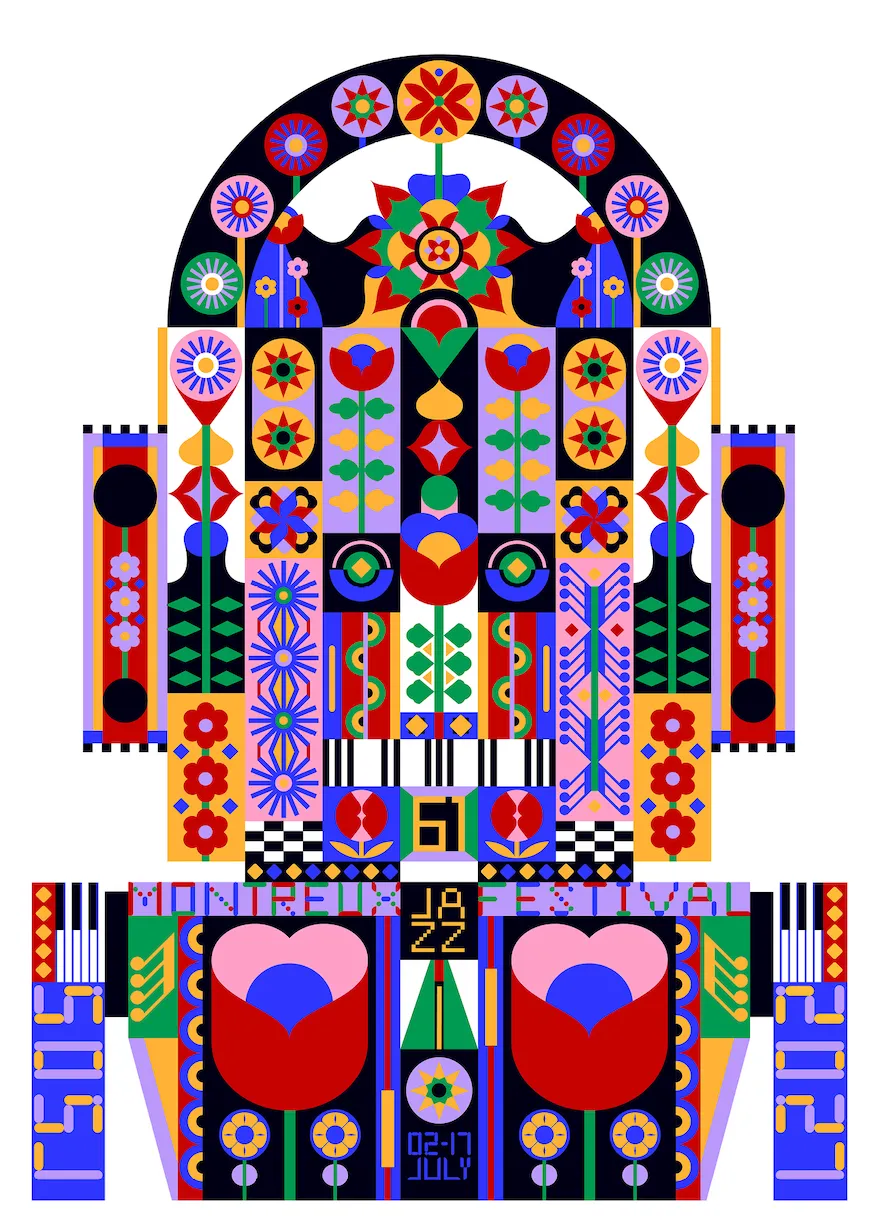
New 40 Years After Andy Warhol and Keith Haring, Montreux Jazz Festival’s Poster Is a Dream Creative Double Act

Image Credit: Montreux Jazz Festival

Montreux has a long history of artist-designed posters. Other previous contributors have included David Bowie, Jean Tinguely, Yoann Lemoine (Woodkid), Lakwena, Kévin Germanier and Christian Marclay. Keith Haring designed for the festival twice. For his second commission, in 1986, he worked with Andy Warhol as a collaborator. The festival invited Malika to adopt a similar approach for her second contribution, ten years after her first design for Montreux……..Continue reading….

By

Source: Creative Bloq

.

Critics:

According to the French historian Max Gallo, “For over two hundred years, posters have been displayed in public places all over the world. Visually striking, they have been designed to attract the attention of passers-by, making us aware of a political viewpoint, enticing us to attend specific events, or encouraging us to purchase a particular product or service.” The modern poster, as we know it, however, dates back to the mid-19th century, when several separate, but related, changes took place.

First, the printing industry perfected colour lithography and made mass production of large and inexpensive images possible. Second, government censorship of public spaces in countries such as France was lifted. And finally, advertisers began to market mass-produced consumer goods to a growing populace in urban areas.”

In little more than a hundred years”, writes poster expert John Barnicoat, “it has come to be recognized as a vital art form, attracting artists at every level, from painters such as Toulouse-Lautrec and Mucha to theatrical and commercial designers. They have ranged in styles from Art Nouveau, Symbolism, Cubism, and Art Deco to the more formal Bauhaus and the often incoherent hippie posters of the 1960s.

Posters, in the form of placards and posted bills, have been used since earliest times, primarily for advertising and announcements. Purely textual posters have a long history: they advertised the plays of Shakespeare and made citizens aware of government proclamations for centuries.

The great revolution in posters, however, was the development of printing techniques that allowed for cheap mass production and printing, notably including the technique of lithography, which was invented in 1796 by the German Alois Senefelder. The invention of lithography was soon followed by chromolithography, which allowed for mass editions of posters illustrated in vibrant colors to be printed.

By the 1890s, the technique had spread throughout Europe. A number of noted French artists created poster art in this period, foremost amongst them Henri de Toulouse-Lautrec, Jules Chéret, Eugène Grasset, Adolphe Willette, Pierre Bonnard, Louis Anquetin, the brothers Léon and Alfred Choubrac, Georges de Feure, and Henri-Gabriel Ibels.

Chéret is considered the “father” of advertisement placards. He was a pencil artist and a scene decorator, who founded a small lithography office in Paris in 1866. He used striking characters, contrast, and bright colors, and created more than 1000 advertisements, primarily for exhibitions, theatres, and products. The industry soon attracted many aspiring painters who needed a source of revenue to support themselves.

Chéret developed a new lithographic technique that better suited the needs of advertisers: he added a lot more colour which, in conjunction with innovative typography, rendered the poster much more expressive. Chéret is said to have introduced sexuality in advertising or, at least, to have exploited the feminine image as an advertising ploy. In contrast with those previously painted by Toulouse-Lautrec, Chéret’s laughing and provocative feminine figures, often called “chérettes”, meant a new conception of art as being of service to advertising.

Posters soon transformed the thoroughfares of Paris, making the streets into what one contemporary called “the poor man’s picture gallery.” Their commercial success was such that some fine artists took up poster design in earnest. Some of these artists, such as Alphonse Mucha, were in great demand and theatre stars personally selected their own favorite artist to do the poster for an upcoming performance. The popularity of poster art was such that in 1884 a major exhibition was held in Paris.

Challenged by newer modes of advertising, the poster as a communicative tool began to decline after the First World War. Civic groups had long assailed the poster, arguing that the nature of the poster made public spaces ugly. But the real threat to posters came from newer forms of advertising. Mass-market magazines, radio, and later, television, as well as billboards all cut into advertiser’s marketing budgets.

While posters continued to be made and advertised products, they were no longer considered a primary form of advertising. More and more, the purpose of posters shifted toward political and decorative uses. Indeed, by the mid 1960s, posters were reborn as part of a broader counter-cultural shift. By 1968 the contemporary poster resurgence was described as “half way between a passing fashion and a form of mass hysteria.

” Sometimes called a “second golden age” or “postermania” however, this resurgence of popularity saw posters used as decoration and self-expression as much as public protest or advertising.

PosterDesign ,GraphicDesign ,DesignInspiration ,CreativePosters ,PrintDesign ,ArtDirection ,VisualCommunication ,DesignTrends ,PostersOfInstagram ,DigitalArt ,Typography ,ColorTheory ,Branding ,MarketingMaterials ,Illustration ,CreativeProcess ,ArtCommunity ,VisualArt ,MakeItUnique

Tuesday, August 25, 2026

Want a Tidier Home? Cleaning Experts Say These 6 Small Daily Tasks Make All the Difference

Credit: Joe Hendrickson/Getty Images

If it feels like you’re the only person with a messy, cluttery house—trust me, you’re not alone. For many of us, keeping the house spotless seems like an insurmountable task. So how do cleaning experts do it? By keeping a tight to-do list that they cross off every day. “People that have a clean house use a routine and a system for how and when they clean their homes,” says Becky Rapinchuk, founder of Clean Mama. “Daily tasks and weekly tasks are the most effective for keeping up with the daily messes and dirt.”……..Continue reading….

By Lisa Milbrand

Source: Real Simple

.

Critics:

“3-5-7 Rule” comes into play, which essentially means styling with odd numbers to create an asymmetric but still visually pleasing arrangement of things. Maybe you’ve heard groupings of three can be more visually pleasing to the eye and memorable than perfectly symmetric arrangements. you can absolutely design a house with AI using Planner 5D! 

AI-powered tools help you create personalized floor plans, visualize interior layouts, and experiment with different styles and features—making it easier than ever to design your dream home, even without specialized skills. The HomeByMe planner will allow you to create a home office whether you’re a beginner or a professional designer. The beauty of office planning using software such as the HomeByMe planner is it can be applied to large corporate companies, as well as small home offices.

In interior design, the three foundational elements of any successful space are often referred to as the Three F’s: Floor Plan, Finishes, and Fixtures. Interior design trends for 2025 focus on warmth, personality, and a connection to nature, moving away from minimalism. Key trends include using warm, earthy color palettes like browns and deep greens, embracing textured and natural materials, and incorporating more maximalist and personalized elements through bold patterns, statement lighting, and mixed-media art displays. 

Biophilic design, which brings the outdoors in, remains popular, as does the integration of smart home technology and creating multi-functional spaces for wellnessAccording to Learning Spaces: Creating Opportunities for Knowledge Creation in Academic Life by Savin-Baden, it explored the concept of space in the physical sense when describing smooth and striated cultural spaces. Smooth spaces are described as “nomadic”; that is, in a constant state of movement.

For example, the lobby of a hotel, an activity room where the seating directions are towards each other instead of focusing in one line, which provides a sense of relaxation and informality. These spaces are open, flexible, and owned by their inhabitants. Smooth spaces are where knowledge is contested and learning is co-created. They are messy and undisciplined, which often creates tension between stakeholders and users.

Striated spaces, on the other hand, are described as bounded spaces, which refers to a certain orientation that focuses primarily in one direction, reflecting the organizational and pedagogical structure of the space. Classrooms and lecture halls are examples of striated spaces.  Perceived beauty and personal involvement within an environment are key factors, which determine our perception of space.

As defined in the Measurement of Meaning by Osgood, Suci and Tannebaum the factors influencing the perception of space are these 3 things: 1. Evaluation- including the aesthetic, affective and symbolic meaning of space 2. Power- the energy requirements to adapt to a space 3. Activity- links to the noise within a space and the worker’s relationship and satisfaction with job and task.

In “Effects of the self-schema on perception of space at work” by Gustave Nicolas Fischer, Cyril Tarquinio, Jacqueline C. Vischer, the study conducted linking design and psychology in the workplace. In this study, they proposed a theoretical model linking environmental perception, work satisfaction and sense of self in a feedback loop. This is shown below in Fig. 1, to illustrate their findings on the direct relationship the environment has with the inhabitant and how through psychology this affects behavior.

There is also something to be said about the way our increasingly popular open office designs may contribute to less productivity and higher distractions, versus traditional cubicle-like workspaces. According to an article from Fortune, “Evidence is mixed on whether open plans actually foster collaboration, and studies have shown that open office plans decrease productivity and employee well-being while increasing the number of sick days workers take. 

A study by the architecture and design firm Gensler found that workers in 2013 spent 54 percent of their time on work requiring individual focus, up from 48 percent in 2008.” In order to combat this, future offices in our next generations will include sound-proof private rooms allowing workers to work solo without distraction, cubicle banks and private offices while continuing to sustain the open floor plan.

Color wields immense power in the psychology of interior design, influencing emotions, perceptions, and behaviors. The strategic use of color can transform spaces, evoke specific moods, and even enhance productivity. For instance, blues and greens often create calming environments, while reds and yellows can energize and stimulate creativity. Understanding the psychological impact of color allows designers to craft spaces that not only look beautiful but also support the well-being and purpose of the occupants.

British men claim they have absolutely no say in home decor except for one room, study reveals  22:31 Sat, 18 Oct 

.

HomeDecor ,InteriorDesign ,HomeInspiration ,DIYHome ,DecoratingIdeas ,DesignTrends ,ViralDecor ,HomeStyling ,InstaHome ,ModernHome ,HomeRenovation ,DecorGoals ,HomeDecorating ,CreativeHome ,HomeEducation ,LearnWithUs ,EducationForAll ,DecorTips ,SmartHomeDecor ,HomeHacks ,AestheticHome ,InteriorStyling ,MyHomeVibe ,HomeSweetHome ,DesignTips ,DecoratingOnABudget ,HomeDecorating101 ,HomeDesignEducation ,DecorInspo ,HomeDecorExperts

Leave a Reply

How El Niño Could Trigger Poisonous Mushroom Surge

Tyler Holtman/Getty Images El Niño rainfall could cause poisonous mushrooms to spawn across California this winter. The warm phase of the ...