Showing posts with label Biomarkers. Show all posts

Friday, November 20, 2026

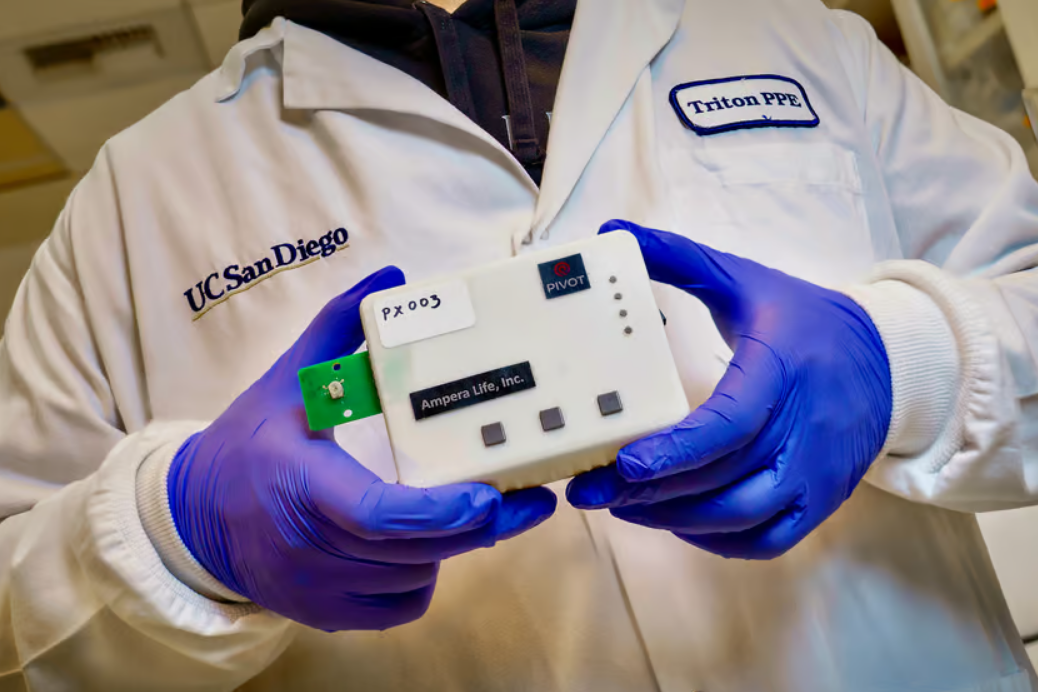
Portable Device Detects Alzheimer’s and Parkinson’s Biomarkers on The Spot

David Baillot/UC San Diego Jacobs School of Engineering

Because of the logistics and invasive procedures involved, many people put off getting tested for Alzheimer’s and Parkinson’s diseases. Thanks to a new portable device, however, such testing could soon be performed non-invasively at just about any location. Ordinarily, testing for neurodegenerative diseases such as Alzheimer’s and Parkinson’s requires patients to travel to a hospital or clinic where they undergo a spinal tap and MRI scan.….Continue reading…

Source: New Atlas

.

Critics:

Parkinson’s disease is the commonest form of parkinsonism and is also called idiopathic parkinsonism, meaning that it has no identifiable cause. The accumulation of a misfolded protein alpha-synuclein in the brain, and its spread throughout the brain makes Parkinson’s disease a neurodegenerative disease classed as a synucleinopathy, and more specifically as an alpha-synucleinopathy (αsynucleinopathy).

Other Parkinson-plus syndromes can have similar movement symptoms but have a variety of associated symptoms. Some of these are also synucleinopathies. Lewy body dementia involves motor symptoms with early onset of cognitive dysfunction and hallucinations which precede motor symptoms. Alternatively, multiple systems atrophy or MSA usually has early onset of autonomic dysfunction (such as orthostasis), and may have autonomic predominance, cerebellar symptom predominance, or Parkinsonian predominance.

 These presentation timelines and associated symptoms can help differentiate these similar movement disorders from idiopathic Parkinson disease.The most recognizable symptoms are movement (motor) related, and include tremor, bradykinesia, rigidity, and shuffling/stooped gait.Non-motor symptoms, including autonomic dysfunction (dysautonomia), neuropsychiatric problems (mood, cognition, behavior or thought alterations), and sensory (especially altered sense of smell) and sleep difficulties may be present as well.

Patients may have non-motor symptoms that precede the onset of motor symptoms including constipation, anosmia, and REM Behavior Disorder. Generally, symptoms such as dementia, psychosis, orthostasis, and more severe falls occur later.Dysphagia can begin at any time during the course of Parkinson’s, and affects more than 80% of patients.

Four motor symptoms are considered as cardinal signs in PD: tremor, slowness of movement (bradykinesia), rigidity, and postural instability. The most common presenting sign is a coarse, slow tremor of the hand at rest, which disappears during voluntary movement of the affected arm and in the deeper stages of sleep. It typically appears in only one hand, eventually affecting both hands as the disease progresses.

Frequency of PD tremor is between 4–6 hertz (cycles per second). A common characteristic of tremor is pill-rolling, the tendency of the index finger and thumb to touch and perform together with a circular movement. The term derives from the similarity between the movement of people with PD and the early pharmaceutical technique of manually making pills. Bradykinesia is due to disturbances in motor planning of movement initiation, and associated with difficulties along the whole course of the movement process, from planning to initiation to execution of a movement.

Although most physicians may readily notice bradykinesia, formal assessment requires persons to do repetitive movements with their fingers and feet. In parkinsonism, rigidity or hypokinesia can be uniform, known as lead-pipe rigidity, or ratcheted, known as cogwheel rigidity. The combination of tremor and increased tone is considered to be at the origin of cogwheel rigidity.

Rigidity may be associated with joint pain; such pain being a frequent initial manifestation of the disease. In early stages of PD, rigidity is asymmetrical and tends to affect the neck and shoulder muscles before the muscles of the face and extremities. With the progression of the disease, rigidity typically affects the whole body and reduces the ability to move. Postural instability is typical in the later stages of the disease, leading to impaired balance and frequent falls, and secondarily to bone fractures, loss of confidence, and reduced mobility.

Instability is absent in the initial stages, especially in younger people, especially before the development of bilateral symptoms. Up to 40% of people diagnosed with PD may experience falls, and around 10% may have falls weekly, with the number of falls being related to the severity of PD. Other recognized motor signs and symptoms include gait and posture disturbances such as festination (rapid shuffling steps and a forward-flexed posture when walking with no flexed arm swing).

Other common signs include freezing of gait (brief arrests when the feet seem to get stuck to the floor, especially on turning or changing direction), a slurred, monotonous, quiet voice, mask-like facial expression, and handwriting that gets smaller and smaller.

Monday, July 14, 2025

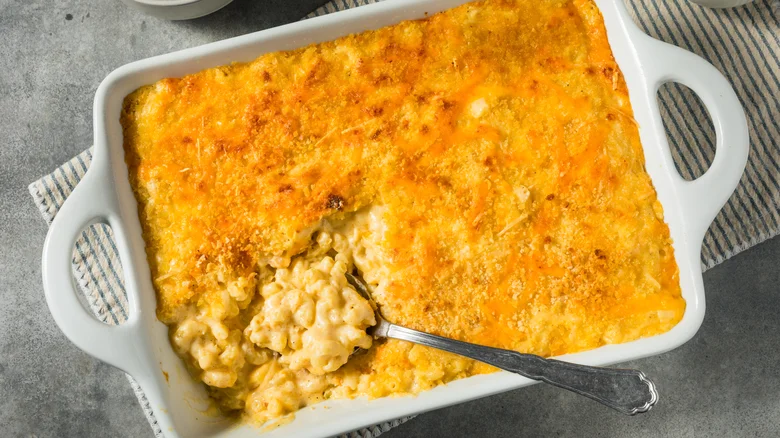
A Classic Canned Soup Is The Key To Better Mac And Cheese

Bhofack2/Getty Images

Boxed or homemade, stovetop or baked, in some form or other mac and cheese has many fans. If you’re looking to upgrade this pasta dish, a different classic comfort food might help: cream of mushroom soup. Well-established as a casserole base, cream of mushroom soup can add a little extra richness and a hint of umami flavor. While it may be an ingredient you never thought to put in mac and cheese, tons of posts on TikTok indicate this canned food combination is having its moment……..Continue reading….

By: Erin Wisti

Source: Mashed 

.

Critics:

It is often claimed that spices were used either as food preservatives or to mask the taste of spoiled meat, especially in the European Middle Ages. This is false. In fact, spices are rather ineffective as preservatives as compared to salting, smoking, pickling, or drying, and are ineffective in covering the taste of spoiled meat.

Moreover, spices have always been comparatively expensive: in 15th century Oxford, a whole pig cost about the same as a pound of the cheapest spice, pepper. There is also no evidence of such use from contemporary cookbooks: “Old cookbooks make it clear that spices weren’t used as a preservative. They typically suggest adding spices toward the end of the cooking process, where they could have no preservative effect whatsoever.”

The control of trade routes and the spice-producing regions were the main reasons that Portuguese navigator Vasco da Gama sailed to India in 1499. When da Gama discovered the pepper market in India, he was able to secure peppers for a much lower cost than demanded by Venice. At around the same time, Christopher Columbus returned from the New World. He described to investors the new spices available there.

Another source of competition in the spice trade during the 15th and 16th centuries was the Ragusans from the maritime republic of Dubrovnik in southern Croatia. The military prowess of Afonso de Albuquerque (1453–1515) allowed the Portuguese to take control of the sea routes to India. In 1506, he took the island of Socotra in the mouth of the Red Sea and, in 1507, Ormuz in the Persian Gulf.

Since becoming the viceroy of the Indies, he took Goa in India in 1510, and Malacca on the Malay Peninsula in 1511. The Portuguese could now trade directly with Siam, China, and the Maluku Islands. With the discovery of the New World came new spices, including allspice, chili peppers, vanilla, and chocolate. This development kept the spice trade, with the Americas as a latecomer with their new seasonings, profitable well into the 19th century.

A study by the Food and Drug Administration of shipments of spices to the United States during fiscal years 2007–2009 showed about 7% of the shipments were contaminated by Salmonella bacteria, some of it antibiotic-resistant. As most spices are cooked before being served salmonella contamination often has no effect, but some spices, particularly pepper, are often eaten raw and are present at the table for convenient use.

Shipments from Mexico and India, a major producer, were the most frequently contaminated. Food irradiation is said to minimize this risk. A mortar and pestle is the classic set of tools for grinding a whole spice. Less labor-intensive tools are more common now: a microplane or fine grater can be used to grind small amounts; a coffee grinder is useful for larger amounts. A frequently used spice such as black pepper may merit storage in its own hand grinder or mill.

The flavor of a spice is derived in part from compounds (volatile oils) that oxidize or evaporate when exposed to air. Grinding a spice greatly increases its surface area and so increases the rates of oxidation and evaporation. Thus, the flavor is maximized by storing a spice whole and grinding when needed. The shelf life of a whole dry spice is roughly two years; of a ground spice roughly six months.

The “flavor life” of a ground spice can be much shorter. Ground spices are better stored away from light. Some flavor elements in spices are soluble in water; many are soluble in oil or fat. As a general rule, the flavors from a spice take time to infuse into the food so spices are added early in preparation. This contrasts to herbs which are usually added late in preparation.

Herbs and Spices – Biomarkers of Intake Based on Human Intervention Studies – A Systematic Review”. 

Spices Board”.

Definition of SPICE”.

Spice – Middle English Compendium”. 

Berenike and the Ancient Maritime Spice Route.

The Material Foundations. 

Bible Gateway passage: Song of Songs 4:14 – New International Version”. 

CRC Handbook of Medicinal Spices.

Tastes of paradise : a social history of spices, stimulants, and intoxicants.

Food in Medieval Times. 

How a full spice cabinet can keep you healthy”. 

Can we understand modern humans without considering pathogens?: Human evolution and parasites”.  

 Prevalence, serotype diversity, and antimicrobial resistance of Salmonella in imported shipments of spice offered for entry to the United States, FY2007–FY2009″.

Spice and herb | Types, Uses, & Facts | 

Herbs and Spices – Biomarkers of Intake Based on Human Intervention Studies – A Systematic Review”. 

Spices Board”.

Definition of SPICE”.

Spice – Middle English Compendium”. 

Berenike and the Ancient Maritime Spice Route.

The Material Foundations. 

Bible Gateway passage: Song of Songs 4:14 – New International Version”. 

CRC Handbook of Medicinal Spices.

Tastes of paradise : a social history of spices, stimulants, and intoxicants.

Food in Medieval Times. 

How a full spice cabinet can keep you healthy”. 

Can we understand modern humans without considering pathogens?: Human evolution and parasites”.  

 Prevalence, serotype diversity, and antimicrobial resistance of Salmonella in imported shipments of spice offered for entry to the United States, FY2007–FY2009″. 

Salmonella in Spices Prompts Changes in Farming”. “

Production of Spice by countries”. UN Food & Agriculture Organization.

Spices and condiments. Food additives”

Salmonella in Spices Prompts Changes in Farming”. “

Production of Spice by countries”. UN Food & Agriculture Organization.

Spices and condiments. Food additives”

.

.

labels: Spices,condiments, additives,pathogens,parasites,antimicrobial,intoxicants,Herbs,Biomarkers,Intervention,microbiome,cancer,Parkinson

Leave a Reply

Turn Any Memory Into a Large-Print Puzzle Book With Memory Lane Book Studio

Memory Lane Book Studio combines AI-written nostalgia themes with large-print puzzle generation, answer keys and paperback cover production...