Showing posts with label NeuralNetworks. Show all posts

Monday, November 9, 2026

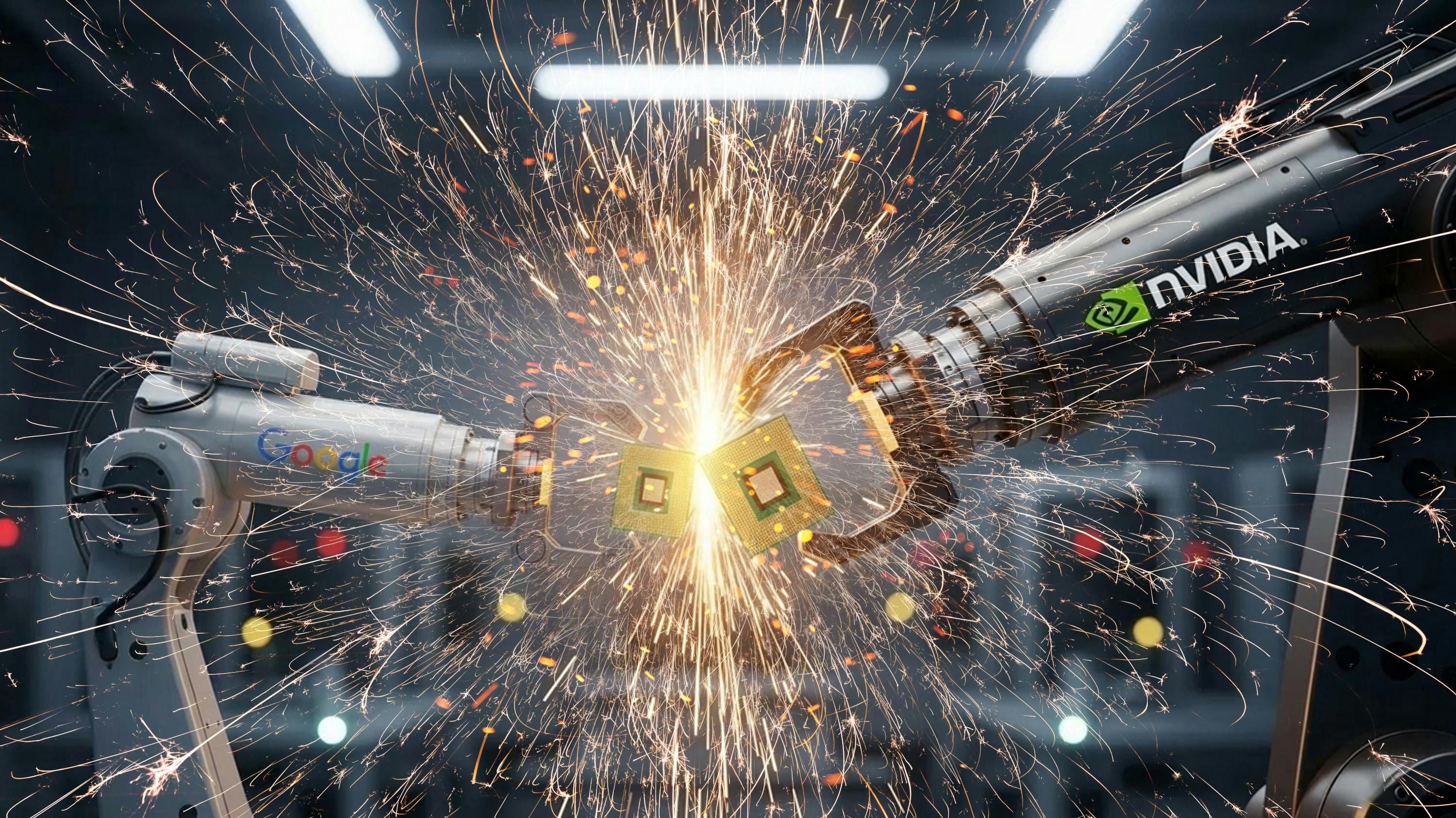
Google Escalates Nvidia Rivalry With New Versions of Its TPU Systems

Alphabet Inc.’s Google is rolling out a broader array of artificial intelligence chips, aiming to capitalize on its rapid ascent as a challenger to Nvidia Corp. in a market worth hundreds of billions of dollars. The company is introducing two new variations of its tensor processing units, or TPUs, custom-made semiconductors that help develop and run AI software. The latest chips will address the need for confidential computing and help models access a wider range of information when handling queries. More broadly, they’re meant to serve an industry that’s shifting toward the use of AI agents and confronting security challenges……..Continue reading….

Source: Bloomberg.

.

Critics:

Nvidia is a software and fabless company which designs and supplies graphics processing units (GPUs), application programming interfaces (APIs) for data science and high-performance computing, as well as system on a chip units (SoCs) for the mobile computing and automotive market. Nvidia’s specialization means it is able to charge a premium for its products.

In fact, its chips, which are manufactured in Taiwan, are so unique that companies looking to build AI capabilities are complaining that there is a shortage of them. The ownership structure of Nvidia (NVDA) stock is a mix of institutional, retail and individual investors. Approximately 35.48% of the company’s stock is owned by Institutional Investors, 3.93% is owned by Insiders and 60.59% is owned by Public Companies and Individual Investors.

According to supply chain data estimates from Bloomberg, Arcuri is spot on with Microsoft being Nvidia’s largest customer. Nvidia stock fell sharply Tuesday, trading at its lowest level since late May as the market awaits Big Tech earnings and looks at potential competition in AI hardware. Nvidia shares closed down 7% at $103.73. The tech-heavy Nasdaq Composite Index dropped 1.3%.

The top individual shareholders of Nvidia are Jen-Hsun (“Jensen”) Huang, Mark A. Stevens, and Tench Coxe. The top institutional shareholders are Vanguard Group Inc., BlackRock Inc. (BLK), and FMR LLC. Nvidia stock has gained 3,776% since the start of 2019 as the company benefits from selling the main chip necessary for artificial intelligence work, minting many new multimillionaires in the process.

The main issue is that Nvidia’s graphics processing units, even its popular H100s, don’t have enough memory to handle the immense amount of video data needed to train these models, founders of AI video startups tell me. Nvidia designs and manufactures GPUs for gaming, cryptocurrency mining, and professional applications, as well as chip systems for use in vehicles, robotics, and other tools.

Today, data center processors for analytics and AI have quickly become Nvidia’s largest source of revenue, surpassing the company’s historical main business line of GPUs (graphic processing units). Nvidia Overtakes Microsoft as World’s Most Valuable Company Nvidia Overtakes Microsoft as World’s Most Valuable Company. Nvidia has become the most valuable company in the world after its market capitalization grew to $3.34 trillion, overtaking Microsoft at $3.32.

 In 2023, companies like Meta, Oracle, and Microsoft signaled their interest in AMD GPUs as a more cost-effective solution and a way to avoid a potential vendor lock-in with dominant Nvidia. AMD’s Instinct MI300 series, for example, is considered a viable alternative for scientific computing and AI uses. Concerns over Nvidia’s valuation seems to be the chief reason behind recent heavy selling. Even now, Nvidia shares on an elevated forward price-to-earnings (P/E) ratio of 43.6 times.

This remains far ahead of an average of 25.5 times for S&P 500 shares. Bank of America analyst Vivek Arya noted Nvidia is one of the firm’s top “rebound” picks amid what he expects to be a comeback for semiconductors to end 2024. “Our base case remains for a [semiconductor] rebound likely in Q4 as seasonal headwinds dissipate,” Arya wrote in a note to clients.

World’s most important fuel of the AI frenzy, NVIDIA, is facing accusations of acting as a “GPU cartel” and controlling supply in the data center market, according to statements made by executives at rival chipmaker Groq and former AMD executive Scott Herkelman. Reports claiming that Nvidia (NASDAQ:NVDA) is buying Xbox from Microsoft (NASDAQ:MSFT) have been debunked as an April Fool’s Day prank from TweakTown.

The “Nvidia buys Xbox” post spread online and started trending on some social media websites. A $20,000 investment made in the semiconductor giant 10 years ago would be worth more than $3.4 million today — up by around 170 times in value. It is also worth noting that the company has taken less than a decade to turn a $20,000 investment into precisely a $1 million.

The ownership structure of Nvidia (NVDA) stock is a mix of institutional, retail and individual investors. Approximately 35.48% of the company’s stock is owned by Institutional Investors, 3.93% is owned by Insiders and 60.59% is owned by Public Companies and Individual Investors.

The AI Chip Behind Nvidia’s Supersonic Stock RallyBNN Bloomberg 22:14 
.
TensorProcessingUnits ,TPUs ,Nvidia, GoogleTech,ArtificialIntelligence, ,MachineLearning ,DeepLearning ,DataScience ,AIProcessing ,NeuralNetworks ,ThinkDeep ,ComputePower ,TechInnovation ,FutureOfTech ,AIHardware ,BigData ,ArtificialNeuralNetworks ,TechTrends ,ProcessedWithTPUs ,AcceleratedComputing ,SmartTech ,CloudComputing

Thursday, October 15, 2026

What’s The Difference Between Machine Learning and Deep Learning?

Login (Shutterstock)

Artificial intelligence is everywhere these days, but the fundamentals of how this influential new technology works can be confusing. Two of the most important fields in AI development are “machine learning” and its sub-field, “deep learning.” Here’s a quick explanation of what these two important disciplines are, and how they’re contributing to the evolution of automation. It’s worth reminding ourselves what AI actually is. Proponents of artificial intelligence say they hope to someday create a machine that can “think” for itself.……..Story continues…

By: Lucas Ropek / Gizmodo

Source: Quartz

.

Critics:

A machine learning model is a type of mathematical model that, after being “trained” on a given dataset, can be used to make predictions or classifications on new data. During training, a learning algorithm iteratively adjusts the model’s internal parameters to minimize errors in its predictions.

By extension, the term “model” can refer to several levels of specificity, from a general class of models and their associated learning algorithms to a fully trained model with all its internal parameters tuned. Various types of models have been used and researched for machine learning systems, picking the best model for a task is called model selection.

As a scientific endeavor, machine learning grew out of the quest for artificial intelligence (AI). In the early days of AI as an academic discipline, some researchers were interested in having machines learn from data. They attempted to approach the problem with various symbolic methods, as well as what were then termed “neural networks”; these were mostly perceptrons and other models that were later found to be reinventions of the generalized linear models of statistics. 

Probabilistic reasoning was also employed, especially in automated medical diagnosis. However, an increasing emphasis on the logical, knowledge-based approach caused a rift between AI and machine learning. Probabilistic systems were plagued by theoretical and practical problems of data acquisition and representation.  By 1980, expert systems had come to dominate AI, and statistics was out of favor.

Work on symbolic/knowledge-based learning did continue within AI, leading to inductive logic programming(ILP), but the more statistical line of research was now outside the field of AI proper, in pattern recognition and information retrieval.  Neural networks research had been abandoned by AI and computer science around the same time. This line, too, was continued outside the AI/CS field, as “connectionism”, by researchers from other disciplines including John Hopfield, David Rumelhart, and Geoffrey Hinton. Their main success came in the mid-1980s with the reinvention of backpropagation.

Machine learning (ML), reorganized and recognized as its own field, started to flourish in the 1990s. The field changed its goal from achieving artificial intelligence to tackling solvable problems of a practical nature. It shifted focus away from the symbolic approaches it had inherited from AI, and toward methods and models borrowed from statistics, fuzzy logic, and probability theory. This section is an excerpt from Data compression Machine learning.

There is a close connection between machine learning and compression. A system that predicts the posterior probabilities of a sequence given its entire history can be used for optimal data compression (by using arithmetic coding on the output distribution). Conversely, an optimal compressor can be used for prediction (by finding the symbol that compresses best, given the previous history). This equivalence has been used as a justification for using data compression as a benchmark for “general intelligence”.

An alternative view can show compression algorithms implicitly map strings into implicit feature space vectors, and compression-based similarity measures compute similarity within these feature spaces. For each compressor C(.) we define an associated vector space ℵ, such that C(.) maps an input string x, corresponding to the vector norm ||~x||. An exhaustive examination of the feature spaces underlying all compression algorithms is precluded by space; instead, feature vectors chooses to examine three representative lossless compression methods, LZW, LZ77, and PPM.

According to AIXI theory, a connection more directly explained in Hutter Prize, the best possible compression of x is the smallest possible software that generates x. For example, in that model, a zip file’s compressed size includes both the zip file and the unzipping software, since you can not unzip it without both, but there may be an even smaller combined form.

Examples of AI-powered audio/video compression software include NVIDIA Maxine, AIVC. Examples of software that can perform AI-powered image compression include OpenCV, TensorFlow, MATLAB’s Image Processing Toolbox (IPT) and High-Fidelity Generative Image Compression. In unsupervised machine learning, k-means clustering can be utilized to compress data by grouping similar data points into clusters.

This technique simplifies handling extensive datasets that lack predefined labels and finds widespread use in fields such as image compression. Data compression aims to reduce the size of data files, enhancing storage efficiency and speeding up data transmission. K-means clustering, an unsupervised machine learning algorithm, is employed to partition a dataset into a specified number of clusters, k, each represented by the centroid of its points.

This process condenses extensive datasets into a more compact set of representative points. Particularly beneficial in image and signal processing, k-means clustering aids in data reduction by replacing groups of data points with their centroids, thereby preserving the core information of the original data while significantly decreasing the required storage space.

Large language models (LLMs) are also capable of lossless data compression, as demonstrated by DeepMind’s research with the Chinchilla 70B model. Developed by DeepMind, Chinchilla 70B effectively compressed data, outperforming conventional methods such as Portable Network Graphics (PNG) for images and Free Lossless Audio Codec (FLAC) for audio.

It achieved compression of image and audio data to 43.4% and 16.4% of their original sizes, respectively. Machine learning and data mining often employ the same methods and overlap significantly, but while machine learning focuses on prediction, based on known properties learned from the training data, data mining focuses on the discovery of (previously) unknown properties in the data (this is the analysis step of knowledge discovery in databases).

Data mining uses many machine learning methods, but with different goals; on the other hand, machine learning also employs data mining methods as “unsupervised learning” or as a preprocessing step to improve learner accuracy. Much of the confusion between these two research communities (which do often have separate conferences and separate journals, ECML PKDD being a major exception) comes from the basic assumptions they work with:

In machine learning, performance is usually evaluated with respect to the ability to reproduce known knowledge, while in knowledge discovery and data mining (KDD) the key task is the discovery of previously unknown knowledge. Evaluated with respect to known knowledge, an uninformed (unsupervised) method will easily be outperformed by other supervised methods, while in a typical KDD task, supervised methods cannot be used due to the unavailability of training data.

Machine learning also has intimate ties to optimization: Many learning problems are formulated as minimization of some loss function on a training set of examples. Loss functions express the discrepancy between the predictions of the model being trained and the actual problem instances (for example, in classification, one wants to assign a label to instances, and models are trained to correctly predict the preassigned labels of a set of examples).

Characterizing the generalization of various learning algorithms is an active topic of current research, especially for deep learning algorithms. Machine learning and statistics are closely related fields in terms of methods, but distinct in their principal goal: statistics draws population inferences from a sample, while machine learning finds generalizable predictive patterns. 

According to Michael I. Jordan, the ideas of machine learning, from methodological principles to theoretical tools, have had a long pre-history in statistics. He also suggested the term data science as a placeholder to call the overall field. Conventional statistical analyses require the a priori selection of a model most suitable for the study data set. In addition, only significant or theoretically relevant variables based on previous experience are included for analysis.

In contrast, machine learning is not built on a pre-structured model; rather, the data shape the model by detecting underlying patterns. The more variables (input) used to train the model, the more accurate the ultimate model will be. Leo Breiman distinguished two statistical modeling paradigms: data model and algorithmic model, wherein “algorithmic model” means more or less the machine learning algorithms like Random Forest.

Some statisticians have adopted methods from machine learning, leading to a combined field that they call statistical learning. Analytical and computational techniques derived from deep-rooted physics of disordered systems can be extended to large-scale problems, including machine learning, e.g., to analyze the weight space of deep neural networks. Statistical physics is thus finding applications in the area of medical diagnostics.

Machine learning approaches are traditionally divided into three broad categories, which correspond to learning paradigms, depending on the nature of the “signal” or “feedback” available to the learning system:

  • Supervised learning: The computer is presented with example inputs and their desired outputs, given by a “teacher”, and the goal is to learn a general rule that maps inputs to outputs.
  • Unsupervised learning: No labels are given to the learning algorithm, leaving it on its own to find structure in its input. Unsupervised learning can be a goal in itself (discovering hidden patterns in data) or a means towards an end (feature learning).
  • Reinforcement learning: A computer program interacts with a dynamic environment in which it must perform a certain goal (such as driving a vehicle or playing a game against an opponent). As it navigates its problem space, the program is provided feedback that’s analogous to rewards, which it tries to maximize.

Although each algorithm has advantages and limitations, no single algorithm works for all problems.

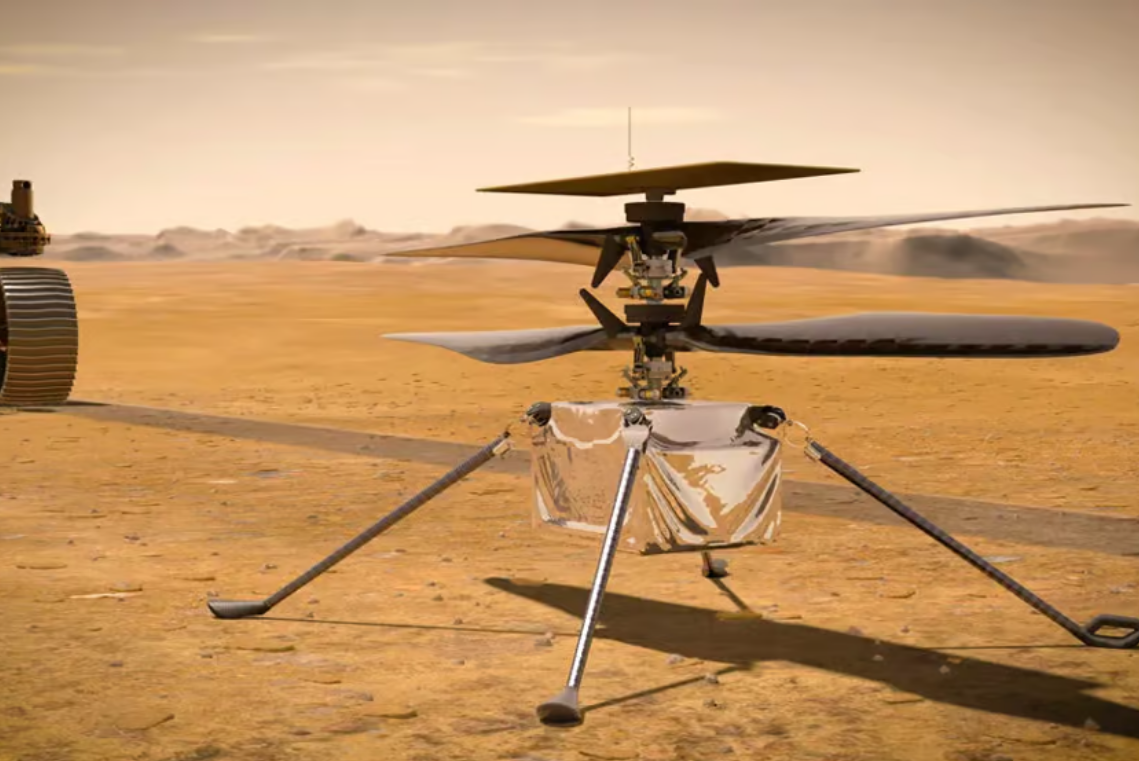
Better Rotors, Higher Heights Thanks To NASA’s Dual Planet Presence

NASA/JPL-Caltech There aren’t any organizations other than NASA that can claim they are operating on two different planets (at least none we...