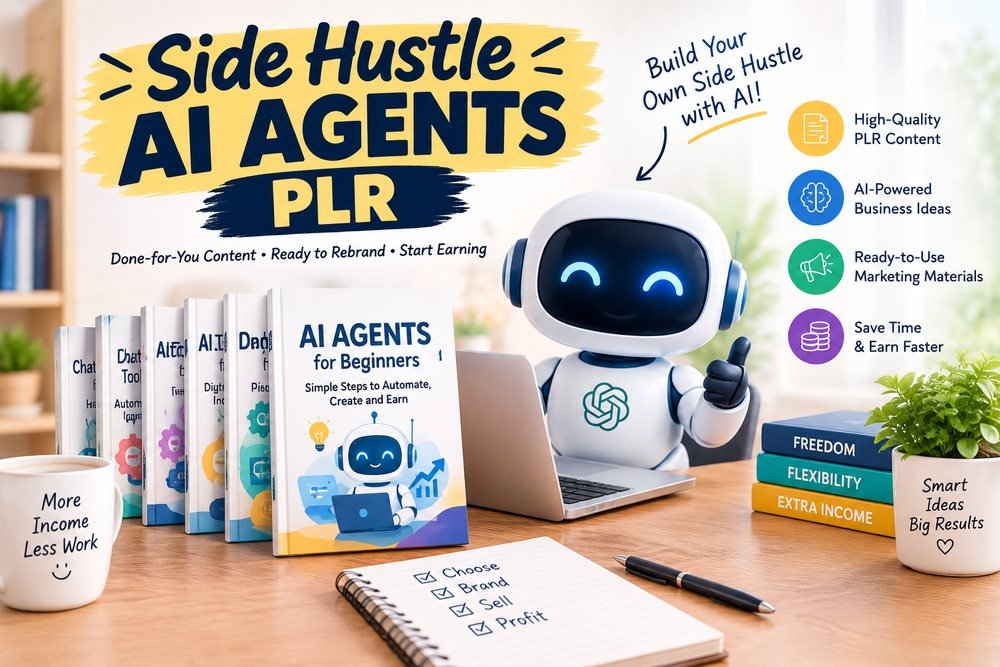
Side Hustle AI Agents is advertised as a collection of digital resources designed to help users explore online business opportunities with the assistance of artificial intelligence. Instead of writing every instruction from scratch, users can work with prepared prompts and workflows intended to support tasks such as brainstorming, content creation, planning, and digital product development.
For beginners, this approach may make experimenting with AI easier. Freelancers and content creators may also find organized instructions useful when handling repetitive tasks. However, there is one important distinction to understand before buying. Side Hustle AI Agents is advertised as a digital prompt and instruction package, not a standalone AI application.
The kit does not include access to ChatGPT, Claude, Gemini, or other external AI services. You need a compatible platform to use the instructions, and some platforms or features may require a separate subscription. Therefore, the product should be evaluated as a collection of resources that may support your work, rather than a complete automated business system.
Thirty-Six AI Agents or Workflows:
The main package advertises 36 AI agents or workflows. These resources are intended to provide instructions for different tasks, helping users approach AI-assisted work without starting with a blank prompt every time. For example, a suitable workflow might help organize a content project, brainstorm potential product ideas, or prepare an initial draft.
The potential advantage is convenience. A well-structured prompt can explain the task, provide context, and specify the type of response you need. However, the advertised number alone does not establish the quality of the resources. I could not independently verify the effectiveness of all 36 workflows or confirm that they produce consistently useful results.
Ten Hustle Tracks:
The package also advertises 10 hustle tracks. These are intended to help users explore different directions for AI-assisted business activities. This may be useful if you are interested in starting an online project but are unsure where to begin. Having several suggested directions can give you ideas to investigate rather than leaving you to brainstorm everything independently.
Still, choosing a business idea is only the first step. You must assess customer demand, research competitors, understand the time involved, and determine whether the idea solves a problem people are willing to pay to address. The hustle tracks should therefore be treated as starting points for research, not proven business opportunities.
Ten Money Recipes:
Another advertised component is 10 Money Recipes. These resources are presented as additional guidance for exploring potential business applications. The name may sound attractive to people looking for ways to earn money online, but it is important to interpret it realistically. A business recipe cannot guarantee sales or profits.
Even a promising idea needs a suitable offer, an identifiable audience, appropriate pricing, and effective marketing. The practical value of these resources will depend on how clearly they explain the proposed activities and whether the ideas are relevant to your goals.
Thirty Prompt Power-Ups:
The kit also advertises 30 Prompt Power-Ups. These additional instructions are intended to help users structure or refine their requests to AI tools. For example, a basic instruction to write an article may produce generic content. Adding the target audience, desired tone, format, topic details, and purpose can help make the response more relevant.
This is one area where prepared prompts may provide convenience, particularly for beginners who are still learning how to communicate effectively with AI tools. Nevertheless, prompt improvements do not eliminate errors. You should still review the output for accuracy, originality, missing details, and unsupported statements.
An 87-Page PDF:
According to the supplied product information, the package includes an 87-page PDF. A PDF can be convenient for reading the instructions, reviewing examples, and keeping the resources organized in one document. However, page count is not a reliable measure of quality.
What matters is whether the material is clear, useful, relevant, and sufficiently detailed to help you complete real tasks. I could not independently verify the complete document or assess every page, so the stated page count should be understood as an advertised specification.
An Editable Word Document:
An editable Word version is also advertised. This format may be helpful if you prefer to organize instructions, add personal notes, or adapt permitted content for your own workflow. For example, a freelancer might keep customized prompts for recurring client tasks in a separate working document.
Any modification or commercial reuse must comply with the applicable license. Having an editable file does not automatically grant unlimited rights to redistribute its contents.
A TXT File:
The package reportedly includes a plain-text file as well. TXT files are simple to open and can make it convenient to copy instructions into compatible AI platforms. They may also be useful for organizing prompts in a personal reference library. As with the other formats, the benefit depends on the quality of the underlying content rather than the file format itself.
PLR Rights and Reseller Quick-Start Materials:
One of the more commercially interesting aspects of the offer is its advertised private-label rights, commonly called PLR, along with reseller quick-start materials. Depending on the license, PLR can allow certain forms of editing, rebranding, or commercial reuse.
Potential applications might include developing customized digital resources, creating bundles, or incorporating permitted content into a broader product. However, the precise permissions matter more than the PLR label.
Here is how that might work in practice.
Step 1: Access the package.
Follow the seller’s delivery instructions and confirm that the advertised files are available.
Step 2: Choose a relevant hustle track.
Select a business activity that matches your skills, interests, available time, and goals.
Step 3: Select a suitable workflow.
Find an instruction related to your task and customize it with the details the AI needs.
Step 4: Use a compatible AI platform.
Enter the prompt into an AI service. Remember that the package does not include access to external AI subscriptions.
Step 5: Review the generated response.
Check the result for errors, generic wording, unsupported claims, and missing information. Edit it as needed.
Step 6: Apply the material to your project.
Use the improved output for your intended purpose, ensuring that your use complies with the product license and any applicable rules.
For instance, a beginner developing a digital guide might use AI to brainstorm topics and organize an outline. They would still need to research the subject, improve the content, and determine whether the finished product meets an audience’s needs.
The advertised 36 workflows sound substantial, but quantity does not establish effectiveness. Some prompts may be more useful than others. Certain tasks may require additional instructions, careful editing, or significant human involvement. The individual workflows have not been independently tested for this review….
Source: Side Hustle AI Agents
.
AIAgent ,InstructionKit ,AIAgentKit ,TechGuides ,ArtificialIntelligence ,SmartTechnology ,UserInstructions ,Innovation ,TechTutorial ,DigitalAssistant ,FutureTech ,AIForEveryone ,AICommunity ,LearningAI ,AIInstruction ,TechEducation ,CodersCorner ,AIRevolution ,TechEnthusiast ,AIDevelopment







Leave a Reply