Showing posts with label getaway. Show all posts

Monday, October 26, 2026

35 Once-In-A-Lifetime Bucket List Experiences You’ve Never Heard Of

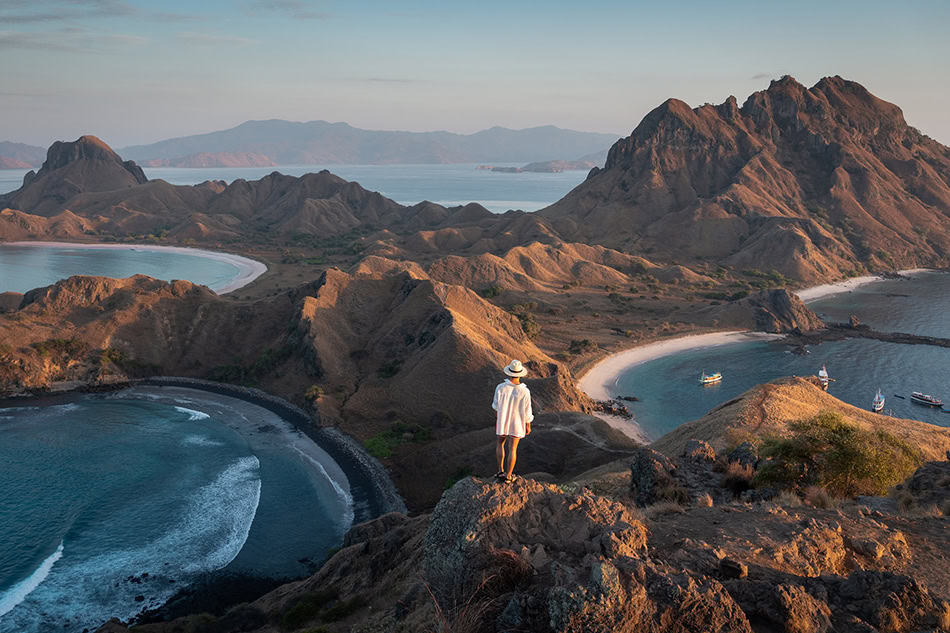
Looking for travel inspiration that goes beyond the typical tourist trail? Here are 35 extraordinary underrated bucket list experiences that combine adventure, cultural immersion, and natural wonders. From sleeping in transparent pods on cliff faces to tracking gorillas through misty forests, these bucket-list worthy moments will reshape how you see the world. Scroll down to explore 35 remarkable journeys that deserve a spot on your bucket list……..Continue reading…

By

Source: Wanderlust Storytellers

.

Critics:

Wellness travelers may seek procedures or treatments using conventional, alternative, complementary, herbal, or homeopathic medicine. Advertisers may use the term wellness to promote a wide range of miscellaneous products and services. Players in wellness tourism may target healthy tourists who want to maintain and promote their health, or cure guests who want to recover from illness and seek healing of bodily ailments.

Wellness tourism suffers from skepticism about the quality and effectiveness of the treatments and pursuits on offer. Individual wellness practitioners and programs provide diverse services such as beauty treatments, exercise opportunities, including physical fitness and sports, healthy diet and weight management, health-related education, and relaxation and stress relief methods in luxurious, privately rent resort centers, small hotels or sections of larger hotels themed for the purpose all over the world.

Wellness travelers pursue these diverse services as a form of stress control. Popular relaxation methods used to control stress include spiritual tourism, including meditation and yoga, whether classical or as exercise; Spiritual tourism is a growing practice that has evolved from a religious pilgrimage into traveling to a sacred spot in hopes of finding a special feeling.

Cruise ships offering wellness programs including the use of on-board spas. Day spas and destination spas offer short-term, residential programs to address specific health concerns, reduce stress, or support lifestyle improvement.Wellness tourism is now an identifiable niche market in at least 30 countries. Twenty countries accounted for 85 percent of global wellness tourism expenditures in 2012.

The top five countries alone (United States, Germany, Japan, France, Austria) account for more than half the market (59 percent of expenditures). Wellness tourism advocates suggest that vacations improve physical well-being, happiness, and productivity, citing that health-oriented trips give travelers a fresh perspective and positively affect creativity, resilience, problem solving, and capacity for coping with stress.

Yet it is difficult to quantify the health benefits since many of the wellness practices are unregulated, and the growing industry negatively impacts the destinations that travelers flock to. One study found that sectors of the wellness industry including healthy eating, physical wellness, and mental resilience had little to no statistical relationship with indicating better health.

While these aspects of wellness are widely regarded to improve health outcomes, some believe that a higher level of spending in these areas does not actually improve health. In these sectors, the offerings of Wellness Tourism experiences do not have a tangible impact on the overall health of the consumer.

Many Wellness Tourism practices are unregulated, and due to the breadth of countries and organizations in the industry, it is difficult to maintain standards across experiences. Over 60% of retreats admitted to not engaging with regulations or certifications beside basic health and safety checks. In many instances, safety cannot be guaranteed during wellness practices. There are several instances where tourists on ayahuasca retreats have died while under the influence of unregulated drugs.

There have also been instances of tourists dying in sweat lodges and incidents involving cults during meditation retreats. There is also little regulation when it comes to employee training, and many retreat employees are only trained internally by their superiors. With the lack of regulations, it is difficult for consumers to determine which retreats are safe. Another impact of tourism is the environmental impacts on the countries tourists flock to.

As many wellness tourism destinations are developing countries, many of these countries are not equipped to handle the heavy influx of tourists surrounding the wellness industry. The draw of these locations is that they are remote: an escape from society. However, these remote locations lack the infrastructure to handle sewage, landfill, and enough natural resources to support tourists.

In 2016, over 1,500 wellness retreat locations in India admitted to dumping sewage directly into rivers, and Tulum faced similar issues. Wellness tourism practices also destroy natural resources and habitats; with the rising fad of ayahuasca retreats, plants were depleted naturally and providers moved to farming them commercially, leading to deforestation to make room for fields. Dimon, Anne (24 October 2013). 

Man who allegedly sold family land to travel to SA returns with nothing  13:54 Wed, 03 Jun 

.

TravelInspiration ,Wanderlust ,TravelGoals ,ExploreTheWorld ,AdventureAwaits ,TravelDiaries ,BucketListTravel ,TravelPhotography ,Getaway ,Wanderer ,SeeTheWorld ,TravelLovers ,JourneyOfALifetime ,TravelMore ,DiscoverDestinations ,ExploreMore ,NomadicLife ,RoamFree ,TravelVibes ,InspireTravel

Wednesday, September 25, 2024

Top 10 Camping Automotives That Are The Ultimate Companions On Your Outdoor Adventures 

After a tiring week at work, with the weekend joyfully looming ahead of me, I often find myself fantasizing about a short sweet getaway! Just a few days away from my hectic life, and this hectic world, in a bubble of my own, where all my worries are nowhere to be seen. And I do think Camping is a plausible plan! There’s nothing more comforting or exciting than lounging about in a cozy camper….Continue reading….

By: 

Source:  Yanko Design

.

Critics:

A campervan, also referred to as a camper, caravanette, motorhome or RV (recreational vehicle) in North America, is a self-propelled vehicle that provides both transport and sleeping accommodation. The term describes vans that have been fitted out, whereas a motorhome is one with a coachbuilt body.

The term motorhome is sometimes used interchangeably with campervan, but the former can also be a larger vehicle than a campervan and intended to be more comfortable, whilst the latter is more concerned with ease of movement and lower cost. For example, some campervans lack built-in toilets and showers, or a divide between the living compartment and the cab.

The United States term “recreational vehicle” (RV) is more analogous to motorhome than campervan . Campervans may be equipped either with a “pop-up” roof which is raised during camping, or a fixed roof, either shared with the commercial van that forms the basis of the vehicle (commonly a “high-top” model), or as part of a custom coach-built body.

Campervans usually have a small kitchen with a refrigerator (which is often powered by a choice of gas, battery, or mains electricity) and a two-burner gas hob and grill. They generally have dual-voltage lighting which can work from either a dedicated battery (other than the van battery) known as a deep-cycle or leisure battery, or from AC power, supplied at a campsite via a hook-up cable.

Larger models may include a water heater, space heating and air conditioning, a portable toilet and an internal shower. Smaller models often carry a portable toilet, and sometimes an external shower that operates within the privacy of an awning. The term “Dormobile” is sometimes used generically in the United Kingdom due to a once highly popular conversion brand, and “Kombi” is used in Australia and other countries.

The popularity of this type expanded in the 1950s after Volkswagen commissioned the Westfalia company to use the Kombi version of their Type 2 transporter as the basis for a campervan. Off-road campervans are often referred to as 4WD or 4×4 campers. Some models include expandable tents mounted on the roof while others have pop-up roofs for additional sleeping space and storage.

Pop-up roof variants share certain design elements with roof tents as sometimes fitted to more robust four wheel drive off-road vehicles intended for expeditions rather than relaxed camping. A compromise between these two purposes is sometimes reached by basing the conversion on an off-road vehicle. Sometimes the conversion is demountable from the back of a pick-up truck body.

In recent years, converting vans into self-contained motorhomes or campervans has become a popular trend among people who want to own a motorhome or campervan but don’t have the budget for a purpose built motorhome or professional conversion.

The conversion process involves stripping out the existing interior of the van and installing the new components. This can include insulating and lining the van, cutting and fitting furniture, installing electrical systems, new windows, a pop-up top and plumbing in a sink and water supply.

It is possible to do a hybrid conversion where large elements such as roof, windows and bed are installed by a professional company and the owner then completes the job themselves. Gas installation requires particular expertise and must either be completed or certified by a qualified engineer.

Insurance for a DIY campervan requires a policy that is flexible enough to cover the vehicle while it is a van, during the conversion process and when it is a completed campervan. There are several types of campervan manufactured by Volkswagen; depending on their age, they are colloquially referred to as either a splitty (split windscreen), a bay (bay framed windscreen), or a bricky (“brick” shaped van).

Although less popular, Mercedes also manufactured a similar-sized light van and conversions were reasonably common in the 1960s and 1970s. Of a similar size and vintage is the British Commer Spacevan conversion. In Europe, the Citroën H-Van has also been used as a base for many campervan conversions, and is popular amongst Dutch and Belgian users in particular.

Ex-factory, it had several height and length configurations, and in all versions it had a low floor and high ceiling, a legacy of one of its original uses as a mobile shop. It does not usually need a pop-top to accommodate its users.

Modern mid-sized Japanese vans such as the Toyota Hiace are sometimes converted to have the appearance of a classic Volkswagen. The car camper is an estate car (UK) or a station wagon (USA) converted into a travel home. The rear cargo area is converted into a full double bed area usually with a fabricated aluminium framework.

All equipment necessary to set up a well-appointed camp site is stored under the double bed with access through lidded areas under the bed. Unlike a standard station wagon where the camping equipment has to be removed before sleeping or a tent set up, the car camper is self-contained.

Tuesday
Monday
In the last month

Applying Empathy To Policymaking

iStock.com/Pakorn Supajitsoontorn “Empathy can be used in decision making by understanding exactly how the program or policy will actually a...