AP Photo/Juan Karita, File
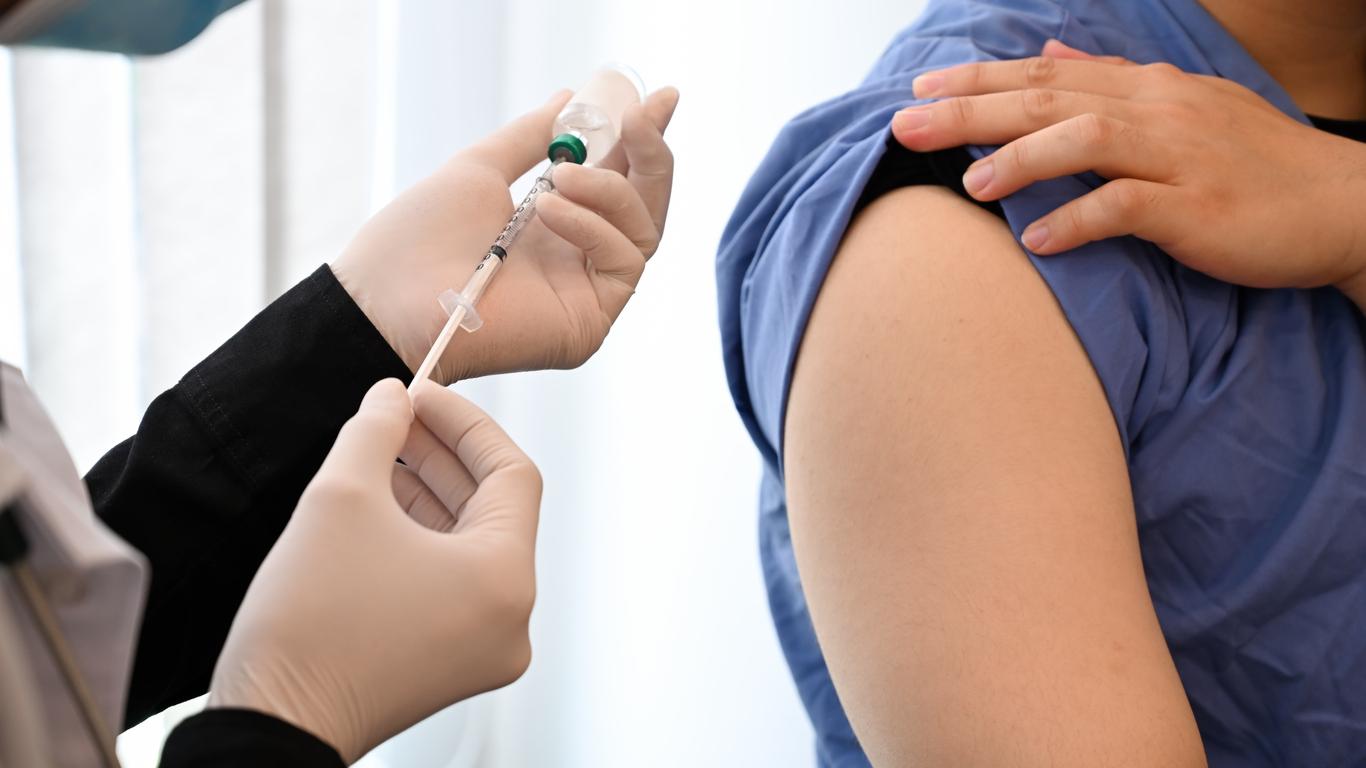
The most widely used COVID-19 vaccines may offer a surprise benefit for some cancer patients revving up their immune systems to help fight tumors. People with advanced lung or skin cancer who were taking certain immunotherapy drugs lived substantially longer if they also got a Pfizer or Moderna shot within 100 days of starting treatment, according to preliminary research being reported Wednesday in the journal Nature. And it had nothing to do with virus infections. Instead, the molecule that powers those specific vaccines, mRNA, appears to help the immune system respond better to the cutting-edge cancer treatment………Continue reading….
By : Lauran Neergaard
Source: AP News
.
Critics:
Several COVID‑19 vaccines, such as the Pfizer BioNTech and Moderna vaccines, use RNA to stimulate an immune response. When introduced into human tissue, the vaccine contains either self-replicating RNA or messenger RNA (mRNA), which both cause cells to express the SARS-CoV-2 spike protein. This teaches the body how to identify and destroy the corresponding pathogen.
RNA vaccines often use nucleoside-modified messenger RNA. The delivery of mRNA is achieved by a coformulation of the molecule into lipid nanoparticles, which protect the RNA strands and help their absorption into the cells. RNA vaccines are the first COVID‑19 vaccines to be authorized in the United Kingdom, the United States, and the European Union.

Authorized vaccines of this type include the Pfizer–BioNTech and Moderna vaccines. The CVnCoV RNA vaccine from CureVac failed in clinical trials. Severe allergic reactions are rare. In December 2020, 1,893,360 first doses of Pfizer–BioNTech COVID‑19 vaccine administration resulted in 175 cases of severe allergic reactions, of which 21 were anaphylaxis.
For 4,041,396 Moderna COVID‑19 vaccine dose administrations in December 2020 and January 2021, only ten cases of anaphylaxis were reported. Lipid nanoparticles (LNPs) were most likely responsible for the allergic reactions. These vaccines are examples of non-replicating viral vector vaccines using an adenovirus shell containing DNA that encodes a SARS‑CoV‑2 protein.
The viral vector-based vaccines against COVID‑19 are non-replicating, meaning that they do not make new virus particles but rather produce only the antigen that elicits a systemic immune response. Authorized vaccines of this type include the Oxford–AstraZeneca COVID‑19 vaccine, the Sputnik V COVID‑19 vaccine, Convidecia, and the Janssen COVID‑19 vaccine. Convidecia and Janssen are both one-shot vaccines that offer less complicated logistics and can be stored under ordinary refrigeration for several months.
Sputnik V uses Ad26 for its first dose, which is the same as Janssen’s only dose, and Ad5 for the second dose, which is the same as Convidecia’s only dose. In August 2021, the developers of Sputnik V proposed, in view of the Delta case surge, that Pfizer test the Ad26 component (termed its ‘Light’ version) as a booster shot. Inactivated vaccines consist of virus particles that are grown in culture and then killed using a method.
Such as heat or formaldehyde to lose disease-producing capacity while still stimulating an immune response. Inactivated virus vaccines authorized in China include the Chinese CoronaVac and the Sinopharm BIBP and WIBP vaccines; there is also the Indian Covaxin, the Russian CoviVac, the Kazakh vaccine QazVac. Subunit vaccines present one or more antigens without introducing whole pathogen particles. The antigens involved are often protein subunits, but they can be any molecule fragment of the pathogen.
The authorized vaccines of this type include the peptide vaccine EpiVacCorona, ZF2001, MVC-COV1901, Corbevax,the Sanofi–GSK vaccine, and Soberana 02 (a conjugate vaccine). Bimervax (selvacovatein) was approved for use as a booster vaccine in the European Union in March 2023.
The V451 vaccine was in clinical trials that were terminated after it was found that the vaccine may potentially cause incorrect results for subsequent HIV testing. The authorized vaccines of this type include the Novavax COVID‑19 vaccine. Additional types of vaccines that are in clinical trials include multiple DNA plasmid vaccines,at least two lentivirus vector vaccines, a conjugate vaccine, and a vesicular stomatitis virus displaying the SARS‑CoV‑2 spike protein.
These vaccines are designed to stimulate nasal immune factors, such as IgA. In addition to inhibiting the virus, nasal vaccines provide ease of administration because no needles (or needle phobia) are involved. A variety of intranasal COVID‑19 vaccines are undergoing clinical trials. The first authorised intranasal vaccine was Razi Cov Pars in Iran at the end of October 2021. The first viral component of Sputnik V vaccine was authorised in Russia as Sputnik Nasal in April 2022.
In September 2022, India and China approved two nasal COVID‑19 vaccines (iNCOVACC and Convidecia), which may (as boosters)also reduce transmission (potentially via sterilizing immunity). In December 2022, China approved a second intranasal vaccine as a booster, trade name Pneucolin. Aivita Biomedical is developing an experimental autologous dendritic cell COVID‑19 vaccine kit where the vaccine is prepared and incubated at the point-of-care using cells from the intended recipient.
The vaccine is undergoing small phase I and phase II clinical studies. A universal coronavirus vaccine would be effective against all coronaviruses and possibly other viruses. The concept was publicly endorsed by NIAID director Anthony Fauci, virologist Jeffery K. Taubenberger, and David M. Morens. In March 2022, the White House released the “National COVID‑19 Preparedness Plan”, which recommended accelerating the development of a universal coronavirus vaccine.
One attempt at such a vaccine is being developed at the Walter Reed Army Institute of Research. It uses a spike ferritin-based nanoparticle (SpFN). This vaccine began a Phase I clinical trial in April 2022. Results of this trial were published in May 2024. Other universal vaccines that have entered clinical trial include OVX033 (France),PanCov (France),pEVAC-PS (UK),and VBI-2902 (Canada). Another strategy is to attach vaccine fragments from multiple strains to a nanoparticle scaffold.
One theory is that a broader range of strains can be vaccinated against by targeting the receptor-binding domain, rather than the whole spike protein. As of September 2020, eleven of the vaccine candidates in clinical development use adjuvants to enhance immunogenicity. An immunological adjuvant is a substance formulated with a vaccine to elevate the immune response to an antigen, such as the COVID‑19 virus or influenza virus.
Specifically, an adjuvant may be used in formulating a COVID‑19 vaccine candidate to boost its immunogenicity and efficacy to reduce or prevent COVID‑19 infection in vaccinated individuals. Adjuvants used in COVID‑19 vaccine formulation may be particularly effective for technologies using the inactivated COVID‑19 virus and recombinant protein-based or vector-based vaccines.Aluminum salts, known as “alum”, were the first adjuvant used for licensed vaccines and are the adjuvant of choice in some 80% of adjuvanted vaccines.
The alum adjuvant initiates diverse molecular and cellular mechanisms to enhance immunogenicity, including the release of proinflammatory cytokines. In June 2024, the US Food and Drug Administration (FDA) advised the manufacturers of the licensed and authorized COVID-19 vaccines that the COVID-19 vaccines (2024-2025 Formula) for use in the United States beginning in fall 2024 should be monovalent JN.1 vaccines.
Since January 2020, vaccine development has been expedited via unprecedented collaboration in the multinational pharmaceutical industry and between governments. Multiple steps along the entire development path are evaluated, including:
- the level of acceptable toxicity of the vaccine (its safety),
- targeting vulnerable populations,
- the need for vaccine efficacy breakthroughs,
- the duration of vaccination protection,
- special delivery systems (such as oral or nasal, rather than by injection),
- dose regimen,
- stability and storage characteristics,
- emergency use authorization before formal licensing,
- optimal manufacturing for scaling to billions of doses, and
- dissemination of the licensed vaccine.
There have been several unique challenges with COVID‑19 vaccine development.Public health programs have been described as “[a] race to vaccinate individuals” with the early wave vaccines. Timelines for conducting clinical research – normally a sequential process requiring years – are being compressed into safety, efficacy, and dosing trials running simultaneously over months, potentially compromising safety assurance.
For example, Chinese vaccine developers and the Chinese Center for Disease Control and Prevention began their efforts in January 2020, and by March they were pursuing numerous candidates on short timelines. The rapid development and urgency of producing a vaccine for the COVID‑19 pandemic were expected to increase the risks and failure rate of delivering a safe, effective vaccine.
Additionally, research at universities is obstructed by physical distancing and the closing of laboratories. Vaccines must progress through several phases of clinical trials to test for safety, immunogenicity, effectiveness, dose levels, and adverse effects of the candidate vaccine. Vaccine developers have to invest resources internationally to find enough participants for Phase II–III clinical trials when the virus has proved to be a “moving target” of changing transmission rates across and within countries, forcing companies to compete for trial participants.
Clinical trial organizers may also encounter people unwilling to be vaccinated due to vaccine hesitancy or disbelief in the science of the vaccine technology and its ability to prevent infection. As new vaccines are developed during the COVID‑19 pandemic, licensure of COVID‑19 vaccine candidates requires submission of a full dossier of information on development and manufacturing quality.







Leave a Reply