Showing posts with label FutureGenerations. Show all posts

Monday, November 16, 2026

How Climate Change Is Affecting This Key Water Cycle, Triggering More Extreme Weather

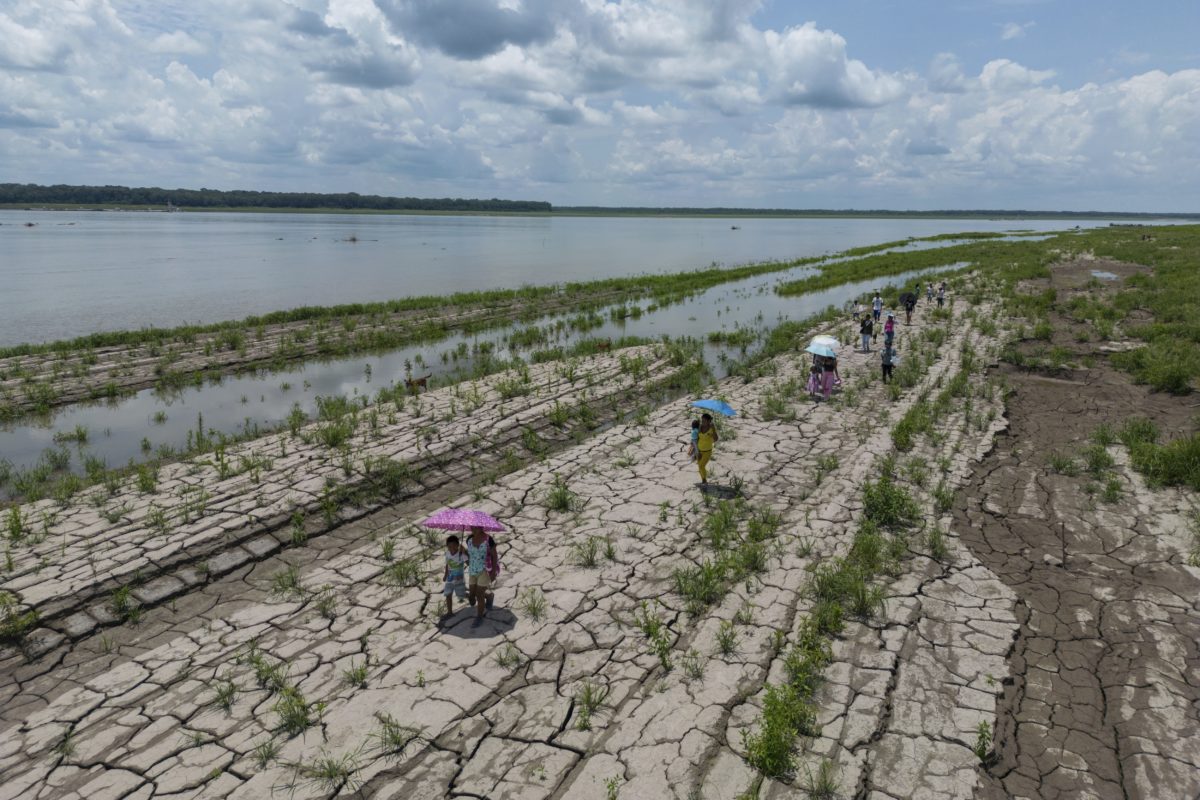
Prolonged droughts, wildfires and water shortages. Torrential downpours that overwhelm dams and cause catastrophic flooding. Around the globe, rising temperatures stoked by climate change are increasing the odds of both severe drought and heavier precipitation that wreak havoc on people and the environment. Rainfall can disappear for years only to return with a vengeance, as it did in California in 2023, with record-setting rain and snowfall. That led to heavy vegetation growth that provided fuel for the devastating January wildfires in Los Angeles after drought returned.….…Continue reading…..

By:

Source:  PBS News

.

Critics:

Rising temperatures are fueling environmental degradation, natural disasters, weather extremes, food and water insecurity, economic disruption, conflict, and terrorism. Sea levels are rising, the Arctic is melting, coral reefs are dying, oceans are acidifying, and forests are burning. While there is still time to limit global emissions to within 1.5℃ above pre-industrial levels, the window of opportunity is closing fast, according to the International Energy Agency (IEA).

But as the transition to a low- or no-carbon future gains momentum, several bright spots are appearing on the horizon. The most recent report of the Intergovernmental Panel on Climate Change (IPCC)—a group of hundreds of scientists working with the United Nations to analyze climate change research from around the world—names many serious risks brought on by the warming of our planet, but human extinction is not among them.

The world is now warming faster than at any point in recorded history. Warmer temperatures over time are changing weather patterns and disrupting the usual balance of nature. This poses many risks to human beings and all other forms of life on Earth. While the effects of human activities on Earth’s climate to date are irreversible on the timescale of humans alive today, every little bit of avoided future temperature increases results in less warming that would otherwise persist for essentially forever.

The global average temperature rise is predicted to climb permanently above 1.5°C by between 2026 and 2042, with a central estimate of 2032, while business as usual will see the 2°C breached by 2050 or very soon after.Future changes are expected to include a warmer atmosphere, a warmer and more acidic ocean, higher sea levels, and larger changes in precipitation patterns.

Risk estimates. Given the limitations of ordinary observation and modeling, expert elicitation is frequently used instead to obtain probability estimates. Humanity has a 95% probability of being extinct in 7,800,000 years, according to J. The simulations also predict that the future of human evolution will suffer from thicker skulls and smaller brains in the year 3000, another side effect of technology making us lazy and causing us to lose some of our brain capacity due to lack of usage.

Even after those first scorching millennia, however, the planet has often been much warmer than it is now. One of the warmest times was during the geologic period known as the Neoproterozoic, between 600 and 800 million years ago. Conditions were also frequently sweltering between 500 million and 250 million years ago. 

Roughly 1.3 billion years from now, “humans will not be able to physiologically survive, in nature, on Earth” due to sustained hot and humid conditions. In about 2 billion years, the oceans may evaporate when the sun’s luminosity is nearly 20% more than it is now, Kopparapu said. Instead, Earth’s natural cycles and greenhouse effects might delay the onset of the next ice age, expected within the next 10,000 to 100,000 years.

 Some theories suggest global warming could potentially trigger an ice age by disrupting ocean currents, specifically the Gulf Stream, leading to dramatic cooling in Europe. We will survive another degree or so as well. However, with each increment in temperature the world we inhabit changes in response. We must adapt to those changes and deal with the disruption and deviation from equilibrium they cause.

We will survive another degree or so as well. However, with each increment in temperature the world we inhabit changes in response. We must adapt to those changes and deal with the disruption and deviation from equilibrium they cause. People and companies will produce their own electricity using reusable energy sources, making power plants and the use of fossil fuels obsolete. Space travel will become a common mode of transport, allowing us to travel to places such as colonies on solar planets, and planetary moons.

A group of closely-related organisms that have common physical and genetic characteristics and are able to interbreed to produce fertile offspring. As humans, we experience dramatically fewer hazards today than we did in our early evolution. However, genetic studies indicate that we are still evolving. Carbon dioxide and other heat-trapping gases are the main drivers of global warming.

While climate change cannot be stopped, it can be slowed. To avoid the worst consequences of climate change, we’ll need to reach “net zero” carbon emissions by 2050 or sooner. While the challenges of preventing dangerous climate change are immense, it is not too late to act. Immediate and sustained efforts are required to mitigate the worst impacts and support vulnerable populations

According to NCEI’s Global Annual Temperature Outlook, there is a 22% chance that 2024 will rank as the warmest year on record and a 99% chance that it will rank in the top five. January saw a record-high monthly global ocean surface temperature for the 10th consecutive month.

Qatar chairs 26th meetings of GCC Ministers of EnvironmentThe Peninsula 10h
.
ClimateChange ,GlobalWarming ,SustainableLiving ,EcoFriendly ,ClimateAction ,SaveThePlanet ,GreenEnergy ,EnvironmentalAwareness ,ActOnClimate ,FutureGenerations ,Conservation ,ProtectOurPlanet ,ClimateCrisis ,GoGreen ,CarbonFootprint ,EcoConscious ,RenewableEnergy ,ClimateJustice ,PlanetEarth

Monday, August 24, 2026

How To Minimize Cover Crop Risks

Courtesy of Jason Carter

The myriad of cover crop benefits are well known: they slow erosion, build soil health, smother weeds, enhance nutrient and moisture availability, and bring a host of other benefits to the farm. Yet there is still hesitancy for growers to adopt cover crops. In a recent University of Illinois FarmDoc webinar, Precision Conservation Management (PCM), the conservation program of the Illinois Corn Growers Association and Illinois Soybean Association….Story continues…

By Adrienne Held

Source: Agriculture

.

Critics:

The importance of a crop varies greatly depending on the region. Globally, the following crops contribute most to human food supply (values of kcal/person/day for 2013 given in parentheses): rice (541 kcal), wheat (527 kcal), sugarcane and other sugar crops (200 kcal), maize (corn) (147 kcal), soybean oil (82 kcal), other vegetables (74 kcal), potatoes (64 kcal), palm oil (52 kcal), cassava (37 kcal), legume pulses (37 kcal), sunflower seed oil (35 kcal), rape and mustard oil (34 kcal).

Other fruits, (31 kcal), sorghum (28 kcal), millet (27 kcal), groundnuts (25 kcal), beans (23 kcal), sweet potatoes (22 kcal), bananas (21 kcal), various nuts (16 kcal), soybeans (14 kcal), cottonseed oil (13 kcal), groundnut oil (13 kcal), yams (13 kcal). Note that many of the globally apparently minor crops are regionally very important. For example, in Africa, roots & tubers dominate with 421 kcal/person/day, and sorghum and millet contribute 135 kcal and 90 kcal, respectively.

There are various methods of cropping that are used in the agricultural industry, such as mono cropping, crop rotation, sequential cropping, and mixed intercropping. Each method of cropping has its purposes and possibly disadvantages as well. Himanshu Arora defines mono cropping as where a field only grows one specific crop year round. Mono Cropping has its disadvantages, according to Himanshu Arora, such as the risk of the soil losing its fertility.

Following mono cropping, another method of cropping is relay cropping. According to the National Library of Medicine, relay cropping may solve a number of conflicts such as inefficient use of available resources, controversies in sowing time, fertilizer application, and soil degradation. The result coming from the use of relay cropping is higher crop output. In the United States, corn is the largest crop produced, and soybean follows in second, according to the government of Alberta.

Referring to a map given by the Government of Alberta, the most popular region to grow these popular crops is in the inner states of the U.S., it is where the crops are most successful in output.The production of primary crops was 9.5 billion tonnes in 2021, 54% more than in 2000. Four crops account for about half of global primary crop production: sugar cane, maize, wheat and rice.

The global production of primary crops increased by 54% between 2000 and 2021, to 9.5 billion tonnes, which is 2% higher than in 2020. This represents 3.3 billion tonnes more than in 2000. With slightly less than one-third of the total, cereals were the main group of crops produced in 2021, followed by sugar crops (22%), vegetables and oil crops (12% each). Fruit, and roots and tubers each accounted for 9–10% of the total production.

The increase in production is mostly attributable to a combination of factors; increased use of irrigation, pesticides and fertilizers, and to a lesser extent a larger cultivated area. Other factors such as better farming practices and the use of high-yield crops also play a role. The value of primary crops production increased at a slightly higher pace in real terms as the quantities produced (57%), from USD 1.8 trillion in 2000 to USD 2.8 trillion in 2021.

As with quantities produced, cereals accounted for the largest share of the total production value in 2021 (30%). Vegetables and fruit represented 19% and 17%, respectively, of the total value in 2021, which is significantly higher than the shares in quantities. The shares of oil crops and roots and tubers in the total value were similar to the shares in quantities.

Sugar crops represented 4% of the total value: such a discrepancy with the share of the quantities produced is due to differences in price compared to fruit and vegetables, and to the fact that the transformation into refined sugar is adding the most value.

State Farm discontinuing 72,000 home policies in California in latest blow to state insurance market KPBS 42m

How to Minimize Cover Crop Risks Successful Farming 22:21 

National Farm Animals Day: A visit to The Good Earth Farm Dakota News Now 22:05 

.

CropsConservation ,SustainableLiving ,EcoFriendly ,GreenLiving ,FarmingTips #FoodSecurity ,Biodiversity ,PlantPower ,FarmLife ,HealthyPlanet ,ConservationEfforts ,FutureGenerations ,GrowYourOwn ,HomeGarden ,EatLocal ,SupportFarmers ,SeedSaving ,HeirloomVarieties ,AgriculturalHeritage ,ProtectOurPlants ,CommunityGarden ,UrbanFarming ,SustainableAgriculture ,AgriculturalTips ,FarmingTools, Seeds, Plants, CoverCrops, CornGrowers, Nutrients

Leave a Reply

Turn Any Memory Into a Large-Print Puzzle Book With Memory Lane Book Studio

Memory Lane Book Studio combines AI-written nostalgia themes with large-print puzzle generation, answer keys and paperback cover production...