Showing posts with label ArtistSpotlight. Show all posts

Tuesday, November 10, 2026

Remembering The Country Artists And Their Loved Ones We Lost In 2025

The country music world has lost some iconic names in 2025. As we head into the homestretch, we take a moment to look back at the country music stars and influential names that have been lost thus far this year. Scroll below to remember those we lost this year……..Continue reading….

By Kelly Fisher

Source:  iHeartCountry Radio

.

Critics:

Music therapy is an interpersonal process in which a trained therapist uses music and all of its facets physical, emotional, mental, social, aesthetic, and spiritual to help clients to improve or maintain their health. In some instances, the client’s needs are addressed directly through music; in others they are addressed through the relationships that develop between the client and therapist.

Music therapy is used with individuals of all ages and with a variety of conditions, including: psychiatric disorders, medical problems, physical disabilities, sensory impairments, developmental disabilities, substance abuse issues, communication disorders, interpersonal problems, and aging. It is also used to improve learning, build self-esteem, reduce stress, support physical exercise, and facilitate a host of other health-related activities.

Music therapists may encourage clients to sing, play instruments, create songs, or do other musical activities. In the 10th century, the philosopher Al-Farabi described how vocal music can stimulate the feelings and souls of listeners. Music has long been used to help people deal with their emotions. In the 17th century, the scholar Robert Burton’s The Anatomy of Melancholy argued that music and dance were critical in treating mental illness, especially melancholia.

He noted that music has an “excellent power …to expel many other diseases” and he called it “a sovereign remedy against despair and melancholy.” He pointed out that in Antiquity, Canus, a Rhodian fiddler, used music to “make a melancholy man merry, …a lover more enamoured, a religious man more devout.” In the Ottoman Empire, mental illnesses were treated with music. In November 2006, Michael J. Crawford and his colleagues also found that music therapy helped schizophrenic patients.

Modern music psychology aims to explain and understand musical behavior and experience. Research in this field and its subfields are primarily empirical; their knowledge tends to advance on the basis of interpretations of data collected by systematic observation of and interaction with human participants. In addition to its focus on fundamental perceptions and cognitive processes, music psychology is a field of research with practical relevance for many areas, including music performance, composition, education, criticism, and therapy, as well as investigations of human aptitude, skill, intelligence, creativity, and social behavior.

Cognitive neuroscience of music is the scientific study of brain-based mechanisms involved in the cognitive processes underlying music. These behaviours include music listening, performing, composing, reading, writing, and ancillary activities. It also is increasingly concerned with the brain basis for musical aesthetics and musical emotion. The field is distinguished by its reliance on direct observations of the brain, using such techniques as functional magnetic resonance imaging (fMRI), transcranial magnetic stimulation (TMS), magnetoencephalography (MEG), electroencephalography (EEG), and positron emission tomography (PET).

Cognitive musicology is a branch of cognitive science concerned with computationally modeling musical knowledge with the goal of understanding both music and cognition. The use of computer models provides an exacting, interactive medium in which to formulate and test theories and has roots in artificial intelligence and cognitive science.

Cognitive musicology investigates topics such as the parallels between language and music in the brain. Research often includes biologically inspired models of computation, such as neural networks and evolutionary programs. This field seeks to model how musical knowledge is represented, stored, perceived, performed, and generated. By using a well-structured computer environment, the systematic structures of these cognitive phenomena can be investigated.

Psychoacoustics is the scientific study of sound perception. More specifically, it is the branch of science studying the psychological and physiological responses associated with sound (including speech and music). It can be further categorized as a branch of psychophysics. Evolutionary musicology concerns the “origins of music, the question of animal song, selection pressures underlying music evolution”, and “music evolution and human evolution”.

It seeks to understand music perception and activity in the context of evolutionary theory. Charles Darwin speculated that music may have held an adaptive advantage and functioned as a protolanguage, a view which has spawned several competing theories of music evolution. An alternate view sees music as a by-product of linguistic evolution; a type of “auditory cheesecake” that pleases the senses without providing any adaptive function.This view has been directly countered by numerous music researchers.

An individual’s culture or ethnicity plays a role in their music cognition, including their preferences, emotional reaction, and musical memory. Musical preferences are biased toward culturally familiar musical traditions beginning in infancy, and adults’ classification of the emotion of a musical piece depends on both culturally specific and universal structural features. Additionally, individuals’ musical memory abilities are greater for culturally familiar music than for culturally unfamiliar music.

Thursday
In the last month

Indy school using music, art to teach the importance of Black History Month WRTV, Indiana 03:40 Wed, 26 Feb 

Sunday, February 1, 2026

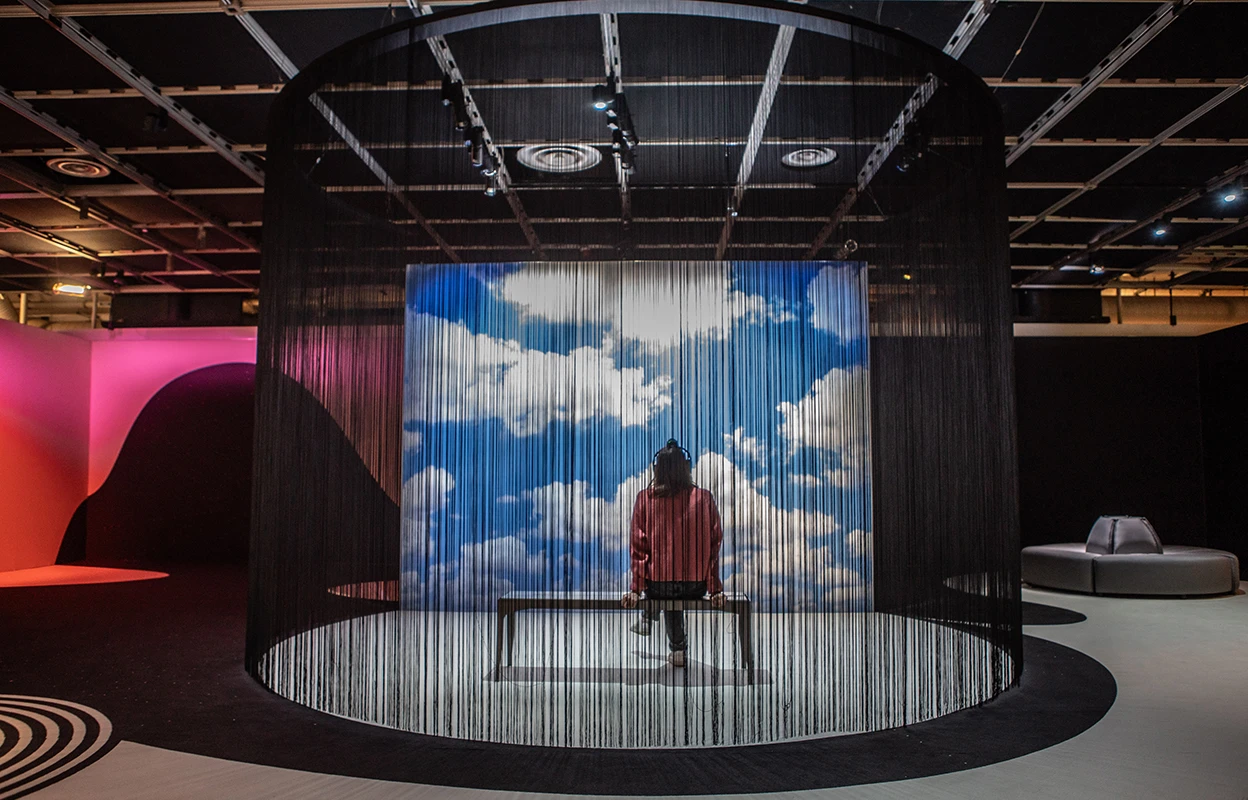
Ever Experiencing True Silence? Intimate Exhibition Offers Insight

EPPDCSI, N. Breton

The Big Bang was spectacularly misnamed, having been “the quietest firework of all time”. Sound waves need matter to propagate through, so the explosion that created it can’t have made a din. This misnomer, testament to our inability to imagine a Universe without noise, comes early in the exhibition Silence, which runs in Paris at the Cité des Sciences et de l’Industrie until the end of August. As well as examining how the Universe has become noisier, the exhibition explores how sound levels have risen on Earth over the past century……..Continue reading…..

By: Laura Spinney

Source: Nature

.

Critics:

There are different kinds of art exhibitions, in particular there is a distinction between commercial and non-commercial exhibitions. A commercial exhibition or trade fair is often referred to as an art fair that shows the work of artists or art dealers where participants generally have to pay a fee. A vanity gallery is an exhibition space of works in a gallery that charges the artist for use of the space.

Temporary museum exhibitions typically display items from the museum’s own collection on a particular period, theme or topic, supplemented by loans from other collections, mostly those of other museums. They normally include no items for sale; they are distinguished from the museum’s permanent displays, and most large museums set aside a space for temporary exhibitions. Exhibitions in commercial galleries are often entirely made up of items that are for sale, but may be supplemented by other items that are not.

Typically, the visitor has to pay (extra on top of the basic museum entrance cost) to enter a museum exhibition, but not a commercial one in a gallery. Retrospectives look back over the work of a single artist; other common types are individual exhibitions or “solo shows”, and group exhibitions or “group shows”). The Biennale is a large exhibition held every two years, often intending to gather together the best of international art; there are now many of these.

A travelling exhibition is an exhibition seen at several venues, sometimes across the world. Exhibitions of new or recent art can be juried, invitational, or open. A juried exhibition, such as the Royal Academy Summer Exhibition in London, or the Iowa Biennial, has an individual (or group) acting as judge of the submitted artworks, selecting which are to be shown. If prizes are to be awarded, the judge or panel of judges will usually select the prizewinners as well. 

In an invitational exhibition, such as the Whitney Biennial, the organizer of the show asks certain artists to supply artworks and exhibits them.An open or “non-juried” exhibition, such as the Kyoto Triennial, allows anybody to enter artworks and shows them all. A type of exhibition that is usually non-juried is a mail art exhibition. A pop-up art exhibition is a temporary showcase of artwork that takes place in unconventional or unexpected locations.

It offers a unique and immersive art experience outside of traditional gallery settings, often appearing spontaneously and capturing the attention of diverse audiences. Although preservation issues are often disregarded in favor of other priorities during the exhibition process, they should certainly be considered so that possible damage to the collection is minimized or limited.

As all objects in the library exhibition are unique and to some extent vulnerable, it is essential that they be displayed with care. Not all materials are able withstand the hardships of display, and therefore each piece needs to be assessed carefully to determine its ability to withstand the rigors of an exhibition. In particular, when exhibited items are archival artifacts or paper-based objects, preservation considerations need be emphasized because damage and change in such materials is cumulative and irreversible.

Two trusted sources – the National Information Standard Organization’s Environmental Conditions for Exhibiting Library and Archival Materials, and the British Library’s Guidance for Exhibiting Library and Archive Materials – have established indispensable criteria to help curtail the deleterious effects of exhibitions on library and archival materials. These criteria may be divided into five main preservation categories:

Environmental concerns of the exhibition space; Length of the exhibition; Individual cases; Display methods used on individual objects; and Security. One factor that influences how well materials will fare in an exhibition is the length of the show. The longer an item is exposed to harmful environmental conditions, the more likely that it will experience deterioration.

Many museums and libraries have permanent exhibitions, and installed exhibitions have the potential to be on the view without any changes for years. Damage from a long exhibition is usually caused by light. The degree of deterioration is different for each respective object. For paper-based items, the suggested maximum length of time that they should be on display is three months per year, or 42 kilolux hours of light per year – whichever comes first. 

An exhibition log report, including records of the length of the exhibition time and the light level of the display, may prevent objects from being exhibited too frequently. Displayed items need to be inspected regularly for evidence of damage or change. It is recommended that high-quality facsimiles of especially delicate or fragile materials be displayed in lieu of originals for longer exhibitions.

The most common way to display bound materials is closed and lying horizontally. If a volume is shown open, the object should be open only as much as its binding allows. Common practice is to open volumes at an angle no greater than 135°. There are some types of equipment that help support volumes as they displayed openly: blocks or wedges, which hold a book cover to reduce stain at the book hinge; cradles, which support bound volumes as they lay open without stress to the binding structure; and polyester film strips, which help to secure open leaves.

Textblock supports are best used in conjunction with book cradles where the textblock is greater than 1/2 inch, or where the textblock noticeably sags. Regardless of its method of support, however, any book that is kept open for long periods can cause damage. One should turn an exhibited book’s pages every few days in order to protect pages from overexposure to light and spread any strain on the binding structure.

Yesterday

Leave a Reply

Scientists Say Cats’ Expressions Richer Than Imagined and Aim To Translate Them

 SensorSpot/Getty Images Artificial intelligence being used to unpick meanings behind vocal and physical cues of host of creatures. If an un...