Showing posts with label AIInnovation. Show all posts

Monday, November 9, 2026

SuperPlug AI Turns Your Conversation Into Real Creative Productive Page

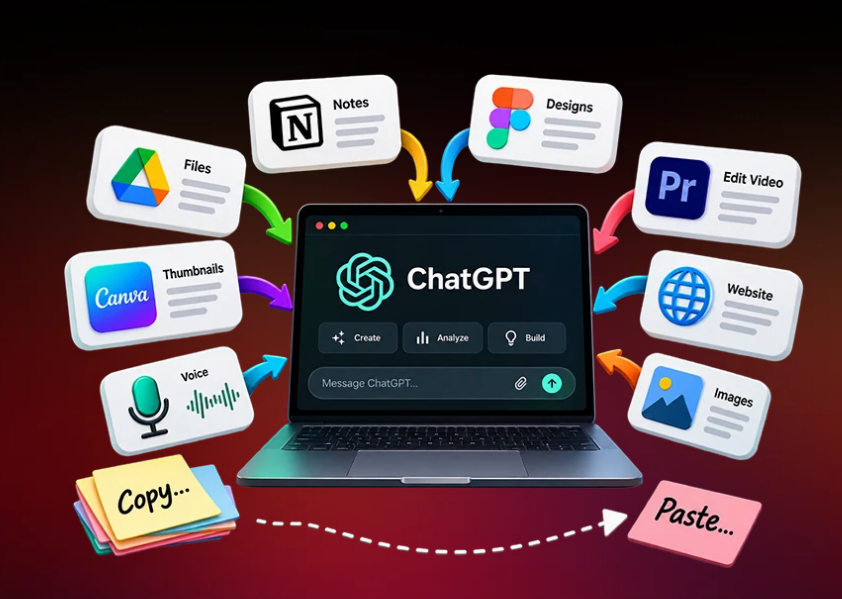
SuperPlug AI is an all-in-one cloud platform engineered to automate, streamline, and scale marketing content production across multiple media types. Instead of bouncing between disparate platforms with different subscription models, SuperPlug AI connects core marketing workflows—copywriting, visual graphics creation, voiceover synthesis, and campaign structuring under one unified roof.

The core philosophy behind SuperPlug AI is simple: frictionless creation. It is built for business owners, agency teams, and independent digital marketers who want high-quality marketing assets without hiring expensive freelancers or spending hours configuring complex prompt setups.

How SuperPlug AI Works

Getting campaign assets ready with SuperPlug AI follows a simple three-step workflow:

Module Selection: Choose the specific output you need—a full sales page, high-converting social graphics, short-form video scripts, or automated voiceovers.

Context & Input: Enter your niche, product details, target audience preferences, and desired tone of voice.

Instant Output & Export: The platform generates publish-ready assets that can be formatted, edited, and deployed immediately.

The copywriting module is pre-loaded with proven direct-response frameworks, including AIDA (Attention, Interest, Desire, Action), PAS (Problem, Agitate, Solution), and BAB (Before, After, Bridge).Creates crisp visual assets designed for high engagement without requiring complex software skills like Photoshop or Illustrator.

  • All-in-One Efficiency: Eliminates the need to context-switch between separate writing, graphics, and audio apps.
  • Low Initial Investment: One-time cost structure saves money compared to recurring monthly subscriptions.
  • Beginner-Friendly UI: Designed cleanly so non-technical users can produce content fast.
  • Commercial Capabilities: Agency upgrade opens up service delivery opportunities for clients.

Turn written text into natural human-like voiceovers in seconds.The campaign builder connects your generated copy, visuals, and voice assets into cohesive marketing funnels.

Source: SuperPlug AI

.

SuperPlug ,AIBusinessBuilder ,BusinessGrowth ,Entrepreneurship ,ArtificialIntelligence ,StartupSuccess ,InnovativeSolutions ,DigitalTransformation ,BusinessStrategy ,TechSavvy ,AIInnovation ,BuildYourBusiness ,FutureOfWork ,Automation ,SmartBusiness ,BusinessIdeas ,AIForEntrepreneurs ,TextToAi ,BusinessDevelopment ,AITechnologies

Sunday, October 25, 2026

A Mathematician Reads The AI Future

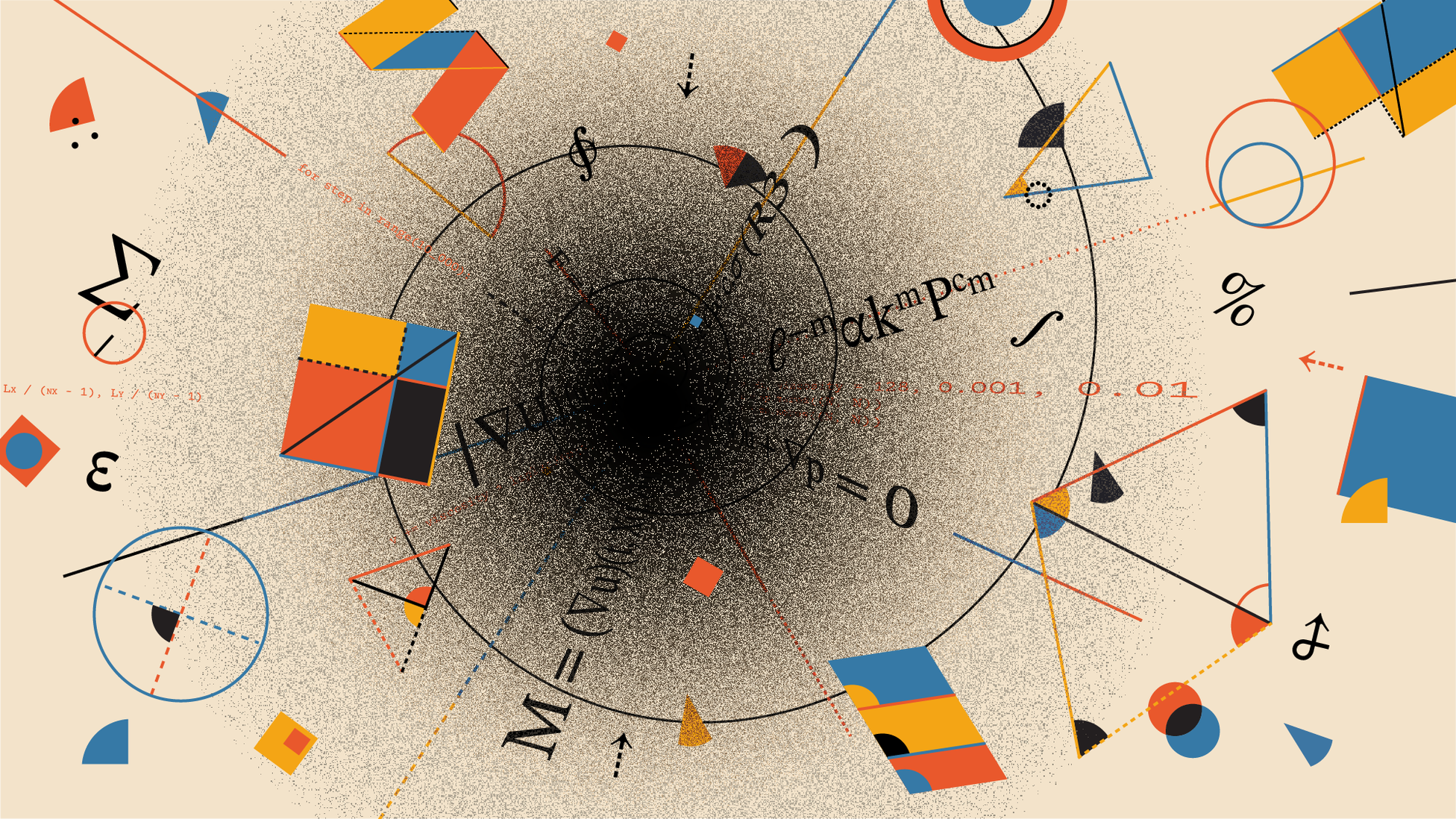
Illustration by Tina Zhou / The Atlantic

The leaves are ablaze here in Ithaca, fiery reds and oranges, and I saw them swirling around in my backyard yesterday, following the streamlines of an eddy described by the Navier-Stokes equations. You’ve heard of Navier-Stokes, right? By now you must have in early September, OpenAI claimed to have solved the Navier-Stokes Millennium Prize problem. An internal AI model unleashed about 10,000 agents that ran for 88 hours straight and gnawed on the old problem until it yielded………Continue reading….

By Steven Strogatz

Source:  The Atlantic

.

Critics:

By cultivating an interest in the natural and social sciences in preschool or immediately following school entry, the chances of STEM success in high school can be greatly improved. STEM supports broadening the study of engineering within each of the other subjects and beginning engineering at younger grades, even elementary school. It also brings STEM education to all students rather than only the gifted programs.

In his 2012 budget, Barack Obama renamed and broadened the “Mathematics and Science Partnership (MSP)” to award block grants to states for improving teacher education in those subjects. In the 2015 run of the international assessment test the Program for International Student Assessment (PISA), American students came out 35th in mathematics, 24th in reading, and 25th in science, out of 109 countries.

The United States also ranked 29th in the percentage of 24-year-olds with science or mathematics degrees. STEM education often uses new technologies such as 3D printers to encourage interest in STEM fields. STEM education can also leverage the combination of new technologies, such as photovoltaics and environmental sensors, with old technologies such as composting systems and irrigation within land lab environments. The focus on increasing participation in STEM fields has attracted criticism.

In the 2014 article “The Myth of the Science and Engineering Shortage” in The Atlantic, demographer Michael S. Teitelbaum criticized the efforts of the U.S. government to increase the number of STEM graduates, saying that, among studies on the subject. No one has been able to find any evidence indicating current widespread labor market shortages or hiring difficulties in science and engineering occupations that require bachelor’s degrees or higher” .

Most studies report that real wages in many—but not all—science and engineering occupations have been flat or slow-growing, and unemployment as high or higher than in many comparably-skilled occupations.” Teitelbaum also wrote that the then-current national fixation on increasing STEM participation paralleled previous U.S. government efforts since World War II to increase the number of scientists and engineers.

All of which he stated ultimately ended up in “mass layoffs, hiring freezes, and funding cuts”; including one driven by the Space Race of the late 1950s and 1960s, which he wrote led to “a bust of serious magnitude in the 1970s.” According to the U.S. Bureau of Labor Statistics, various STEM occupational outlooks have shown slowing growth or declines for several years.

 IEEE Spectrum contributing editor Robert N. Charette echoed these sentiments in the 2013 article “The STEM Crisis Is a Myth”, also noting that there was a “mismatch between earning a STEM degree and having a STEM job” in the United States, with only around 1⁄4 of STEM graduates working in STEM fields, while less than half of workers in STEM fields have a STEM degree.

Economics writer Ben Casselman, in a 2014 study of post-graduation earnings in the United States for FiveThirtyEight, wrote that, based on the data, science should not be grouped with the other three STEM categories, because, while the other three generally result in high-paying jobs, “many sciences, particularly the life sciences, pay below the overall median for recent college graduates.”

A 2017 article from the University of Leicester concluded, that “maintaining accounts of a ‘crisis’ in the supply of STEM workers has usually been in the interests of industry, the education sector and government, as well as the lobby groups that represent them. Concerns about a shortage have meant the allocation of significant additional resources to the sector whose representatives have, in turn, become powerful voices in advocating for further funds and further investment.”

A 2022 report from Rutgers University stated: “In the United States, the STEM crisis theme is a perennial policy favorite, appearing every few years as an urgent concern in the nation’s competition with whatever other nation is ascendant, or as the cause of whatever problem is ailing the domestic economy. And the solution is always the same: increase the supply of STEM workers through expanding STEM education.

Time and again, serious and empirically grounded studies find little evidence of any systemic failures or an inability of market responses to address whatever supply is required to meet workforce needs.” A study of the UK job market, published in 2022, found similar problems, which have been reported for the USA earlier: “It is not clear that having a degree in the sciences, rather than in other subjects, provides any sort of advantage in terms of short- or long-term employability…

While only a minority of STEM graduates ever work in highly-skilled STEM jobs, we identified three particular characteristics of the STEM labour market that may present challenges for employers: STEM employment appears to be predicated on early entry to the sector; a large proportion of STEM graduates are likely to never work in the sector; and there may be more movement out of HS STEM positions by older workers than in other sectors.

Excellence in Education: Michigan Lottery recognizes Freeland stem teacher  18:09 Wed, 17 Dec 

Beyond the Mechanistic: Restoring the ‘Human’ in STEM Education  02:19 Thu, 11 Dec

ai, mathematics ,artificialintelligence ,mathskills ,learnmath ,aisolutions ,mathlover ,maths ,datascience ,technologylearning ,aiinnovation ,ml ,statisticalanalysis ,numericalmethods ,educationtechnology #studentsuccess ,stemeducation ,techforgood ,problem-solving

Monday, September 28, 2026

Agentic AI Creates Human-Like AI Agents That Think, Speak and Act Like YOU Selling, Supporting and Scaling

f

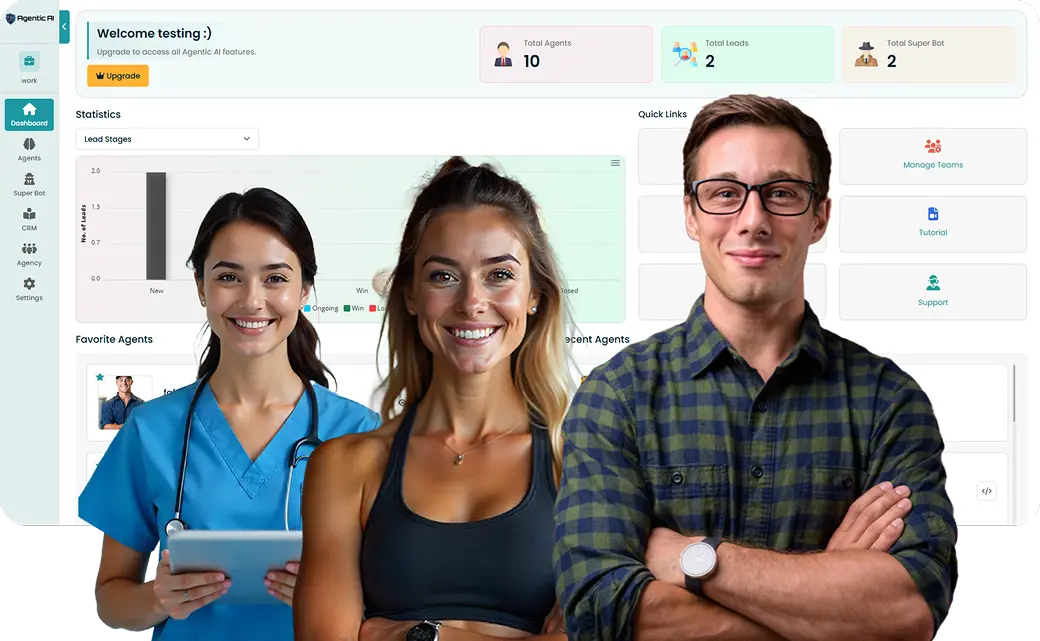
Agentic AI is a no-code platform for building smart agents that feel human. These agents do more than spit out answers. They chat with context, qualify leads, book calls, and handle support.  You can place them on your site, inside a member area, as a voice assistant, or inside your CRM. Training is simple.

Point the agent to your PDFs, FAQs, help docs, and pages. Set the rules for tone and handoff. Hit publish. What I like most is the ready-made library. With 1,000+ templates, you don’t start from a blank screen. There are setups for support, sales, onboarding, follow-ups, and more. If you run an agency, you can white-label the platform and sell agents to clients under your own brand. That turns a tool into a service you can charge for.

Agentic AI hits the pain we all feel: missed leads, slow replies, and too many simple tickets. It gives you human-like agents, a no-code builder, multilingual voice, and a built-in CRM. In my tests, the chat felt natural, kept context, and pushed users to the next step. The CRM link kept the trail clean for follow-ups. Live chat handoff let me jump in without breaking the flow.

There are trade-offs. You must feed it clean docs or it will echo bad info. Voice needs a short tuning phase. If you already run a heavy CRM, you may keep that and use Agentic AI mainly for chat and voice. And as with any fresh launch, take “bonus” pages with a grain of salt. Focus on what you’ll use every day.

  1. Build & Customize: Start with 1,000+ done-for-you AI agent templates—or create from scratch using Agentic AI’s no-code builder. Personalize design, voice, and persona to perfectly match your brand.
  2. Train & Enhance: Upload your own data—PDFs, URLs, or FAQs—and instantly teach your agent. Fine-tune its knowledge, tone, and style so it responds naturally and delivers real solutions.
  3. Publish & Profit: Launch your AI Agent anywhere—your website, Membership, Course, audio conversation, or even as a standalone assistant. Capture leads, support customers, and close sales across every platform.

The agent uses plain language, keeps track of the chat, and points people to next steps. It can push a cart add, book a call, or send a link with a clear call to action. That means fewer dead ends and more results. Your visitors get help that feels like a person who knows your brand. Pick a template, edit prompts and tone, attach your docs, and publish.

You don’t need a dev or a week of trial and error. Teams without tech skills can ship same day. Use the same agent across chat and phone. Place it on your site, inside a course area, or in a CRM flow. You keep one source of truth while meeting people where they are. Every chat can log to the CRM. Leads get scored and tagged. You see the trail from question to sale. No copy-paste between systems. No lost notes.

Support 50+ languages and 1,500+ voices. Clone your voice for brand trust, or pick a voice that fits a client niche. This matters if you sell in more than one country or serve mixed audiences. You can link agents into a single super agent that manages key jobs under one system. You avoid a tangle of mini bots. Feed it your PDFs, help docs, pricing, and policy.

The agent learns your offers and voice. It stops guessing and starts answering with facts that match your brand. Brand the platform as your own and sell set-ups for dentists, gyms, salons, realtors, and more. Bundle with web design or SEO. Keep the profit. Watch conversion paths, common blocks, and top intents. Fix weak points. Double down on what works.

Across public posts and demos, users keep pointing to quick setup and strong first results on support tasks. Many like how the agent handles longer chats without losing the thread. Small teams praise the built-in CRM because it removes a tool from the stack. Agency owners talk about faster delivery to clients and easy branding…..

Source: Agentic AI

.

AIAgentCreator ,ArtificialIntelligence ,AIAgents ,AIInnovation ,TechTrends ,AICreator ,DigitalAgents ,GPT3 ,MachineLearning ,FutureOfAI ,SmartTechnology ,Automation ,CreativeAI ,AIInAction ,NextGenAI ,AIContentCreation ,TechDevelopment ,AIApplications ,AIRevolution ,DigitalTransformation

Leave a Reply

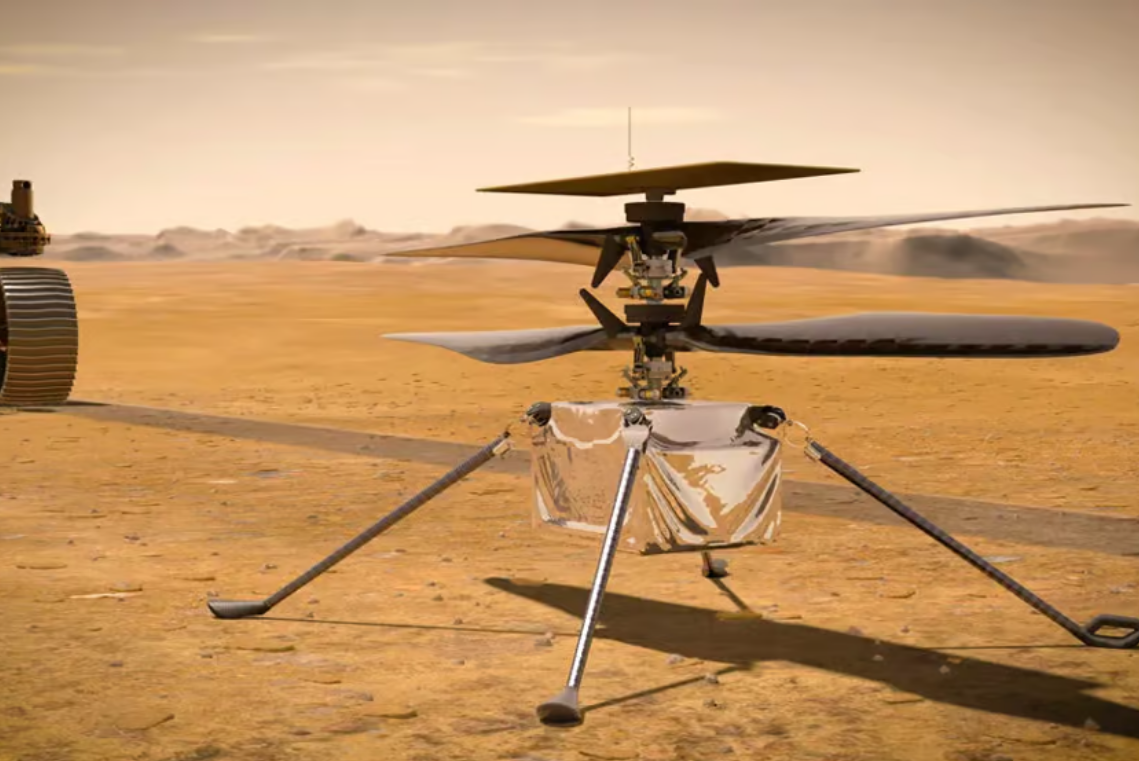
Better Rotors, Higher Heights Thanks To NASA’s Dual Planet Presence

NASA/JPL-Caltech There aren’t any organizations other than NASA that can claim they are operating on two different planets (at least none we...