Showing posts with label TechSavvy. Show all posts

Wednesday, November 18, 2026

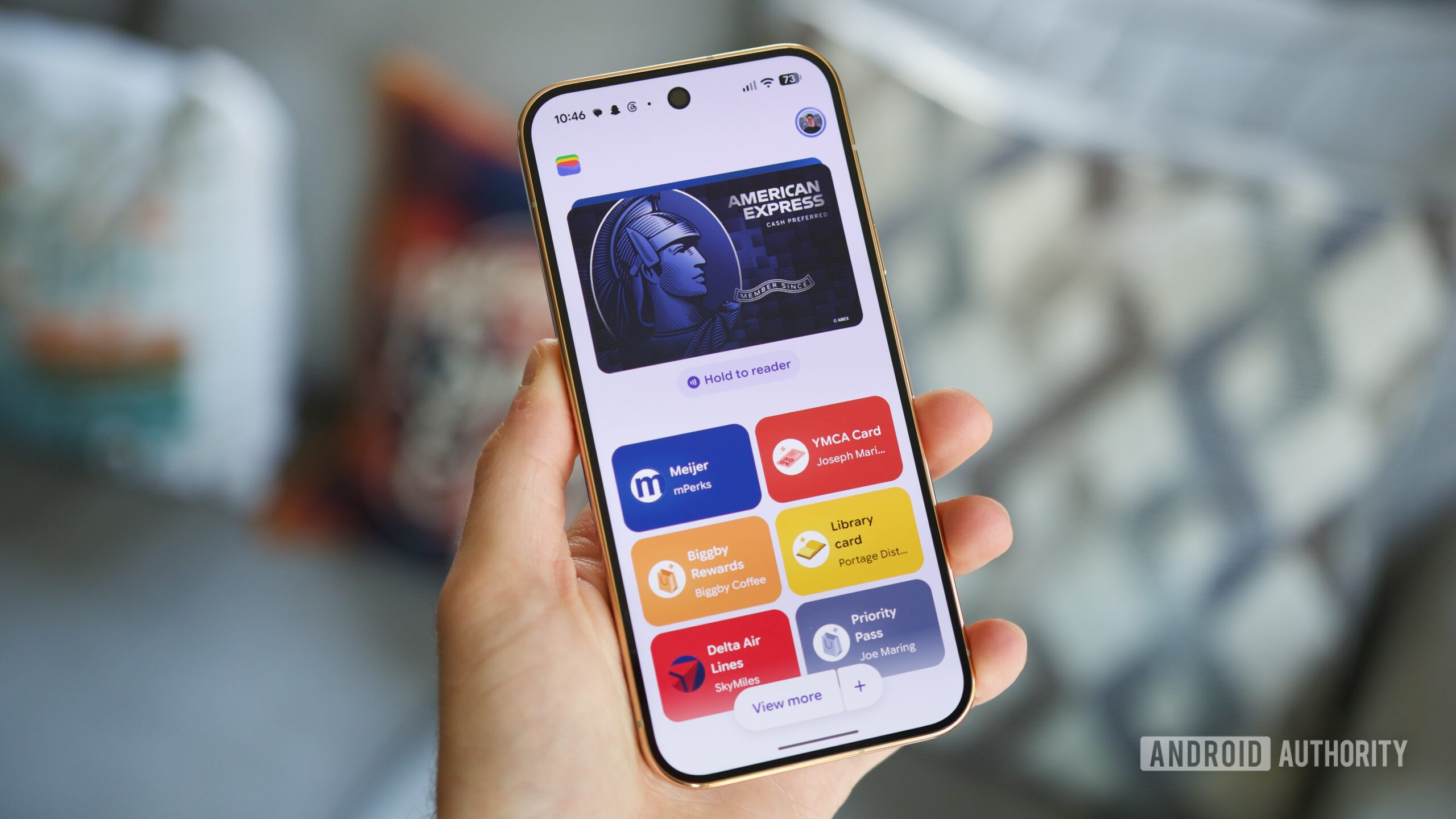
Google Wallet Is Preparing Digital Social Security Cards That Show Your Benefits

Google Wallet card redesign as of November 2026.

Joe Maring

Google Wallet has slowly become a place for more than just your credit cards. Its journey as a digital vault has taken in state-issued digital IDs and passport-based ID passes, and we’ve since spotted Google working on online age verification too. The next government document headed to Google Wallet could be the one most of us keep tucked away in a drawer: the Social Security card. We found new strings in Google Play Services v26.46.30 that reference a “Social Security Number” credential for Google Wallet……..Continue reading…

By: Aamir Siddiqui

Source: Android Authority

.

Critics:

Google generates most of its revenues from advertising. This includes sales of apps, purchases made in-app, digital content products on Google and YouTube, Android and licensing and service fees, including fees received for Google Cloud offerings. Forty-six percent of this profit was from clicks (cost per clicks), amounting to US$109,652 million in 2017.

This includes three principal methods, namely AdMob, AdSense (such as AdSense for Content, AdSense for Search, etc.) and DoubleClick AdExchange. In addition to its own algorithms for understanding search requests, Google uses technology from its acquisition of DoubleClick, to project user interest and target advertising to the search context and the user history. In 2007, Google launched “AdSense for Mobile”, taking advantage of the emerging mobile advertising market.

Google Analytics allows website owners to track where and how people use their website, for example by examining click rates for all the links on a page. Google advertisements can be placed on third-party websites in a two-part program. Google Ads allows advertisers to display their advertisements in the Google content network, through a cost-per-click scheme.

The sister service, Google AdSense, allows website owners to display these advertisements on their website and earn money every time ads are clicked. One of the criticisms of this program is the possibility of click fraud, which occurs when a person or automated script clicks on advertisements without being interested in the product, causing the advertiser to pay money to Google unduly. Industry reports in 2006 claimed that approximately 14 to 20 percent of clicks were fraudulent or invalid.

 Google Search Console (rebranded from Google Webmaster Tools in May 2015) allows webmasters to check the sitemap, crawl rate, and for security issues of their websites, as well as optimize their website’s visibility. Google had previously used virtual assistants and chatbots, such as Google Bard, prior to the announcement of Gemini in March 2024. None of them, however, had been seen as legitimate competitors to ChatGPT, unlike Gemini. An artificial intelligence training program for Google employees was also introduced in April 2024.

Google has also created the text-to-image model Imagen, and the text-to-video model Veo. In 2023, Google released NotebookLM, an online tool for synthesizing documents using Gemini. In September 2024, it gained attention for its “Audio Overview” feature, which generates podcast-like summaries of documents. Google offers Gmail for email, Google Calendar for time-management and scheduling.

Google Maps and Google Earth for mapping, navigation and satellite imagery Google Drive for cloud storage of files, Google Docs, Sheets and Slides for productivity, Google Photos for photo storage and sharing, Google Keep for note-taking, Google Translate for language translation, YouTube for video viewing and sharing, Google My Business for managing public business information,and Duo for social interaction.

A job search product has also existed since before 2017, Google for Jobs is an enhanced search feature that aggregates listings from job boards and career sites. Google Earth, launched in 2005, allows users to see high-definition satellite pictures from all over the world for free through a client software downloaded to their computers. Google develops the Android mobile operating system, as well as its smartwatch, television, car, and Internet of things-enabled smart devices variations. It also develops the Google Chrome web browser, and ChromeOS, an operating system based on Chrome.

In January 2010, Google released Nexus One, the first Android phone under its own brand. It spawned a number of phones and tablets under the “Nexus” branding until its eventual discontinuation in 2016, replaced by a new brand called Pixel. In 2011, the Chromebook was introduced, which runs on ChromeOS. In July 2013, Google introduced the Chromecast dongle, which allows users to stream content from their smartphones to televisions.

In June 2014, Google announced Google Cardboard, a simple cardboard viewer that lets the user place their smartphone in a special front compartment to view virtual reality (VR) media. In October 2016, Google announced Daydream View, a lightweight VR viewer which lets the user place their smartphone in the front hinge to view VR media.

Other hardware products include:

  • Nest, a series of voice assistant smart speakers that can answer voice queries, play music, find information from apps (calendar, weather etc.), and control third-party smart home appliances (users can tell it to turn on the lights, for example). The Google Nest line includes the original Google Home (later succeeded by the Nest Audio), the Google Home Mini (later succeeded by the Nest Mini), the Google Home Max, the Google Home Hub (later rebranded as the Nest Hub), and the Nest Hub Max.
  • Nest Wifi (originally Google Wifi), a connected set of Wi-Fi routers to simplify and extend coverage of home Wi-Fi.

Google Workspace (formerly G Suite until October 2020) is a monthly subscription offering for organizations and businesses to get access to a collection of Google’s services, including Gmail, Google Drive and Google Docs, Google Sheets and Google Slides, with additional administrative tools, unique domain names, and 24/7 support.

On September 24, 2012, Google launched Google for Entrepreneurs, a largely not-for-profit business incubator providing startups with co-working spaces known as Campuses, with assistance to startup founders that may include workshops, conferences, and mentorships. Presently, there are seven Campus locations: Berlin, London, Madrid, Seoul, São Paulo, Tel Aviv, and Warsaw.

On March 15, 2016, Google announced the introduction of Google Analytics 360 Suite, “a set of integrated data and marketing analytics products, designed specifically for the needs of enterprise-class marketers” which can be integrated with BigQuery on the Google Cloud Platform. Among other things, the suite is designed to help “enterprise class marketers” “see the complete customer journey”, generate “useful insights”, and “deliver engaging experiences to the right people”.

Jack Marshall of The Wall Street Journal wrote that the suite competes with existing marketing cloud offerings by companies including Adobe, Oracle, Salesforce, and IBM. In February 2010, Google announced the Google Fiber project, with experimental plans to build an ultra-high-speed broadband network for 50,000 to 500,000 customers in one or more American cities. Following Google’s corporate restructure to make Alphabet Inc. its parent company, Google Fiber was moved to Alphabet’s Access division.

In April 2015, Google announced Project Fi, a mobile virtual network operator, that combines Wi-Fi and cellular networks from different telecommunication providers in an effort to enable seamless connectivity and fast Internet signal. In August 2023, Google became the first major tech company to join the OpenWallet Foundation, launched earlier in the year, whose goal was creating open-source software for interoperable digital wallets.

Google’s initial public offering (IPO) took place on August 19, 2004. At IPO, the company offered 19,605,052 shares at a price of $85 per share. The sale of $1.67 billion gave Google a market capitalization of more than $23 billion. The stock performed well after the IPO, with shares hitting $350 for the first time on October 31, 2007, primarily because of strong sales and earnings in the online advertising market. The surge in stock price was fueled mainly by individual investors, as opposed to large institutional investors and mutual funds.

GOOG shares split into GOOG class C shares and GOOGL class A shares. The company is listed on the NASDAQ stock exchange under the ticker symbols GOOGL and GOOG, and on the Frankfurt Stock Exchange under the ticker symbol GGQ1. These ticker symbols now refer to Alphabet Inc., Google’s holding company, since the fourth quarter of 2015. In the third quarter of 2005, Google reported a 700% increase in profit, largely due to large companies shifting their advertising strategies from newspapers, magazines, and television to the Internet.

For the 2006 fiscal year, the company reported $10.492 billion in total advertising revenues and only $112 million in licensing and other revenues. In 2011, 96% of Google’s revenue was derived from its advertising programs. Google generated $50 billion in annual revenue for the first time in 2012, generating $38 billion the previous year. In January 2013, then-CEO Larry Page commented, “We ended 2012 with a strong quarter … Revenues were up 36% year-on-year, and 8% quarter-on-quarter.

And we hit $50 billion in revenues for the first time last year – not a bad achievement in just a decade and a half.” Google’s consolidated revenue for the third quarter of 2013 was reported in mid-October 2013 as $14.89 billion, a 12 percent increase compared to the previous quarter.Google’s Internet business was responsible for $10.8 billion of this total, with an increase in the number of users’ clicks on advertisements.By January 2014, Google’s market capitalization had grown to $397 billion.

Daily News Wrap: Google Announces Loads of AI Features, Realme Buds Air 6 Launch Confirmed and More MySmartPrice 17:45 

AI News: Google Launches Gemini 1.5 Flash, Updates API and Gemma Line CoinGape 00:13 

.

DigitalSocialSecurityCards ,SocialSecurity ,DigitalID ,SecureDocuments ,IdentityProtection ,TechSavvy ,IncreasedSecurity ,OnlineSafety ,SocialSecurityNumber ,DigitalSolutions ,SSN ,InnovativeTech ,Modernization ,PersonalSafety ,SecureYourIdentity ,ElderlyCare ,FraudPrevention ,SmartSecurity ,FinancialHealth, GoogleWallet

Monday, November 9, 2026

SuperPlug AI Turns Your Conversation Into Real Creative Productive Page

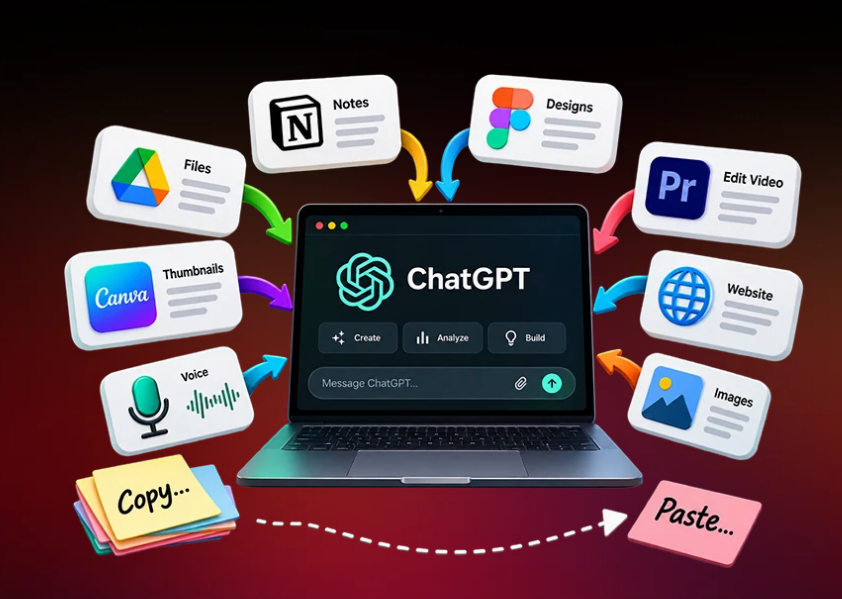
SuperPlug AI is an all-in-one cloud platform engineered to automate, streamline, and scale marketing content production across multiple media types. Instead of bouncing between disparate platforms with different subscription models, SuperPlug AI connects core marketing workflows—copywriting, visual graphics creation, voiceover synthesis, and campaign structuring under one unified roof.

The core philosophy behind SuperPlug AI is simple: frictionless creation. It is built for business owners, agency teams, and independent digital marketers who want high-quality marketing assets without hiring expensive freelancers or spending hours configuring complex prompt setups.

How SuperPlug AI Works

Getting campaign assets ready with SuperPlug AI follows a simple three-step workflow:

Module Selection: Choose the specific output you need—a full sales page, high-converting social graphics, short-form video scripts, or automated voiceovers.

Context & Input: Enter your niche, product details, target audience preferences, and desired tone of voice.

Instant Output & Export: The platform generates publish-ready assets that can be formatted, edited, and deployed immediately.

The copywriting module is pre-loaded with proven direct-response frameworks, including AIDA (Attention, Interest, Desire, Action), PAS (Problem, Agitate, Solution), and BAB (Before, After, Bridge).Creates crisp visual assets designed for high engagement without requiring complex software skills like Photoshop or Illustrator.

  • All-in-One Efficiency: Eliminates the need to context-switch between separate writing, graphics, and audio apps.
  • Low Initial Investment: One-time cost structure saves money compared to recurring monthly subscriptions.
  • Beginner-Friendly UI: Designed cleanly so non-technical users can produce content fast.
  • Commercial Capabilities: Agency upgrade opens up service delivery opportunities for clients.

Turn written text into natural human-like voiceovers in seconds.The campaign builder connects your generated copy, visuals, and voice assets into cohesive marketing funnels.

Source: SuperPlug AI

.

SuperPlug ,AIBusinessBuilder ,BusinessGrowth ,Entrepreneurship ,ArtificialIntelligence ,StartupSuccess ,InnovativeSolutions ,DigitalTransformation ,BusinessStrategy ,TechSavvy ,AIInnovation ,BuildYourBusiness ,FutureOfWork ,Automation ,SmartBusiness ,BusinessIdeas ,AIForEntrepreneurs ,TextToAi ,BusinessDevelopment ,AITechnologies

Monday, November 2, 2026

5 Essential Microsoft Copilot AI Tools To Boost Your Work Efficiency

Illustration of AI-powered Copilot agents designed to enhance workplace productivity

What if you could reclaim hours of your workday without sacrificing quality or precision? Imagine having a team of virtual assistants who anticipate your needs, tackle tedious tasks, and deliver insights faster than you can ask for them. This isn’t some far-off vision of the future, it’s the reality of AI-powered Copilot agents. These tools are transforming the way professionals work, offering a level of efficiency that feels almost superhuman. This isn’t some far-off vision of the future, it’s the reality of AI-powered Copilot agents. These tools are transforming the way professionals work, offering a level of efficiency that feels almost superhuman…..….Continue reading…..

By

Source: Geeky Gadgets

.

Critics:

On March 16, 2023, Microsoft announced Microsoft 365 Copilot, designed for Microsoft 365 applications and services. Its primary marketing focus is as an added feature to Microsoft 365, with an emphasis on the enhancement of business productivity. With the use of Copilot, Microsoft emphasizes the promotion of the user’s creativity and productivity by having the chatbot perform more tedious work, like collecting information.

Microsoft has also demonstrated Copilot’s accessibility on the mobile version of Outlook to generate or summarize emails with a mobile device. At its Build 2023 conference, Microsoft announced its plans to integrate a variant of Copilot, initially called Windows Copilot, into Windows 11, allowing users to access it directly through the taskbar. Alongside the voice access feature for Windows 11, Microsoft presented Bing Chat, Microsoft 365 Copilot, and Windows Copilot as primary alternatives to Cortana when announcing the shutdown of its standalone app on June 2, 2023.

As of its announcement date, Microsoft 365 Copilot had been tested by 20 initial users. By May 2023, Microsoft had broadened its reach to 600 customers who were willing to pay for early access, and concurrently, new Copilot features were introduced to the Microsoft 365 apps and services. As of July 2023, the tool’s pricing was set at US$30 per user, per month for Microsoft 365 E3, E5, Business Standard, and Business Premium customers. On September 21, 2023, Microsoft began rebranding all variants of its Copilot to Microsoft Copilot.

A new Microsoft Copilot logo was also introduced, moving away from the use of color variations of the standard Microsoft 365 logo. Additionally, the company revealed that it would make Copilot generally available for Microsoft 365 Enterprise customers purchasing more than 300 licenses starting November 1, 2023. However, no timeline has been provided as for when Copilot for Microsoft 365 will become generally available to non-enterprise customers.

Windows Copilot, which had been available in the Windows Insider Program, would be renamed to Microsoft Copilot in October when it became broadly available for customers. The same month also saw Microsoft Edge’s Bing Chat function be renamed to Microsoft Copilot with Bing Chat. On November 15, 2023, Microsoft announced that Bing Chat itself was being rebranded as Microsoft Copilot. On Patch Tuesday in December 2023, Copilot was added without payment to many Windows 11 installations, with more installations, and limited support for Windows 10, to be added later.

Later that month, a standalone Microsoft Copilot app was quietly released for Android, and one was released for iOS soon after. On January 4, 2024, a dedicated Copilot key was announced for Windows keyboards, superseding the menu key. On January 15, a subscription service, Microsoft Copilot Pro, was announced, providing priority access to newer features for US$20 per month. It is analogous to ChatGPT Plus. Bing Image Creator was also rebranded as Image Creator from Designer.

On May 20, 2024, Microsoft announced integration of GPT-4o into Copilot, as well as an upgraded user interface in Windows 11. Microsoft also revealed a Copilot feature called Recall, which takes a screenshot of a user’s desktop every few seconds and then uses on-device artificial intelligence models to allow a user to retrieve items and information that had previously been on their screen. This caused controversy, with experts warning that the feature could be a “disaster” for security and privacy, prompting Microsoft to postpone its rollout.

In September 2024, Microsoft announced several updates to Copilot for both enterprise and personal customers as a part of its Microsoft 365 Copilot: Wave 2 event. These features included further integration with Microsoft 365 applications and improving performance by moving to the GPT-4o model. On October 1, 2024, Microsoft announced a major overhaul of Copilot for personal accounts, which included UI changes, fully separating it from Bing, the addition of features such as Copilot Voice, Copilot Vision, and Think Deeper (a reasoning model), and the launch of Copilot Labs, an early access program exclusive to Microsoft Copilot Pro.

It has “warm tone and a distinct style” and provides “encouragement, feedback and advice”. It has 4 voice options. Copilot Daily reads in voice the morning news, weather, and schedule. Conversation history could be used for personalization. The Lab contained Copilot Vision and Think Deeper at the time of announcement. In February 2025, Microsoft announced that Copilot Voice and Copilot Think Deeper, which uses OpenAI’s o1 model, would be free for all Copilot users with unlimited access. Previously, free users had only limited access.

On February 27, 2025, Microsoft launched a native Copilot app for macOS. On April 4, 2025, Microsoft introduced optional Memory for personalization (user preferences, facts, routines), Actions for performing specific tasks (tickets, reservations, gifts) online with specific partnering websites (Expedia, OpenTable, etc.), Pages as a canvas feature, Shopping assistant, Deep Research mode, and Copilot Search in Bing that combines search with generative AI responses.

On March 16, 2023, Microsoft announced Microsoft 365 Copilot, designed for Microsoft 365 applications and services. Its primary marketing focus is as an added feature to Microsoft 365, with an emphasis on the enhancement of business productivity. With the use of Copilot, Microsoft emphasizes the promotion of the user’s creativity and productivity by having the chatbot perform more tedious work, like collecting information. Microsoft has also demonstrated Copilot’s accessibility on the mobile version of Outlook to generate or summarize emails with a mobile device.

At its Build 2023 conference, Microsoft announced its plans to integrate a variant of Copilot, initially called Windows Copilot, into Windows 11, allowing users to access it directly through the taskbar. Alongside the voice access feature for Windows 11, Microsoft presented Bing Chat, Microsoft 365 Copilot, and Windows Copilot as primary alternatives to Cortana when announcing the shutdown of its standalone app on June 2, 2023.

As of its announcement date, Microsoft 365 Copilot had been tested by 20 initial users. By May 2023, Microsoft had broadened its reach to 600 customers who were willing to pay for early access, and concurrently, new Copilot features were introduced to the Microsoft 365 apps and services. As of July 2023, the tool’s pricing was set at US$30 per user, per month for Microsoft 365 E3, E5, Business Standard, and Business Premium customers.

On September 21, 2023, Microsoft began rebranding all variants of its Copilot to Microsoft Copilot. A new Microsoft Copilot logo was also introduced, moving away from the use of color variations of the standard Microsoft 365 logo. Additionally, the company revealed that it would make Copilot generally available for Microsoft 365 Enterprise customers purchasing more than 300 licenses starting November 1, 2023. However, no timeline has been provided as for when Copilot for Microsoft 365 will become generally available to non-enterprise customers.

Windows Copilot, which had been available in the Windows Insider Program, would be renamed to Microsoft Copilot in October when it became broadly available for customers. The same month also saw Microsoft Edge’s Bing Chat function be renamed to Microsoft Copilot with Bing Chat. On November 15, 2023, Microsoft announced that Bing Chat itself was being rebranded as Microsoft Copilot.

On Patch Tuesday in December 2023, Copilot was added without payment to many Windows 11 installations, with more installations, and limited support for Windows 10, to be added later. Later that month, a standalone Microsoft Copilot app was quietly released for Android, and one was released for iOS soon after. On January 4, 2024, a dedicated Copilot key was announced for Windows keyboards, superseding the menu key.

On January 15, a subscription service, Microsoft Copilot Pro, was announced, providing priority access to newer features for US$20 per month. It is analogous to ChatGPT Plus. Bing Image Creator was also rebranded as Image Creator from Designer. On May 20, 2024, Microsoft announced integration of GPT-4o into Copilot, as well as an upgraded user interface in Windows 11.

Microsoft also revealed a Copilot feature called Recall, which takes a screenshot of a user’s desktop every few seconds and then uses on-device artificial intelligence models to allow a user to retrieve items and information that had previously been on their screen. This caused controversy, with experts warning that the feature could be a “disaster” for security and privacy, prompting Microsoft to postpone its rollout.

In September 2024, Microsoft announced several updates to Copilot for both enterprise and personal customers as a part of its Microsoft 365 Copilot: Wave 2 event. These features included further integration with Microsoft 365 applications and improving performance by moving to the GPT-4o model. On October 1, 2024, Microsoft announced a major overhaul of Copilot for personal accounts, which included UI changes, fully separating it from Bing, the addition of features such as Copilot Voice, Copilot Vision, and Think Deeper (a reasoning model), and the launch of Copilot Labs, an early access program exclusive to Microsoft Copilot Pro.

It has “warm tone and a distinct style” and provides “encouragement, feedback and advice”. It has 4 voice options. Copilot Daily reads in voice the morning news, weather, and schedule. Conversation history could be used for personalization. The Lab contained Copilot Vision and Think Deeper at the time of announcement. In February 2025, Microsoft announced that Copilot Voice and Copilot Think Deeper, which uses OpenAI’s o1 model, would be free for all Copilot users with unlimited access. Previously, free users had only limited access.

On February 27, 2025, Microsoft launched a native Copilot app for macOS. On April 4, 2025, Microsoft introduced optional Memory for personalization (user preferences, facts, routines), Actions for performing specific tasks (tickets, reservations, gifts) online with specific partnering websites (Expedia, OpenTable, etc.), Pages as a canvas feature, Shopping assistant, Deep Research mode, and Copilot Search in Bing that combines search with generative AI responses.

In January 2024, a premium service, Microsoft Copilot Pro, was launched, costing US$20 monthly. According to Microsoft, this version of Copilot would provide priority access to newer models, including GPT-4 Turbo, during peak usage periods. It would also give access to the Copilot GPT Builder, which lets users create custom Copilot chatbots, access to features inside Copilot Labs, an early-access program for in-development features, and allow for higher resolution in images generated by Microsoft Designer’s Image Creator.

Several default chatbots are available in Microsoft Copilot, including the standard Copilot chatbot as well as Microsoft Designer, which is oriented towards the use of its Image Creator to generate images based on text prompts. Others include “Travel Planner”, “Cooking Assistant”, and “Fitness Trainer”. Copilot supports plugins for Instacart, Kayak, Klarna, OpenTable, Shop from Shopify, and Suno AI. Copilot Voice allows users to engage with Copilot in real-time voice conversations.

The feature utilizes OpenAI’s GPT-4o model, which has the capability to understand and generate audio. In October 2024, an early-access program for features in-development, Copilot Labs, was revealed, exclusive to Microsoft Copilot Pro subscribers. Features available through this program include “Think Deeper”, which uses the OpenAI o1 models to let Copilot “reason” through more complex queries, and Copilot Vision, which lets Copilot view and converse about websites while browsing them. According to Microsoft, content used during Copilot Vision will not be stored or used to train models during the preview.

Copilot is able to communicate in numerous languages and dialects. PCMag journalists conducted a test to determine translation capabilities of Copilot, ChatGPT, and Gemini, comparing them to Google Translate. They “asked bilingual speakers of seven languages to do a blind test”. Languages tested were Polish, French, Korean, Spanish, Arabic, Tagalog, and Amharic. They concluded that Copilot performed better than Google Translate, but not as well as ChatGPT.

Japanese researchers compared Japanese-to-English translation abilities of Copilot, ChatGPT with GPT-4, and Gemini with those of DeepL, and found similar results, noting that “AI chatbots’ translations were much better than those of DeepL—presumably because of their ability to capture the context”. The markup language copilot uses for mathematical output is LaTeX.

HMRC boots up Microsoft Copilot AI rollout  02:14 Thu, 30 Oct 

.

Microsoft ,Copilot ,AITools ,ArtificialIntelligence ,Productivity ,Innovation ,TechTrends ,DigitalTransformation ,SmartTech ,MachineLearning ,Automation ,CloudComputing ,TechSavvy ,FutureOfWork ,AIInnovation ,BusinessSolutions ,TechUpdates ,EnterpriseAI ,CoPiloting

Eczema and Dermatitis: Overview And More

Michela Buttignol for Verywell Health; Getty Images People with eczema already have a compromised skin barrier, but extreme temperatures fur...