Source: Forbes
.
Critics:
Jacob Shelton investigated in detail the many ways that horror films manipulate audience members. Shelton notes that negative space can draw viewers’ eyes to anything in the frame for example, a wall or the empty blackness in the shadows.

Anna Powell explores how horror directors use cinematography to induce certain viewer reactions. Powell observes that lighting extremes, whether bright or dark, can prevent viewers from seeing every detail in a scene, which provokes unease. Bright lighting might also trick viewers into feeling safe.
Powell also points out how distorting space and time can confuse and disorient horror film viewers. To confound viewers’ senses, directors might use tilted camera angles and shots in slow-motion or reverse.
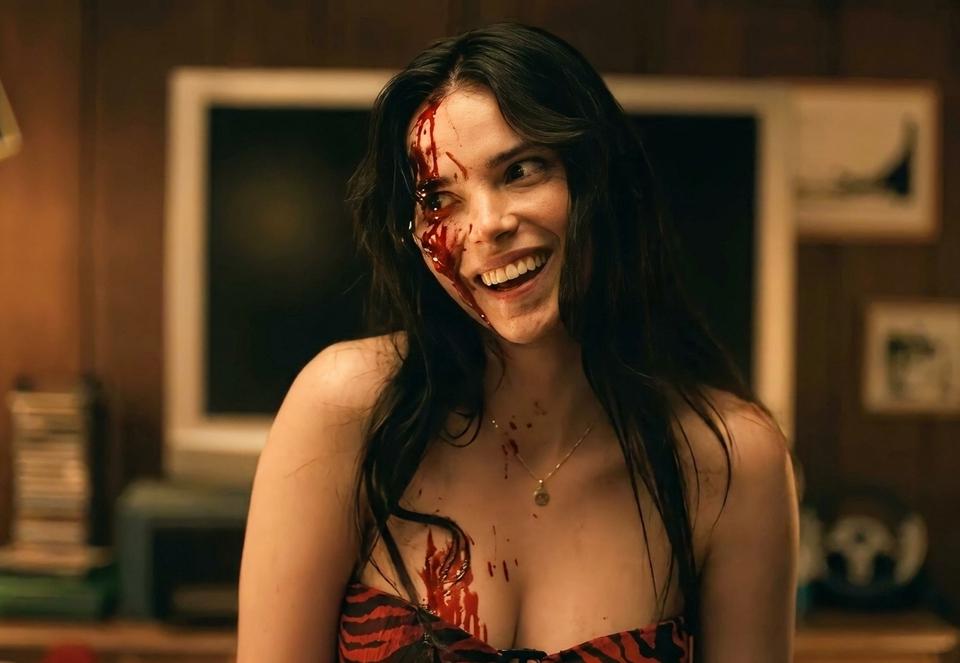
Powell notes that directors also use colour, through costuming, setting, and lens filters, to communicate mood and evoke certain connotations. Red, for example, might convey blood, passion, or disease. Contrasting colours bring viewers’ attention to certain places in the frame.
The jump scare is a horror film trope where an abrupt change in image accompanied by a loud sound aims to surprise the viewer. This trope can also be subverted to create tension, as audiences may feel increased unease and discomfort in anticipating jump scares.
Mirrors are often used in horror films to create visual depth and build tension. Shelton argues that mirrors have been used so often in horror films that audiences have been conditioned to fear them, and subverting audience expectations of a jump scare in a mirror can further build tension.[17] Tight framing and close-ups are also commonly used; these can build tension and induce anxiety by not allowing the viewer to see beyond what is near the protagonist.
The interaction between horror films and their audiences is another significant issue discussed by Rhodes. He notes that horror films often serve as a safe space for viewers to confront and process their fears. This cathartic experience can provide psychological relief and a sense of empowerment, as viewers face and overcome their anxieties in a controlled environment.
The communal experience of watching horror films in theaters or discussing them in fan communities also plays a crucial role in the genre’s impact and popularity.A genre that emerged in the 1970s, body horror films focus on the process of a bodily transformation. In these films, the body is either engulfed by some larger process or heading towards fragmentation and collapse.
The focus can be on apocalyptic implication of an entire society being overtaken, but the focus is generally upon an individual and their sense of identity, primarily them watching their own body change. The earliest appearance of the sub-genre was the work of director David Cronenberg, specifically with early films like Shivers (1975).

Mark Jancovich of the University of Manchester declared that the transformation scenes in the genre provoke fear and repulsion, but also pleasure and excitement such as in The Thing (1982) and The Fly (1986).