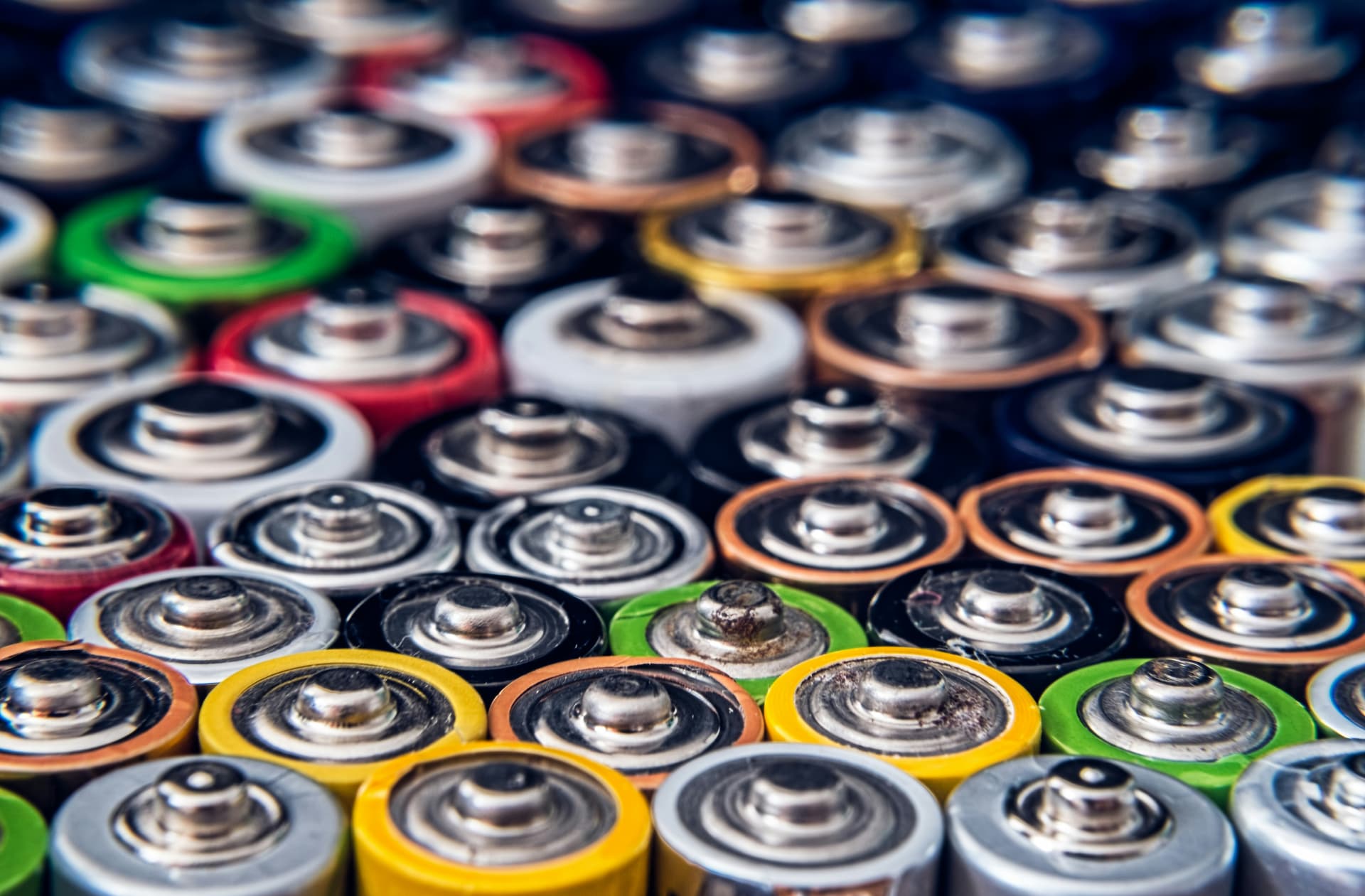
© Roberto Sorin – Unsplash
A new breakthrough in battery recycling has emerged from a team of researchers in China, who have developed an eco-friendly method to recover nearly all valuable materials from spent lithium-ion batteries. This innovative process uses glycine, an amino acid, to extract 99.99% of lithium and significant percentages of nickel, cobalt, and manganese from old batteries in just 15 minutes. Unlike traditional methods, this approach avoids harsh chemicals and minimizes environmental harm, generating effluents suitable for use as fertilizer………Continue reading…
By: Laio
Source: IO+Innovation Origins
.
Critics:
A rechargeable battery is only one of several types of rechargeable energy storage systems. Several alternatives to rechargeable batteries exist or are under development. For uses such as portable radios, rechargeable batteries may be replaced by clockwork mechanisms which are wound up by hand, driving dynamos, although this system may be used to charge a battery rather than to operate the radio directly.
Flashlights may be driven by a dynamo directly. For transportation, uninterruptible power supply systems and laboratories, flywheel energy storage systems store energy in a spinning rotor for conversion to electric power when needed; such systems may be used to provide large pulses of power that would otherwise be objectionable on a common electrical grid.

Ultracapacitors – capacitors of extremely high value – are also used; an electric screwdriver which charges in 90 seconds and will drive about half as many screws as a device using a rechargeable battery was introduced in 2007, and similar flashlights have been produced. In keeping with the concept of ultracapacitors, betavoltaic batteries may be utilized as a method of providing a trickle-charge to a secondary battery, greatly extending the life and energy capacity of the battery system being employed;
This type of arrangement is often referred to as a “hybrid betavoltaic power source” by those in the industry. Ultracapacitors are being developed for transportation, using a large capacitor to store energy instead of the rechargeable battery banks used in hybrid vehicles. One drawback of capacitors compared to batteries is that the terminal voltage drops rapidly; a capacitor that has 25% of its initial energy left in it will have one-half of its initial voltage.
By contrast, battery systems tend to have a terminal voltage that does not decline rapidly until nearly exhausted. This terminal voltage drop complicates the design of power electronics for use with ultracapacitors. However, there are potential benefits in cycle efficiency, lifetime, and weight compared with rechargeable systems. China started using ultracapacitors on two commercial bus routes in 2006; one of them is route 11 in Shanghai.
Flow batteries, used for specialized applications, are recharged by replacing the electrolyte liquid. A flow battery can be considered to be a type of rechargeable fuel cell. The lead–acid battery, invented in 1859 by French physicist Gaston Planté, is the oldest type of rechargeable battery. Despite having a very low energy-to-weight ratio and a low energy-to-volume ratio, its ability to supply high surge currents means that the cells have a relatively large power-to-weight ratio.
These features, along with the low cost, makes it attractive for use in motor vehicles to provide the high current required by automobile starter motors. The nickel–cadmium battery (NiCd) was invented by Waldemar Jungner of Sweden in 1899. It uses nickel oxide hydroxide and metallic cadmium as electrodes. Cadmium is a toxic element, and was banned for most uses by the European Union in 2004.
Nickel–cadmium batteries have been almost completely superseded by nickel–metal hydride (NiMH) batteries. The nickel–iron battery (NiFe) was also developed by Waldemar Jungner in 1899; and commercialized by Thomas Edison in 1901 in the United States for electric vehicles and railway signalling. It is composed of only non-toxic elements, unlike many kinds of batteries that contain toxic mercury, cadmium, or lead.
The nickel–metal hydride battery (NiMH) became available in 1989.[12] These are now a common consumer and industrial type. The battery has a hydrogen-absorbing alloy for the negative electrode instead of cadmium. The lithium-ion battery was introduced in the market in 1991, is the choice in most consumer electronics, having the best energy density and a very slow loss of charge when not in use. It does have drawbacks too, particularly the risk of unexpected ignition from the heat generated by the battery.
Such incidents are rare and according to experts, they can be minimized “via appropriate design, installation, procedures and layers of safeguards” so the risk is acceptable. Lithium-ion polymer batteries (LiPo) are light in weight, offer slightly higher energy density than Li-ion at slightly higher cost, and can be made in any shape. They are available but have not displaced Li-ion in the market. A primary use is for LiPo batteries is in powering remote-controlled cars, boats and airplanes.
LiPo packs are readily available on the consumer market, in various configurations, up to 44.4 V, for powering certain R/C vehicles and helicopters or drones. Some test reports warn of the risk of fire when the batteries are not used in accordance with the instructions. Independent reviews of the technology discuss the risk of fire and explosion from lithium-ion batteries under certain conditions because they use liquid electrolytes.
The active components in a secondary cell are the chemicals that make up the positive and negative active materials, and the electrolyte. The positive and negative electrodes are made up of different materials, with the positive exhibiting a reduction potential and the negative having an oxidation potential. The sum of the potentials from these half-reactions is the standard cell potential or voltage.
In primary cells the positive and negative electrodes are known as the cathode and anode, respectively. Although this convention is sometimes carried through to rechargeable systems—especially with lithium-ion cells, because of their origins in primary lithium cells—this practice can lead to confusion. In rechargeable cells the positive electrode is the cathode on discharge and the anode on charge, and vice versa for the negative electrode.
If batteries are used repeatedly even without mistreatment, they lose capacity as the number of charge cycles increases, until they are eventually considered to have reached the end of their useful life. Different battery systems have differing mechanisms for wearing out. For example, in lead-acid batteries, not all the active material is restored to the plates on each charge/discharge cycle; eventually enough material is lost that the battery capacity is reduced.
In lithium-ion types, especially on deep discharge, some reactive lithium metal can be formed on charging, which is no longer available to participate in the next discharge cycle. Sealed batteries may lose moisture from their liquid electrolyte, especially if overcharged or operated at high temperature. This reduces the cycling life.

BatteryRecycling ,RecycleBatteries ,SustainableEnergy ,EcoFriendly ,WasteManagement ,GoGreen ,SaveThePlanet ,CleanEnergy ,RecyclingAwareness ,GreenInitiatives ,SustainabilityMatters ,EnvironmentalProtection ,ClimateAction ,ReduceWaste ,CircularEconomy ,RenewableResources ,BatteryDisposal ,ZeroWaste ,EcoConscious







Leave a Reply