
Showing posts with label BitcoinNews. Show all posts

Thursday, November 5, 2026

Crypto’s $19B Mistake: Exchanges Must Adopt Circuit Breakers, And This Is How

A standardized circuit breaker framework will have positive implications, reducing the frequency of market crashes and disorderly liquidations.

Crypto plummeted in October, with the chaos leading to cascading liquidations that wiped out more than $19 billion worth of leveraged positions and, more importantly, over 1.6 million retail accounts, exposing the extreme fragility of digital asset markets. Individual traders lost millions, and the chaos caused market makers like Wintermute and LO:TECH to temporarily slam the brakes on trading to try to calm the volatility……Continue reading….

By: Yariv Eisenberg

Source: Crypto News

.

Critics:

In 2024, the majority of Bitcoins are still out in the wild, so to speak. But, these large entities will likely keep growing their holdings over time and if they continue to be treated as a speculative investment and store of value.The surge in the crypto market since the past few days can be attributed to several factors driving renewed investor optimism and heightened interest in digital assets.

Despite facing challenges in 2023 due to global economic conditions, the market has demonstrated resilience and bounced back strongly. If Wood is correct and Bitcoin does reach $3.8 million by 2030, an investment of $1,000 would be worth over $60,000. This would result in a compound annual growth rate (CAGR) of over 100%. Read Next: Bitcoin has jumped another 45% already this year – how much would you need to get started today?

Sarathy concurs that there are risks involved with investing in these cryptocurrencies, including price volatility, cybersecurity concerns and a lack of regulations compared to traditional currency. Ultimately, it’s up to each individual user how much risk they want to take. Specifically, bitcoin has moved like a speculative asset: a high-risk class of investments that draw interest for their potential to greatly increase, as opposed to their underlying utility. 

When interest rates shrank during the pandemic, allowing people to borrow and invest money more easily, bitcoin boomed. Dorsey, who led the social media platform from 2015 to 2021, developed a strong interest in crypto during that time and is now fully focused on the sector. Jack Dorsey believes the price of bitcoin could reach over $1 million by the end of 2030.

Bitcoin is more stable than it’s been in years, and the next halving is fast approaching. Taking current market conditions into account, now might well be the perfect time to invest, so long as you remain cognizant of the risks. Bitcoin is a risky investment with high volatility, and generally should be considered only if you have a high risk tolerance, are in a strong financial position already and can afford to lose some or all of your investment.

As of 2024, there are about 420 million cryptocurrency users globally. Of these, approximately 1.5 million individuals possess more than 1 Bitcoin, which is just 0.36% of all cryptocurrency users. Here’s the detailed breakdown: – Total Bitcoin Supply: The maximum number of Bitcoins is capped at 21 million. Bitcoin is not controlled by any single group or person. Instead, it is governed by multiple stakeholders — including developers, miners, and users.

Developers write the code that makes Bitcoin run; miners validate transactions; and users put the software to work by trading, transacting, holding, and more. Bitcoin is not controlled by any single group or person. Instead, it is governed by multiple stakeholders — including developers, miners, and users. Developers write the code that makes Bitcoin run; miners validate transactions; and users put the software to work by trading, transacting, holding, and more.

Bitcoin is more stable than it’s been in years, and the next halving is fast approaching. Taking current market conditions into account, now might well be the perfect time to invest, so long as you remain cognizant of the risks. Investing in Bitcoin cryptocurrency has its pros and cons. While its transactions are relatively secure, it’s also prone to volatility, with large dips and spikes in price.

Cryptocurrencies are subject to high fluctuations in value. A decline in value or a complete loss are possible at any time. The loss of access to data and passwords can also lead to a complete loss.A reasonable assumption that Bitcoin could hypothetically reach the null state of it’s value is worth the thought. Even-though such an event is very less likely to take place, there are some factors that could theoretically lead to Bitcoin price crashing to zero.

It is quite likely that a bitcoin price crash will result in a correction in their prices as well. It is also certain that the vast majority of cryptocurrencies that populate the current listings will disappear. Over 100 million people in India own cryptocurrencies, making it the country with the most cryptocurrency owners, according to Triple-A. United States: China, Russia, Nigeria, and the EU are the next five countries with the most trading volume on exchanges.

Bitcoin (BTC) Price Prediction (Dec 04th 2024) Coinpedia 09:21 

.

BitcoinFragility ,CryptoCrisis ,BitcoinVolatility ,CryptoInvesting ,BitcoinLife ,TrustInCrypto ,MarketUncertainty ,BitcoinNews,InvestSmart #FinancialRisk ,CryptoAwareness ,BlockchainChallenges ,DigitalCurrency ,CryptoEducation ,Fintech ,BTC ,AlternativeInvestments ,CryptocurrencyMarket ,WealthManagement ,InvestInKnowledge

Wednesday, October 28, 2026

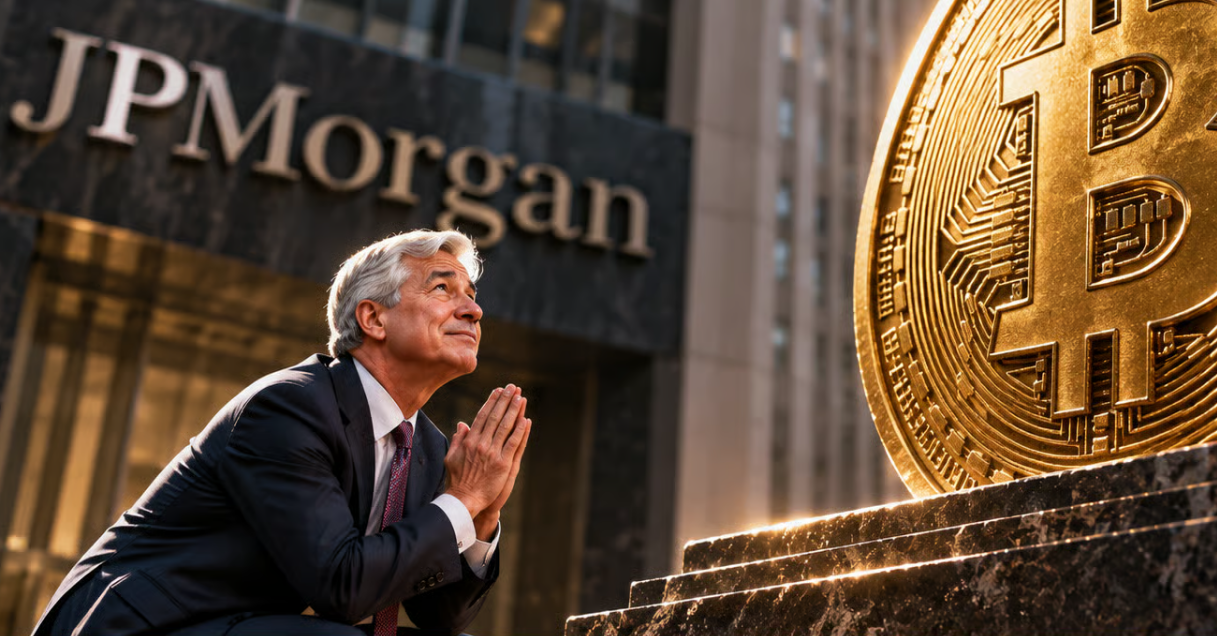
JPMorgan Thinks Bitcoin Will Beat Everything. It’s Still Too Conservative.

This week, agentic AI attacks are threatening the very internet as we know it, with major vulnerabilities discovered in fundamental infrastructure like PHP. And yet, as long as the internet is still functioning, we’ll be here in your inbox every Monday morning. Speaking of attacks, one man who has never missed an opportunity to attack Bitcoin, JPMorgan CEO Jamie Dimon, had to eat some humble pie this week. For the first time ever, his bank included Bitcoin in its 2027 Long-Term Capital Market Assumptions. And not only did Bitcoin make the list, JPMorgan ranked it as the best-performing asset class for the next decade…….Continue reading…

By Bam

Source: Bitcoin News

.

Critics:

Both ETFs and mutual funds charge annual expense ratios that range from 0.02% of the investment value to upwards of 1% of the investment value. Mutual funds generally have higher annual fees since they have higher marketing, distribution and accounting expenses (12b-1 fees). 

ETFs are also generally cheaper to operate since, unlike mutual funds, they do not have to buy and sell securities and maintain cash reserves to accommodate shareholder purchases and redemptions. Stockbrokers may charge different commissions, if any, for the purchase and sale of ETFs and mutual funds.

In addition, sales of ETFs in the United States are subject to transaction fees that the national securities exchanges must pay to the SEC under section 31 of the Securities Exchange Act of 1934, which, as of February 2023, is $8 per $1 million in transaction proceeds. Many mutual funds can be bought commission-free from the issuer, although some charge front-end or back-end loads, while ETFs do not have loads at all.

ETFs can be bought and sold at current market prices at any time during the trading day, unlike mutual funds, which can only be traded at the end of the trading day. Also unlike mutual funds, investors can execute the same types of trades that they can with a stock, such as limit orders, which allow investors to specify the price points at which they are willing to trade, stop-loss orders, margin buying, hedging strategies, and there is no minimum investment requirement.

ETFs can be traded frequently to hedge risk or implement market timing investment strategies, whereas many mutual funds have restrictions on frequent trading. Options, including put options and call options, can be written or purchased on most ETFs – which is not possible with mutual funds, allowing investors to implement strategies such as covered calls on ETFs.

There are also several ETFs that implement covered call strategies within the funds. Many mutual funds must be held in an account at the issuing firm, while ETFs can be traded via any stockbroker. Some stockbrokers do not allow for automatic recurring investments or trading fractional shares of ETFs, while these are allowed by all mutual fund issuers.

The most popular ETFs such as those tracking the S&P 500 trade tens of millions of shares per day and have strong market liquidity, while there are many ETFs that do not trade very often, and thus might be difficult to sell compared to more liquid ETFs. The most active ETFs are very liquid, with high regular trading volume and tight bid-ask spreads (the gap between buyer and seller’s prices), and the price thus fluctuates throughout the day.

This is in contrast with mutual funds, where all purchases or sales on a given day are executed at the same price at the end of the trading day. Actively managed ETFs include active management, whereby the manager executes a specific trading strategy instead of replicating the performance of a stock market index.

The securities held by such funds are posted on their websites daily, or quarterly in the cases of active non-transparent ETFs. The ETFs may then be at risk from people who might engage in front running since the portfolio reports can reveal the manager’s trading strategy. Some actively managed equity ETFs address this problem by trading only weekly or monthly.

The largest actively managed ETFs are the JPMorgan Equity Premium Income ETF (NYSE: JEPI), which charges 0.35% in annual fees, JPMorgan Ultra-Short Income ETF (NYSE: JPST), which charges 0.18% in annual fees, and the Pimco Enhanced Short Duration ETF (NYSE: MINT), which charges 0.36% in annual fees.

Cryptocurrency ETFs invest in cryptocurrencies such as Bitcoin, Ethereum, or a basket of different cryptocurrencies. There are two types of crypto ETFs. Spot crypto ETFs invest directly in cryptocurrencies, tracking their real-time prices, and their share prices will fluctuate with the prices of the cryptocurrencies they hold.

On the other hand, future-based crypto ETFs refer to equities that do not invest directly in cryptocurrencies but rather in crypto futures contracts. These contracts are agreements to buy or sell cryptocurrencies at a predetermined price in the future. As a result, the share prices and price fluctuating trends of funds in these two types could be different, even though they hold identical cryptocurrencies and amounts.

ETF shares are created and redeemed when large broker-dealers called authorized participants (AP) act as market makers and purchase and redeem ETF shares directly from the ETF issuer in large blocks, generally 50,000 shares, called creation units. Purchases and redemptions of the creation units are generally in kind, with the AP contributing or receiving securities of the same type and proportion held by the ETF; the lists of ETF holdings are published online.

The ability to purchase and redeem creation units gives ETFs an arbitrage mechanism intended to minimize the potential deviation between the market price and the net asset value of ETF shares. APs provide market liquidity for the ETF shares and help ensure that their intraday market price approximates the net asset value of the underlying assets.

Other investors, such as individuals using a retail broker, trade ETF shares on the secondary market. If there is strong investor demand for an ETF, its share price will temporarily rise above its net asset value per share, giving arbitrageurs an incentive to purchase additional creation units from the ETF issuer and sell the component ETF shares in the open market.

The additional supply of ETF shares reduces the market price per share, generally eliminating the premium over net asset value. A similar process applies when there is weak demand for an ETF: its shares trade at a discount from their net asset value.

Ethereum traders, watch these metrics as ETH hits rare accumulation zone
.
BitcoinDominance ,Cryptocurrency ,CryptoTrading ,Bitcoin ,Blockchain ,CryptoMarket ,Investment ,Altcoins ,DigitalCurrency ,BitcoinNews ,MarketAnalysis ,CryptoCommunity ,BitcoinInvesting ,DecentralizedFinance ,CryptoAdoption ,HODL ,BTC ,CryptoTrends ,MarketTrends ,FinancialFreedom, JPMorgan

Sunday, August 2, 2026

Bitcoin ETFs Gain Fresh Case After $89M Coldcard Drain

Bitcoin ETFs gain fresh case after $89M Coldcard drain, says Balchunas

Bloomberg Intelligence senior ETF analyst Eric Balchunas said on Aug. 2 that the Coldcard security failure strengthens the case for U.S. spot Bitcoin ETFs, especially for investors who want long-term price exposure without managing private keys. His comments followed Galaxy Research’s estimate that three suspected attack waves drained 1,367.05 BTC, worth about $88.6 million, from 4,585 addresses……..Continue reading….

By:

Source: Crypto News

.

Critics:

ETFs are similar in many ways to mutual funds, except that ETFs are bought and sold from other owners throughout the day on stock exchanges, whereas mutual funds are bought and sold from the issuer based on their price at day’s end. ETFs are also more transparent since their holdings are generally published online daily and, in the United States, are more tax efficient than mutual funds.

Unlike mutual funds, ETFs trade on a stock exchange, can be sold short, can be purchased using funds borrowed from a stockbroker (margin), and can be purchased and sold using limit orders, with the buyer or seller aware of the price per share in advance. Both ETFs and mutual funds charge annual expense ratios that range from 0.02% of the investment value to upwards of 1% of the investment value.

Mutual funds generally have higher annual fees since they have higher marketing, distribution and accounting expenses (12b-1 fees). ETFs are also generally cheaper to operate since, unlike mutual funds, they do not have to buy and sell securities and maintain cash reserves to accommodate shareholder purchases and redemptions.

Stockbrokers may charge different commissions, if any, for the purchase and sale of ETFs and mutual funds. In addition, sales of ETFs in the United States are subject to transaction fees that the national securities exchanges must pay to the SEC under section 31 of the Securities Exchange Act of 1934, which, as of February 2023, is $8 per $1 million in transaction proceeds. 

Many mutual funds can be bought commission-free from the issuer, although some charge front-end or back-end loads, while ETFs do not have loads at all. In the United States, ETFs can be more attractive tax-wise than mutual funds for transactions made in taxable accounts. However, there are no tax benefits to ETFs compared to mutual funds in the United Kingdom and Germany.

In the US, whenever a mutual fund realizes a capital gain that is not balanced by a realized loss (i.e. when the fund sells appreciated shares to meet investor redemptions), its shareholders who hold the fund in taxable accounts must pay capital gains taxes on their share of the gain. However, ETF investors generally only realize capital gains when they sell their own shares for a gain. ETFs offered by Vanguard are actually a different share class of its mutual funds and do not stand on their own; however, they generally do not have any adverse tax issues.

In the United States, ETFs can be more attractive tax-wise than mutual funds for transactions made in taxable accounts. However, there are no tax benefits to ETFs compared to mutual funds in the United Kingdom and Germany. In the US, whenever a mutual fund realizes a capital gain that is not balanced by a realized loss (i.e. when the fund sells appreciated shares to meet investor redemptions), its shareholders who hold the fund in taxable accounts must pay capital gains taxes on their share of the gain.

However, ETF investors generally only realize capital gains when they sell their own shares for a gain. ETFs offered by Vanguard are actually a different share class of its mutual funds and do not stand on their own; however, they generally do not have any adverse tax issues. The most popular ETFs such as those tracking the S&P 500 trade tens of millions of shares per day and have strong market liquidity, while there are many ETFs that do not trade very often, and thus might be difficult to sell compared to more liquid ETFs.

The most active ETFs are very liquid, with high regular trading volume and tight bid-ask spreads (the gap between buyer and seller’s prices), and the price thus fluctuates throughout the day. This is in contrast with mutual funds, where all purchases or sales on a given day are executed at the same price at the end of the trading day.

Actively managed ETFs include active management, whereby the manager executes a specific trading strategy instead of replicating the performance of a stock market index. The securities held by such funds are posted on their websites daily, or quarterly in the cases of active non-transparent ETFs. The ETFs may then be at risk from people who might engage in front running since the portfolio reports can reveal the manager’s trading strategy.

Some actively managed equity ETFs address this problem by trading only weekly or monthly. The largest actively managed ETFs are the JPMorgan Equity Premium Income ETF (NYSE: JEPI), which charges 0.35% in annual fees, JPMorgan Ultra-Short Income ETF (NYSE: JPST), which charges 0.18% in annual fees, and the Pimco Enhanced Short Duration ETF (NYSE: MINT), which charges 0.36% in annual fees.

Cryptocurrency ETFs invest in cryptocurrencies such as Bitcoin, Ethereum, or a basket of different cryptocurrencies. There are two types of crypto ETFs. Spot crypto ETFs invest directly in cryptocurrencies, tracking their real-time prices, and their share prices will fluctuate with the prices of the cryptocurrencies they hold.

On the other hand, future-based crypto ETFs refer to equities that do not invest directly in cryptocurrencies but rather in crypto futures contracts. These contracts are agreements to buy or sell cryptocurrencies at a predetermined price in the future. As a result, the share prices and price fluctuating trends of funds in these two types could be different, even though they hold identical cryptocurrencies and amounts.

ETF shares are created and redeemed when large broker-dealers called authorized participants (AP) act as market makers and purchase and redeem ETF shares directly from the ETF issuer in large blocks, generally 50,000 shares, called creation units. Purchases and redemptions of the creation units are generally in kind, with the AP contributing or receiving securities of the same type and proportion held by the ETF; the lists of ETF holdings are published online.

The ability to purchase and redeem creation units gives ETFs an arbitrage mechanism intended to minimize the potential deviation between the market price and the net asset value of ETF shares. APs provide market liquidity for the ETF shares and help ensure that their intraday market price approximates the net asset value of the underlying assets. Other investors, such as individuals using a retail broker, trade ETF shares on the secondary market.

Fediverse Reactions
  • #bitcoinnews
  • #blockchain
  • #bitcoin
  • #bitcoinetfs
  • #bloomberg
  • #digitalassets
  • #etfanalyst
  • #coldcardsecurity
  • #cryptocurrency
  • #cryptoinvestment
  • #cryptoassets
  • #investmenttips
  • #markettrends
  • #financialgrowth
  • #investing
  • #futureoffinance
  • #finance
  • #etfs
  • #hodlbullmarket
  • #wealthmanagement

Leave a Reply

Should You Brush Your Teeth Before or After Breakfast?

Credit: seb_ra / Getty Images “When you brush first thing in the morning, you remove that plaque and apply fluoride directly onto the ename...