Showing posts with label Mindfulness. Show all posts

Tuesday, November 10, 2026

What Are The Emotional Triggers For Empaths To Watch For?

Getty

Empathy helps you relate to others on a profound human level, understand their problems together, and support the people around you. If you’re a highly empathetic person, you might identify as an empath: someone who can sense others’ feelings and relate to them on a deeper level. But being constantly aware of other people’s emotions can be exhausting. It might even have significant impacts on your own life and make you feel tired and drained — a phenomenon sometimes known as empathy or compassion fatigue…..….Story continues…..

By Allaya Cooks-Campbell

Source: BetterUp

.

Critics:

Compassion and sympathy are terms associated with empathy. A person feels compassion when they notice others are in need, and this feeling motivates that person to help. Like empathy, compassion has a wide range of definitions and purported facets (which overlap with some definitions of empathy). 

Sympathy is a feeling of care and understanding for someone in need. Some include in sympathy an empathic concern for another person, and the wish to see them better off or happier. Empathy is also related to pity and emotional contagion. One feels pity towards others who might be in trouble or in need of help. This feeling is described as “feeling sorry” for someone.

Emotional contagion is when a person (especially an infant or a member of a mob) imitatively “catches” the emotions that others are showing without necessarily recognizing this is happening. Alexithymia describes a deficiency in understanding, processing, or describing one’s own emotions (unlike empathy which is about someone else’s emotions).

Affective empathy, also called emotional empathy, is the ability to respond with an appropriate emotion to another’s mental states. Our ability to empathize emotionally is based on emotional contagion: being affected by another’s emotional or arousal state. Affective empathy can be subdivided into the following scales:

Empathic concern: sympathy and compassion for others in response to their suffering. Personal distress: feelings of discomfort and anxiety in response to another’s suffering. There is no consensus regarding whether personal distress is a form of empathy or instead is something distinct from empathy There may be a developmental aspect to this subdivision.

Infants respond to the distress of others by getting distressed themselves; only when they are two years old do they start to respond in other-oriented ways: trying to help, comfort, and share. Affective mentalizing: uses clues like body language, facial expressions, knowledge about the other’s beliefs & situation, and context to understand more about what one is empathizing with.

Cognitive empathy is the ability to understand another’s perspective or mental state. The terms empathic accuracy, social cognition, perspective-taking, theory of mind, and mentalizing are often used synonymously, but due to a lack of studies comparing theory of mind with types of empathy, it is unclear whether these are equivalent.

Athough measures of cognitive empathy include self-report questionnaires and behavioral measures, a 2019 meta-analysis found only a negligible association between self-report and behavioral measures, suggesting that people are generally not able to accurately assess their own cognitive empathy abilities. Cognitive empathy can be subdivided into the following scales: Perspective-taking: the tendency to spontaneously adopt others’ psychological perspectives.

Fantasy: the tendency to identify with fictional characters. Tactical (or strategic) empathy: the deliberate use of perspective-taking to achieve certain desired ends. Emotion regulation: a damper on the emotional contagion process that allows you to empathize without being overwhelmed by the emotion you are empathizing with.

The scientific community has not coalesced around a precise definition of these constructs, but there is consensus about this distinction. Affective and cognitive empathy are also independent from one another; someone who strongly empathizes emotionally is not necessarily good in understanding another’s perspective.

Additional constructs that have been proposed include behavioral empathy (which governs how one chooses to respond to feelings of empathy), social empathy (in which the empathetic person integrates their understanding of broader social dynamics into their empathetic modeling), and ecological empathy (which encompasses empathy directed towards the natural world). 

In addition, Fritz Breithaupt emphasizes the importance of empathy suppression mechanisms in healthy empathy. Efforts to measure empathy go back to at least the mid-twentieth century. Researchers approach the measurement of empathy from a number of perspectives. Behavioral measures normally involve raters assessing the presence or absence of certain behaviors in the subjects they are monitoring.

Both verbal and non-verbal behaviors have been captured on video by experimenters. Other experimenters required subjects to comment upon their own feelings and behaviors, or those of other people involved in the experiment, as indirect ways of signaling their level of empathic functioning to the raters. Physiological responses tend to be captured by elaborate electronic equipment that has been physically connected to the subject’s body.

Researchers then draw inferences about that person’s empathic reactions from the electronic readings produced. Bodily or “somatic” measures can be seen as behavioral measures at a micro level. They measure empathy through facial and other non-verbally expressed reactions. Such changes are presumably underpinned by physiological changes brought about by some form of “emotional contagion” or mirroring.

These reactions, while they appear to reflect the internal emotional state of the empathizer, could also, if the stimulus incident lasted more than the briefest period, reflect the results of emotional reactions based on cognitions associated with role-taking (“if I were him I would feel…”). Picture or puppet-story indices for empathy have been adopted to enable even very young, pre-school subjects to respond without needing to read questions and write answers.

Dependent variables (variables that are monitored for any change by the experimenter) for younger subjects have included self reporting on a seven-point smiley face scale and filmed facial reactions. In some experiments, subjects are required to watch video scenarios (either staged or authentic) and to make written responses which are then assessed for their levels of empathy; scenarios are sometimes also depicted in printed form.

Empathy is theatre’s thing, isn’t it? Why not extend that empathy to parents? The Stage 18:57 Wed, 01 May 

Monday, November 9, 2026

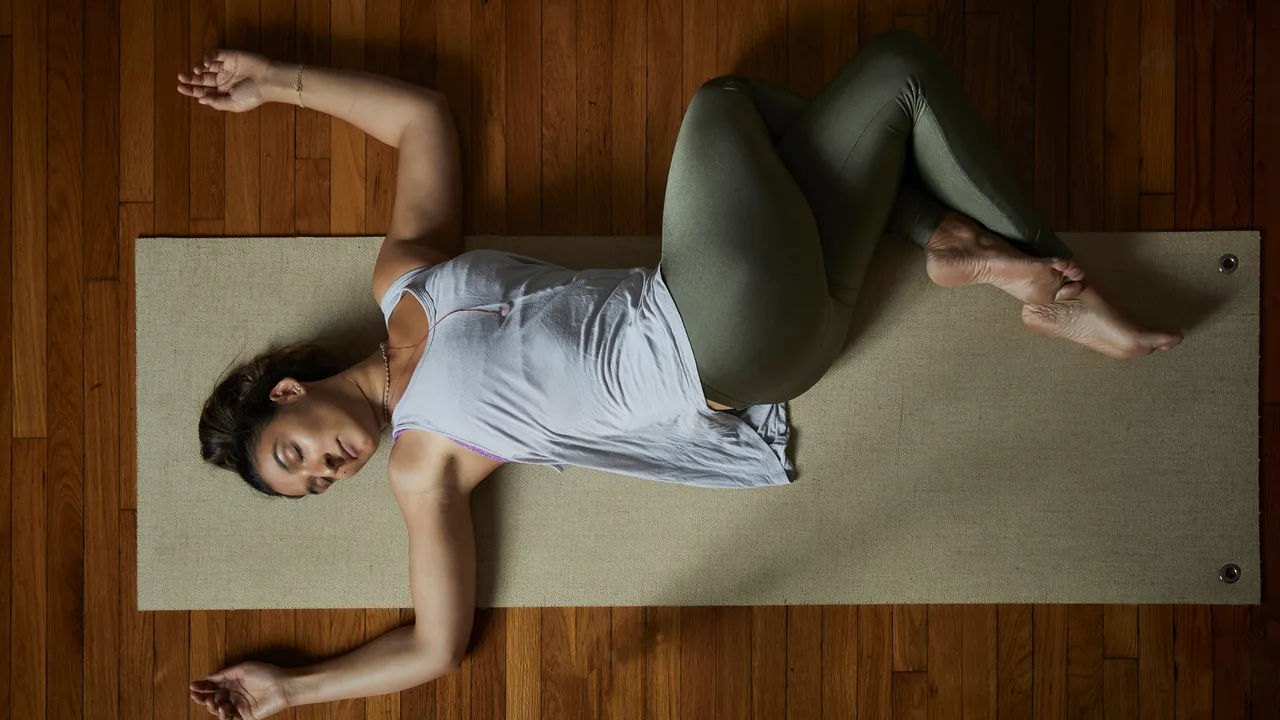
A Yoga Teacher Says This Type of Movement is One of The Best Things For Relieving Hip Tension

Getty Images/ The Good Brigade

If you have stiff, immobile hips, you’re not alone it’s a common problem for anyone who spends a lot of time sitting. Eloise Skinner is a yoga instructor and she says there’s one type of movement she swears by for relieving tension in this area. “I love twists,” she tells Fit&Well, saying reclined twists are particularly useful for people with weak hips, because they put minimal pressure on the joint. “Lying on your back, you don’t have any extra weight down on the hips, so you can really get into the stretch without putting additional force into it,” says Skinner.……..Continue reading….

By

Source: Fit & Well

.

Critics:

Yoga as exercise, the postural yoga of the Western world, is a physical activity consisting of asanas, often connected by smooth transitions, sometimes accompanied by breathing exercises and usually ending with a period of relaxation or meditation. It is often known simply as “yoga”, despite older traditions in which asanas played little or no part; asanas were not central to any tradition.

Yoga as exercise is a 20th-century blend of Western physical culture and women’s harmonial gymnastics with haį¹­ha yoga, pioneered by Shri Yogendra and Swami Kuvalayananda. Before 1900, hatha yoga had few standing poses; the Sun Salutation (Surya Namaskar) was pioneered by Bhawanrao Shrinivasrao Pant Pratinidhi, the Rajah of Aundh, during the 1920s. Many standing poses used in gymnastics were incorporated into yoga by Krishnamacharya in Mysore between the 1930s and the 1950s.

Several of his students founded schools of yoga. Pattabhi Jois created ashtanga vinyasa yoga, which led to Power Yoga; B. K. S. Iyengar created Iyengar Yoga and systematised asanas in his 1966 book, Light on Yoga; Indra Devi taught yoga to Hollywood actors; and Krishnamacharya’s son, T. K. V. Desikachar, founded the Krishnamacharya Yoga Mandalam in Chennai. Other schools founded during the 20th century include Bikram Choudhury’s Bikram Yoga and Swami Sivananda of Rishikesh’s Sivananda yoga. Yoga as exercise has spread around the world.

The number of asanas used in yoga has increased from 84 in 1830 (as illustrated in Joga Pradipika) to about 200 in Light on Yoga and over 900 performed by Dharma Mittra by 1984. The spiritual goal of haį¹­ha yoga was largely replaced by the goals of physical fitness and relaxation, and many of its more esoteric components were reduced or removed. In modern usage, the term “hatha yoga” denotes gentle exercise, often for women.

Yoga as exercise has developed into a worldwide, multi-billion-dollar business involving classes, teacher certification, clothing such as yoga pants, equipment including yoga mats, books, videos, and holidays. The ancient, cross-legged lotus position and Siddhasana are widely recognised symbols of yoga. The United Nations General Assembly established 21 June as the International Day of Yoga, and it has been celebrated annually around the world since 2015. On 1 December 2016, yoga was listed by UNESCO as an intangible cultural heritage.

The effect of yoga as exercise on physical and mental health has been a subject of study, with evidence that regular practice is beneficial for low back pain and stress.. Yoga as exercises (compaired to no exercises) can improve function and pain in chronic low back pain after three months; there is no evidence that yoga is better or worse than any other back-pain exercises. A 2015 systematic review noted that yoga may be effective in alleviating symptoms of prenatal depression.

Yoga has been a central practice in Jainism. Jain spirituality is based on a strict code of nonviolence, or ahimsa (which includes vegetarianism), almsgiving (dāna), faith in the three jewels, austerities (tapas) such as fasting, and yoga. Jain yoga aims at the liberation and purification of the self from the forces of karma, which binds the self to the cycle of reincarnation. Like yoga and Sankhya, Jainism believes in a number of individual selves bound by their individual karma.

Only through the reduction of karmic influences and the exhaustion of collected karma can one become purified and released. Early Jain yoga seems to have been divided into several types, including meditation, abandonment of the body (kāyotsarga), contemplation, and reflection (bhāvanā).

Classical yoga, ashtanga yoga, or rāja yoga is primarily the yoga outlined in the dualistic Yoga Sutras of Patanjali. The origins of classical yoga are unclear, although early discussions of the term appear in the Upanishads. Rāja yoga (yoga of kings) originally denoted the ultimate goal of yoga; samadhi, but was popularised by Vivekananda as a common name for ashtanga yoga, the eight limbs attain samadhi as described in the Yoga Sutras.

Yoga philosophy came to be regarded as a distinct orthodox school (darsanas) of Hinduism in the second half of the first millennium CE. Classical yoga incorporates epistemology, metaphysics, ethical practices, systematic exercises and self-development for body, mind and spirit. Its epistemology (pramana) and metaphysics are similar to the Sāṅkhya school. The Classical yoga’s metaphysics, like Sāṅkhya’s, primarily posits two distinct realities:

Prakriti (nature, the eternal and active unconscious source of the material world composed of three guṇas) and puruį¹£a (consciousness), the plural consciousnesses which are the intelligent principles of the world. Moksha (liberation) results from the isolation (kaivalya) of puruį¹£a from prakirti, and is achieved through meditation, stilling one’s thought waves (citta vritti) and resting in pure awareness of puruį¹£a. Unlike Sāṅkhya, which takes a non-theistic approach, the yoga school of Hinduism accepts a “personal, yet essentially inactive, deity” or “personal god” (Ishvara).

Sunday, November 8, 2026

8 Minutes of Anger Can Stiffen Your Blood Vessels and Raise Heart Attack Risk

 (Photo: Pexel)

A fresh study shows that even short bursts of anger can affect blood vessels in a way that weakens circulation and raises the risk of a heart attack or stroke. Researchers found that just eight minutes of angry emotions reduced the ability of blood vessels to widen by nearly half, and this effect lasted for up to 40 minutes afterward. This finding adds new detail to how anger and heart health are connected, and suggests that frequent anger could play a role in cardiovascular problems over time. Scientists from several US institutions studied 280 healthy adults, all free of heart disease and major risk factors like diabetes or high blood pressure……..Continue reading…

By:India Today Health Desk

Source: India Today

.

Critics:

Anger causes a reduction in cognitive ability and the accurate processing of external stimuli. Dangers seem smaller, actions seem less risky, ventures seem more likely to succeed, and unfortunate events seem less likely. Angry people are more likely to make risky decisions, and make less realistic risk assessments. In one study, test subjects primed to feel angry felt less likely to have heart disease, and more likely to receive a pay raise, compared to fearful people.

This tendency can manifest in retrospective thinking as well: in a 2005 study, angry subjects said they thought the risks of terrorism in the year following 9/11 in retrospect were low, compared to what the fearful and neutral subjects thought. In inter-group relationships, anger makes people think in more negative and prejudiced terms about outsiders. Anger makes people less trusting, and slower to attribute good qualities to outsiders.

When a group is in conflict with a rival group, it will feel more anger if it is the politically stronger group and less anger when it is the weaker. Unlike other negative emotions like sadness and fear, angry people are more likely to demonstrate correspondence bias – the tendency to blame a person’s behavior more on their nature than on their circumstances. They tend to rely more on stereotypes, and pay less attention to details and more attention to the superficial.

In this regard, anger is unlike other “negative” emotions such as sadness and fear, which promote analytical thinking. An angry person tends to anticipate other events that might cause them anger. They will tend to rate anger-causing events (e.g. being sold a faulty car) as more likely than sad events (e.g. a good friend moving away). A person who is angry tends to place more blame on another person for their misery.

This can create a feedback, as this extra blame can make the angry person angrier still, so they in turn place yet more blame on the other person. When people are in a certain emotional state, they tend to pay more attention to, or remember, things that are charged with the same emotion; so it is with anger. For instance, if a person is trying to persuade someone that a tax increase is necessary.

If the person is currently feeling angry, they would do better to use an argument that elicits anger (“more criminals will escape justice”) than, say, an argument that elicits sadness (“there will be fewer welfare benefits for disabled children”). Also, unlike other negative emotions, which focus attention on all negative events, anger only focuses attention on anger-causing events.

Anger can make a person more desiring of an object to which their anger is tied. In a 2010 Dutch study, test subjects were primed to feel anger or fear by being shown an image of an angry or fearful face, and then were shown an image of a random object. When subjects were made to feel angry, they expressed more desire to possess that object than subjects who had been primed to feel fear.

Conventional therapies for anger involve restructuring thoughts and beliefs to bring about a reduction in anger. These therapies often come within the schools of CBT (or cognitive behavioral therapy) like modern systems such as REBT (rational emotive behavior therapy). Research shows that people with excessive anger often harbor and act on dysfunctional attributions, assumptions and evaluations in specific situations.

It has been shown that with therapy by a trained professional, individuals can bring their anger to more manageable levels. The therapy is followed by the so-called “stress inoculation” in which the clients are taught relaxation skills to control their arousal and various cognitive controls to exercise on their attention, thoughts, images, and feelings. “Logic defeats anger, because anger, even when it’s justified, can quickly become irrational.” (American Psychological Association).

In other words, although there may be a rational reason to get angry, the frustrated actions of the subject can become irrational. Taking deep breaths is regarded as the first step to calming down. Once the anger has subsided a little, the patient will accept that they are frustrated and move on. Lingering around the source of frustration may bring the rage back.

The skills-deficit model states that poor social skills is what renders a person incapable of expressing anger in an appropriate manner. Social skills training has been found to be an effective method for reducing exaggerated anger by offering alternative coping skills to the angry individual. Research has found that persons who are prepared for aversive events find them less threatening, and excitatory reactions are significantly reduced.

In a 1981 study, that used modeling, behavior rehearsal, and videotaped feedback to increase anger control skills, showed increases in anger control among aggressive youth in the study. Research conducted with youthful offenders using a social skills training program (aggression replacement training), found significant reductions in anger, and increases in anger control.

Research has also found that antisocial personalities are more likely to learn avoidance tasks when the consequences involved obtaining or losing tangible rewards. Learning among antisocial personalities also occurred better when they were involved with high intensity stimulation. Social learning theory states that positive stimulation was not compatible with hostile or aggressive reactions.

Anger research has also studied the effects of reducing anger among adults with antisocial personality disorder (ASPD), with a social skills program approach that used a low fear and high arousal group setting. This research found that low fear messages were less provocative to the ASPD population, and high positive arousal stimulated their ability to concentrate, and subsequently learn new skills for anger reduction.

76 DIY Christmas Ornaments To Make In 2025

Becky Lugart-Stayner It’s officially Christmas-tree decorating season! Of course, you’ll want to pull out those beloved sentimental ornamen...