Showing posts with label wildlife. Show all posts

Saturday, October 17, 2026

A 24 Year Study Uncovers A Surprising Climate Benefit Beneath Forests

Credit: Shutterstock

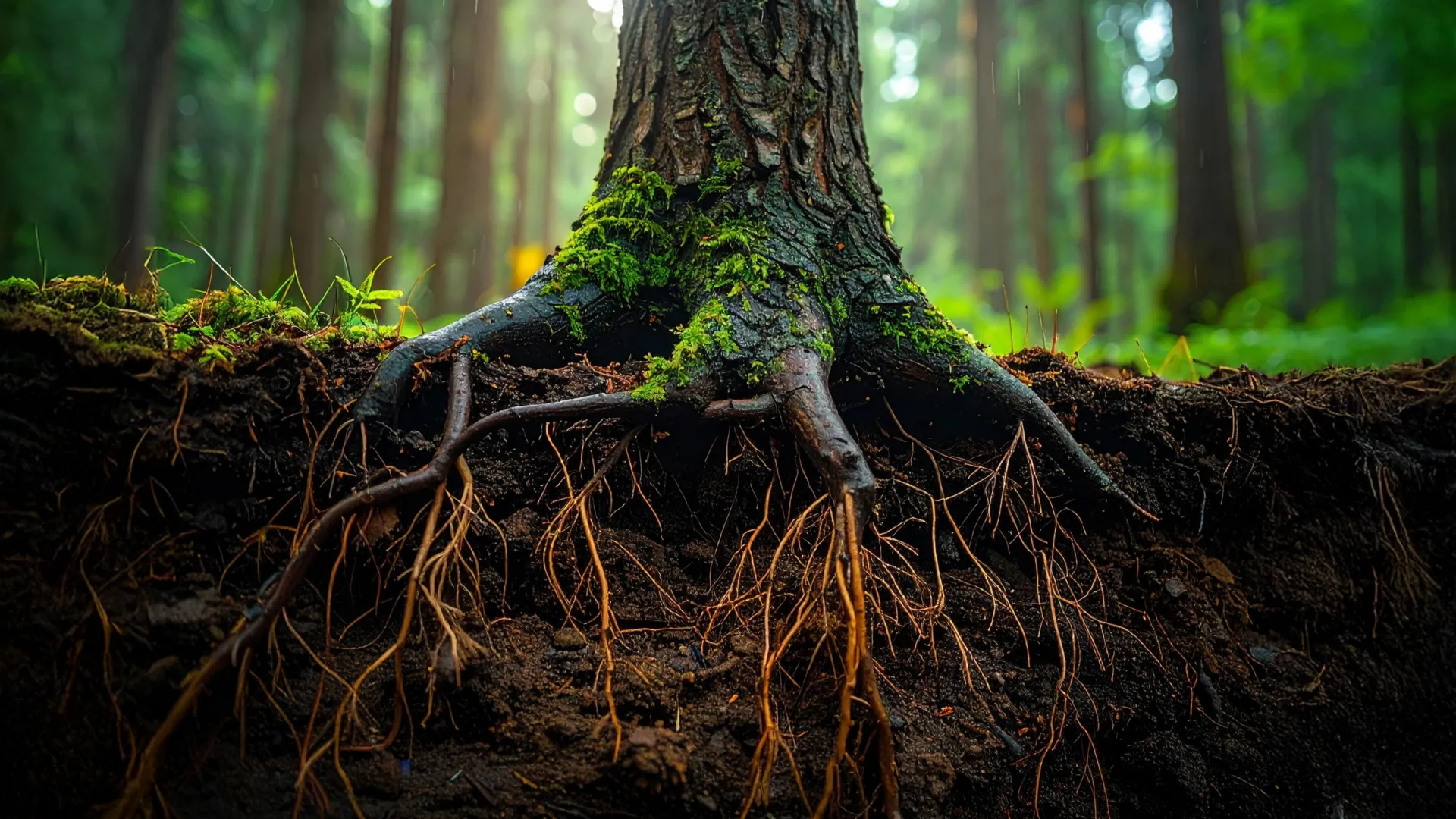
Forest soils are playing a surprisingly powerful role in removing methane from the atmosphere, and new findings suggest that certain effects of climate change could make them even better at it. Methane is a potent greenhouse gas that contributes to global warming, but microorganisms living in the soil can break it down before it builds up in the air. Scientists from the University of Göttingen and the Baden-Württemberg Forest Research Institute (FVA) analyzed the world’s most comprehensive collection of long-term measurements of methane absorption by forest soils………Continue reading…

Advertisement
Privacy Settings

By: University of Göttingen

Source: ScienceDaily

.

Critics:

Temperate needleleaf forests mostly occupy the higher latitudes of the Northern Hemisphere, as well as some warm temperate areas, especially on nutrient-poor or otherwise unfavourable soils. These forests are composed entirely, or nearly so, of coniferous species (Coniferophyta). In the Northern Hemisphere, pines Pinus, spruces Picea, larches Larix, firs Abies, Douglas firs Pseudotsuga, and hemlocks Tsuga make up the canopy; but other taxa are also important.

In the Southern Hemisphere, most coniferous trees (members of Araucariaceae and Podocarpaceae) occur mixed with broadleaf species, and are classed as broadleaf-and-mixed forests. Temperate broadleaf and mixed forests include a substantial component of trees of the Anthophyta group. They are generally characteristic of the warmer temperate latitudes, but extend to cool temperate ones, particularly in the southern hemisphere.

They include such forest types as the mixed deciduous forests of the United States and their counterparts in China and Japan; the broadleaf evergreen rainforests of Japan, Chile, and Tasmania; the sclerophyllous forests of Australia, central Chile, the Mediterranean, and California; and the southern beech Nothofagus forests of Chile and New Zealand.

There are many different types of tropical moist forests, with lowland evergreen broad-leaf tropical rainforests: for example várzea and igapó forests and the terra firme forests of the Amazon Basin; the peat swamp forests; dipterocarp forests of Southeast Asia; and the high forests of the Congo Basin. Seasonal tropical forests, perhaps the best description for the colloquial term “jungle”, typically range from the rainforest zone 10 degrees north or south of the equator, to the Tropic of Cancer and Tropic of Capricorn.

Forests located on mountains are also included in this category, divided largely into upper and lower montane formations, on the basis of the variation of physiognomy corresponding to changes in altitude. Tropical dry forests are characteristic of areas in the tropics affected by seasonal drought. The seasonality of rainfall is usually reflected in the deciduousness of the forest canopy, with most trees being leafless for several months of the year.

Under some conditions, such as less fertile soils or less predictable drought regimes, the proportion of evergreen species increases and the forests are characterised as “sclerophyllous”. Thorn forest, a dense forest of low stature with a high frequency of thorny or spiny species, is found where drought is prolonged, and especially where grazing animals are plentiful. On very poor soils, and especially where fire or herbivory are recurrent phenomena, savannas develop.

Sparse trees and savanna are forests with sparse tree-canopy cover. They occur principally in areas of transition from forested to non-forested landscapes. The two major zones in which these ecosystems occur are in the boreal region and in the seasonally dry tropics. At high latitudes, north of the main zone of boreal forestland, growing conditions are not adequate to maintain a continuously closed forest cover, so tree cover is both sparse and discontinuous.

This vegetation is variously called open taiga, open lichen woodland, and forest-tundra. A savanna is a mixed woodland–grassland ecosystem characterized by the trees being sufficiently widely spaced so that the canopy does not close. The open canopy allows sufficient light to reach the ground to support an unbroken herbaceous layer that consists primarily of grasses. Savannas maintain an open canopy despite a high tree density.

Forest plantations are generally intended for the production of timber and pulpwood. Commonly mono-specific, planted with even spacing between the trees, and intensively managed, these forests are generally important as habitat for native biodiversity. Some are managed in ways that enhance their biodiversity protection functions and can provide ecosystem services such as nutrient capital maintenance, watershed and soil structure protection and carbon storage.

The term forest-dependent people is used to describe any of a wide variety of livelihoods that are dependent on access to forests, products harvested from forests, or ecosystem services provided by forests, including those of Indigenous peoples dependent on forests. In India, approximately 22 percent of the population belongs to forest-dependent communities, which live in close proximity to forests and practice agroforestry as a principal part of their livelihood.

People of Ghana who rely on timber and bushmeat harvested from forests and Indigenous peoples of the Amazon rainforest are also examples of forest-dependent people. Though forest-dependence by more common definitions is statistically associated with poverty and rural livelihoods, elements of forest-dependence exist in communities with a wide range of characteristics. Generally, richer households derive more cash value from forest resources, whereas among poorer households, forest resources are more important for home consumption and increase community resilience.

Saturday, July 25, 2026

Why You Should Never Kill Spiders In Your Home, According To An Entomologist

Getty Images/iStockphoto

I know it may be hard to convince you, but let me try: Don’t kill the next spider you see in your home. Why? Because spiders are an important part of nature and our indoor ecosystem – as well as being fellow organisms in their own right. People like to think of their dwellings as safely insulated from the outside world, but many types of spiders can be found inside. Some are accidentally trapped, while others are short-term visitors. Some species even enjoy the great indoors, where they happily live out their lives and make more spiders……..Continue reading….

By: Matt Bertone

Source:  The Independent

.

Critics:

Although spiders are generally regarded as predatory, the jumping spider Bagheera kiplingi gets over 90% of its food from Beltian bodies, a solid plant material produced by acacias as part of a mutualistic relationship with a species of ant. Juveniles of some spiders in the families Anyphaenidae, Corinnidae, Clubionidae, Thomisidae and Salticidae feed on plant nectar. Laboratory studies show that they do so deliberately and over extended periods, and periodically clean themselves while feeding.

These spiders also prefer sugar solutions to plain water, which indicates that they are seeking nutrients. Since many spiders are nocturnal, the extent of nectar consumption by spiders may have been underestimated. Nectar contains amino acids, lipids, vitamins and minerals in addition to sugars, and studies have shown that other spider species live longer when nectar is available. Feeding on nectar avoids the risks of struggles with prey, and the costs of producing venom and digestive enzymes.

Various species are known to feed on dead arthropods (scavenging), web silk, and their own shed exoskeletons. Pollen caught in webs may also be eaten, and studies have shown that young spiders have a better chance of survival if they have the opportunity to eat pollen. In captivity, several spider species are also known to feed on bananas, marmalade, milk, egg yolk and sausages. Airborne fungal spores caught on the webs of orb-weavers may be ingested along with the old web before construction of a new web.

The enzyme chitinase present in their digestive fluid allows for the digestion of these spores. Spiders have been observed to consume plant material belonging to a large variety of taxa and type. Conversely, cursorial spiders comprise the vast majority (over 80%) of reported incidents of plant-eating. The best-known method of prey capture is by means of sticky webs. Varying placement of webs allows different species of spider to trap different insects in the same area, for example flat horizontal webs trap insects that fly up from vegetation underneath while flat vertical webs trap insects in horizontal flight.

Web-building spiders have poor vision, but are extremely sensitive to vibrations. The water spider Argyroneta aquatica build underwater “diving bell” webs that they fill with air and use for digesting prey and molting. Mating and raising the offspring happens in the female’s bell. They live almost entirely within the bells, darting out to catch prey animals that touch the bell or the threads that anchor it. A few spiders use the surfaces of lakes and ponds as “webs”, detecting trapped insects by the vibrations that these cause while struggling.

Net-casting spiders weave only small webs, but then manipulate them to trap prey. Those of the genus Hyptiotes and the family Theridiosomatidae stretch their webs and then release them when prey strike them, but do not actively move their webs. Those of the family Deinopidae weave even smaller webs, hold them outstretched between their first two pairs of legs, and lunge and push the webs as much as twice their own body length to trap prey, and this move may increase the webs’ area by a factor of up to ten.

Experiments have shown that Deinopis spinosus has two different techniques for trapping prey: backwards strikes to catch flying insects, whose vibrations it detects; and forward strikes to catch ground-walking prey that it sees. These two techniques have also been observed in other deinopids. Walking insects form most of the prey of most deinopids, but one population of Deinopis subrufa appears to live mainly on tipulid flies that they catch with the backwards strike.

Mature female bolas spiders of the genus Mastophora build “webs” that consist of only a single “trapeze line”, which they patrol. They also construct a bolas made of a single thread, tipped with a large ball of very wet sticky silk. They emit chemicals that resemble the pheromones of moths, and then swing the bolas at the moths. Although they miss on about 50% of strikes, they catch about the same weight of insects per night as web-weaving spiders of similar size. The spiders eat the bolas if they have not made a kill in about 30 minutes, rest for a while, and then make new bolas.

Juveniles and adult males are much smaller and do not make bolas. Instead they release different pheromones that attract moth flies, and catch them with their front pairs of legs. The primitive Liphistiidae, the “trapdoor spiders” of the family Ctenizidae and many tarantulas are ambush predators that lurk in burrows, often closed by trapdoors and often surrounded by networks of silk threads that alert these spiders to the presence of prey.

Other ambush predators do without such aids, including many crab spiders, and a few species that prey on bees, which see ultraviolet, can adjust their ultraviolet reflectance to match the flowers in which they are lurking. Wolf spiders, jumping spiders, fishing spiders and some crab spiders capture prey by chasing it, and rely mainly on vision to locate prey. Some jumping spiders of the genus Portia hunt other spiders in ways that seem intelligent, outflanking their victims or luring them from their webs.

Laboratory studies show that Portia‘s instinctive tactics are only starting points for a trial-and-error approach from which these spiders learn very quickly how to overcome new prey species. However, they seem to be relatively slow “thinkers”, which is not surprising, as their brains are vastly smaller than those of mammalian predators.

A few spider species that build webs live together in large colonies and show social behavior, although not as complex as in social insects. Anelosimus eximius (in the family Theridiidae) can form colonies of up to 50,000 individuals. The genus Anelosimus has a strong tendency towards sociality: all known American species are social, and species in Madagascar are at least somewhat social. Members of other species in the same family but several different genera have independently developed social behavior.

For example, although Theridion nigroannulatum belongs to a genus with no other social species, T. nigroannulatum build colonies that may contain several thousand individuals that co-operate in prey capture and share food. Other communal spiders include several Philoponella species (family Uloboridae), Agelena consociata (family Agelenidae) and Mallos gregalis (family Dictynidae).

Social predatory spiders need to defend their prey against kleptoparasites (“thieves”), and larger colonies are more successful in this. The herbivorous spider Bagheera kiplingi lives in small colonies which help to protect eggs and spiderlings. Even widow spiders (genus Latrodectus), which are notoriously cannibalistic, have formed small colonies in captivity, sharing webs and feeding together.

Fediverse Reactions
  • #arachnid
  • #creepycreature
  • #creepycrawly
  • #bugsofinstagram
  • #beautifulinsects
  • #edibleinsects
  • #entomology
  • #entomologist
  • #naturelovers
  • #indoorecosystem
  • #macrophotography
  • #insects
  • #species
  • #spidersofinstagram
  • #spiders
  • #spidernature
  • #spiderlife
  • #spiderhunters
  • #spidergram
  • #spiderfacts

Leave a Reply

What To Do When Stock Market Crash

We all worry about money. It is easy to understand why one would be worried about having little or no money. But, we also worry when we have...