Showing posts with label Stretching. Show all posts

Monday, November 9, 2026

A Yoga Teacher Says This Type of Movement is One of The Best Things For Relieving Hip Tension

Getty Images/ The Good Brigade

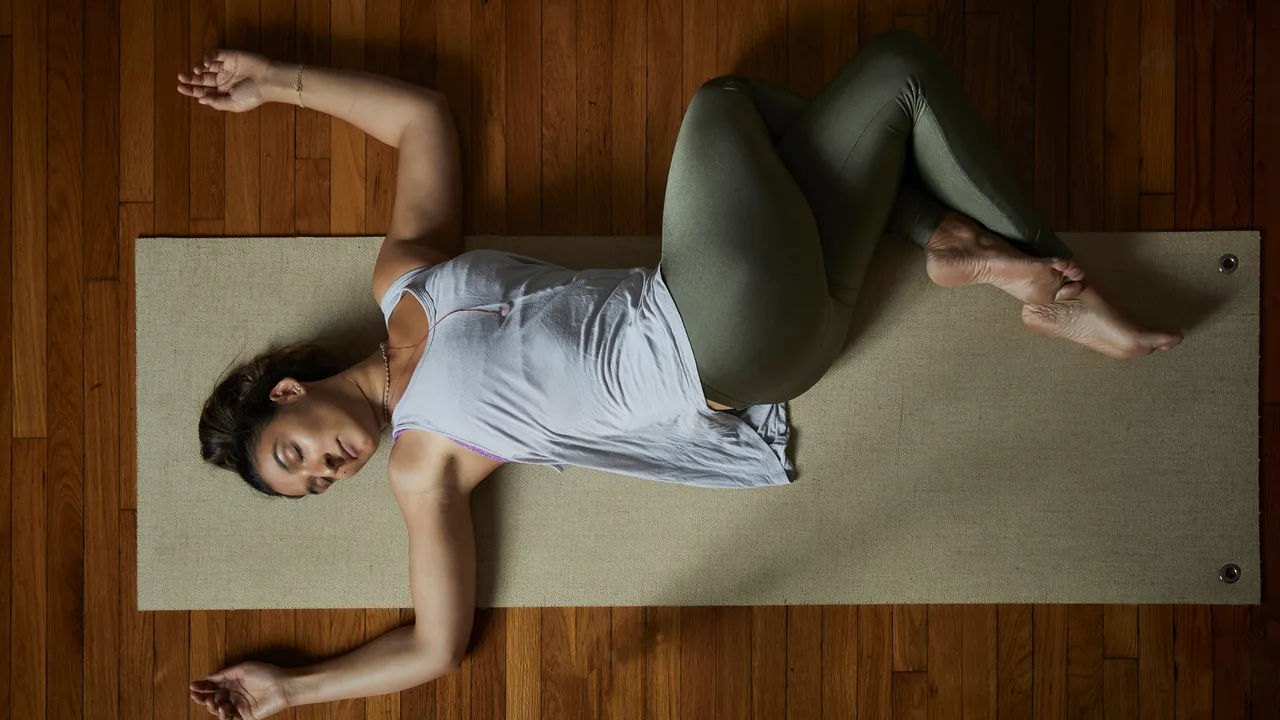
If you have stiff, immobile hips, you’re not alone it’s a common problem for anyone who spends a lot of time sitting. Eloise Skinner is a yoga instructor and she says there’s one type of movement she swears by for relieving tension in this area. “I love twists,” she tells Fit&Well, saying reclined twists are particularly useful for people with weak hips, because they put minimal pressure on the joint. “Lying on your back, you don’t have any extra weight down on the hips, so you can really get into the stretch without putting additional force into it,” says Skinner.……..Continue reading….

By

Source: Fit & Well

.

Critics:

Yoga as exercise, the postural yoga of the Western world, is a physical activity consisting of asanas, often connected by smooth transitions, sometimes accompanied by breathing exercises and usually ending with a period of relaxation or meditation. It is often known simply as “yoga”, despite older traditions in which asanas played little or no part; asanas were not central to any tradition.

Yoga as exercise is a 20th-century blend of Western physical culture and women’s harmonial gymnastics with haṭha yoga, pioneered by Shri Yogendra and Swami Kuvalayananda. Before 1900, hatha yoga had few standing poses; the Sun Salutation (Surya Namaskar) was pioneered by Bhawanrao Shrinivasrao Pant Pratinidhi, the Rajah of Aundh, during the 1920s. Many standing poses used in gymnastics were incorporated into yoga by Krishnamacharya in Mysore between the 1930s and the 1950s.

Several of his students founded schools of yoga. Pattabhi Jois created ashtanga vinyasa yoga, which led to Power Yoga; B. K. S. Iyengar created Iyengar Yoga and systematised asanas in his 1966 book, Light on Yoga; Indra Devi taught yoga to Hollywood actors; and Krishnamacharya’s son, T. K. V. Desikachar, founded the Krishnamacharya Yoga Mandalam in Chennai. Other schools founded during the 20th century include Bikram Choudhury’s Bikram Yoga and Swami Sivananda of Rishikesh’s Sivananda yoga. Yoga as exercise has spread around the world.

The number of asanas used in yoga has increased from 84 in 1830 (as illustrated in Joga Pradipika) to about 200 in Light on Yoga and over 900 performed by Dharma Mittra by 1984. The spiritual goal of haṭha yoga was largely replaced by the goals of physical fitness and relaxation, and many of its more esoteric components were reduced or removed. In modern usage, the term “hatha yoga” denotes gentle exercise, often for women.

Yoga as exercise has developed into a worldwide, multi-billion-dollar business involving classes, teacher certification, clothing such as yoga pants, equipment including yoga mats, books, videos, and holidays. The ancient, cross-legged lotus position and Siddhasana are widely recognised symbols of yoga. The United Nations General Assembly established 21 June as the International Day of Yoga, and it has been celebrated annually around the world since 2015. On 1 December 2016, yoga was listed by UNESCO as an intangible cultural heritage.

The effect of yoga as exercise on physical and mental health has been a subject of study, with evidence that regular practice is beneficial for low back pain and stress.. Yoga as exercises (compaired to no exercises) can improve function and pain in chronic low back pain after three months; there is no evidence that yoga is better or worse than any other back-pain exercises. A 2015 systematic review noted that yoga may be effective in alleviating symptoms of prenatal depression.

Yoga has been a central practice in Jainism. Jain spirituality is based on a strict code of nonviolence, or ahimsa (which includes vegetarianism), almsgiving (dāna), faith in the three jewels, austerities (tapas) such as fasting, and yoga. Jain yoga aims at the liberation and purification of the self from the forces of karma, which binds the self to the cycle of reincarnation. Like yoga and Sankhya, Jainism believes in a number of individual selves bound by their individual karma.

Only through the reduction of karmic influences and the exhaustion of collected karma can one become purified and released. Early Jain yoga seems to have been divided into several types, including meditation, abandonment of the body (kāyotsarga), contemplation, and reflection (bhāvanā).

Classical yoga, ashtanga yoga, or rāja yoga is primarily the yoga outlined in the dualistic Yoga Sutras of Patanjali. The origins of classical yoga are unclear, although early discussions of the term appear in the Upanishads. Rāja yoga (yoga of kings) originally denoted the ultimate goal of yoga; samadhi, but was popularised by Vivekananda as a common name for ashtanga yoga, the eight limbs attain samadhi as described in the Yoga Sutras.

Yoga philosophy came to be regarded as a distinct orthodox school (darsanas) of Hinduism in the second half of the first millennium CE. Classical yoga incorporates epistemology, metaphysics, ethical practices, systematic exercises and self-development for body, mind and spirit. Its epistemology (pramana) and metaphysics are similar to the Sāṅkhya school. The Classical yoga’s metaphysics, like Sāṅkhya’s, primarily posits two distinct realities:

Prakriti (nature, the eternal and active unconscious source of the material world composed of three guṇas) and puruṣa (consciousness), the plural consciousnesses which are the intelligent principles of the world. Moksha (liberation) results from the isolation (kaivalya) of puruṣa from prakirti, and is achieved through meditation, stilling one’s thought waves (citta vritti) and resting in pure awareness of puruṣa. Unlike Sāṅkhya, which takes a non-theistic approach, the yoga school of Hinduism accepts a “personal, yet essentially inactive, deity” or “personal god” (Ishvara).

Wednesday, August 19, 2026

A Pilates Instructor Recommends These Three Moves To Improve Your Core Strength and Balance

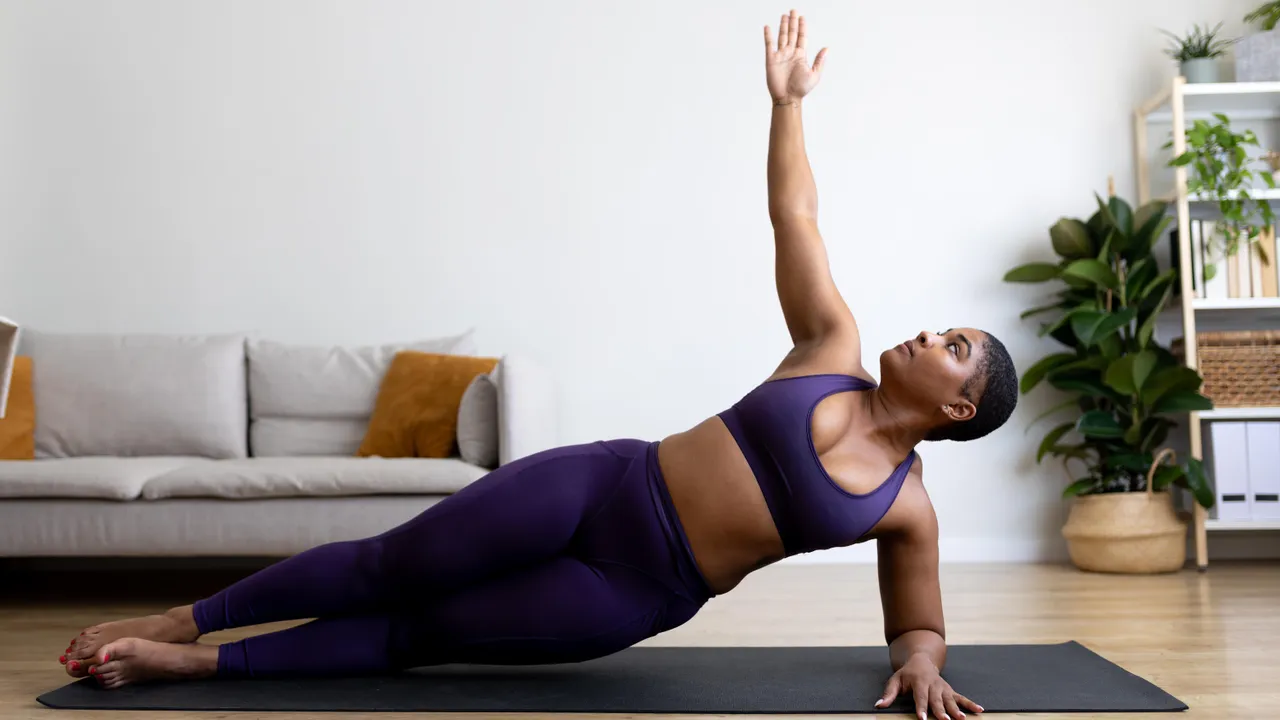
A woman performs a side plank at home on an exercise mat. She is on her left side, propped up on her elbow and forearm, with her legs elevated in the air. Her right arm reaches up toward the ceiling.

Getty Images

Your core plays an important role in almost every movement that you do, keeping you stable, and contributing to your balance and coordination. Pamela Paley, a Pilates master trainer for Club Pilates, says that the core muscles are the central support system for your whole body. “Without good core stability, our body would have trouble staying upright and controlled during static positions such as sitting or standing, and dynamic movements such as jumping or running,” she says……..Continue reading….

By:

Source: Fit&Well

.

Critics:

Pilates is continuously evolving through the use of modern equipment, but the core of the technique is tied to the movement patterns designed by Joseph Pilates. Pilates can be performed on both a mat or on specialized equipment. Pilates often incorporates spring-based resistance machines known as reformers, which consists of a box-like frame, sliding platform, springs, straps/ropes, and pulleys that help support the spine and target different muscle groups.

For example, in order to target the upper back, a typical Pilates move on the reformer involves lying face-down on top of an accessory called a long box which is placed on top of the sliding platform. The participant then lifts their head and chest while pulling back the straps down toward their hips to slide forward with the moving platform and repeating a few times. The straps can be heavier or lighter depending on the resistance that is controlled by the springs.

Pilates accompanied his method with a variety of equipment, which he called “apparatus”. Each apparatus was designed to help accelerate the process of stretching, strengthening, body alignment and increased core strength started by mat work. This included the Reformer, originally called the Universal Reformer, named for “universally reforming the body”. Eventually Pilates designed other apparatus, including the Cadillac, Wunda Chair, High “Electric” Chair, Spine Corrector, Ladder Barrel and Pedi-Pole.

With mat Pilates, people sit or lie with their body weight as the main resistance, using gravity to stabilize their core. For example, a common mat Pilates exercise is called “roll-up”, where participants start by sitting on the floor with their legs straight out in front of them and their arms extended over their legs. Participants then slowly using the breath to control the motion uncurl their upper bodies backward toward a supinated lying down position, until they are indeed lying down on their backs with their arms out over their heads.

They then curl back up into the starting position as they exhale, repeating this process multiple times. Accessories such as resistance circle rings or resistance bands may be used in both mat and reformer Pilates. Modern yoga, like Pilates, is a mind-and-body discipline, though yoga classes are more likely to address spiritual aspects explicitly. Both yoga and Pilates incorporate elements of stretching and breathing. Both are low-impact, low-intensity exercises, but there are key differences.

When practicing yoga, individuals hold certain poses for longer periods of time and flow into others; when practicing Pilates, individuals move their arms or legs while in certain positions. With yoga, breath is used for relaxation and to hold poses. With Pilates, breath is used to power the muscles with more energy. Most Pilates exercises start from lying down, while most yoga poses start from standing up.

Some poses are similar in the two disciplines, for example, open leg balance closely resembles Navasana (boat pose), roll over is similar to Halasana (plough pose), and swan and push-up are essentially identical to Bhujangasana (cobra pose) and Chaturanga Dandasana (low plank pose). Both disciplines develop strength, flexibility and fitness. Pilates, however, emphasises core strength, while yoga emphasizes flexibility.

Pilates developed in the aftermath of the late nineteenth century physical culture of exercising to alleviate ill health. There is, however, only limited evidence to support the use of Pilates to alleviate problems such as lower back pain. While studies have found that regular sessions improve balance, and can help muscle conditioning in healthy adults (compared to doing no exercise), it has not been shown to be an effective treatment for any medical condition. Pilates is not professionally regulated.

In October 2000, “Pilates” was ruled a generic term by a U.S. federal court, making it free for unrestricted use. The term is still capitalized in writing due to its origin from the proper name of the method’s founder. As a result of the US court ruling, the Pilates Method Alliance was formed as a professional association for the Pilates community. Its purpose is to provide an international organization to connect teachers, teacher trainers, studios, and facilities dedicated to preserving and enhancing the legacy of Joseph H. Pilates and his exercise method by establishing standards, encouraging unity, and promoting professionalism.

For the treatment of lower back pain, low-quality evidence suggests that while Pilates is better than doing nothing, it is no more effective than other forms of physical exercise. There is some evidence that regular sessions can help condition the abdominal muscles of healthy people, when compared to doing no exercise. There is no good evidence that it helps improve balance in elderly people.

From the limited data available, it would seem from the statistically and clinically significant findings that Pilates has demonstrated efficacy as a tool for the rehabilitation of a wide range of conditions.

In the last month
Fediverse Reactions
  • #balance
  • #activateyourcore
  • #fitnessjourney
  • #fitness
  • #corestrength
  • #bodybalance
  • #exercise
  • #clubpilates
  • #getfit
  • #healthylifestyle
  • #healthandwellness
  • #mindbody
  • #pilates
  • #physicalfitness
  • #pilatesinspo
  • #strength
  • #pilatesworkout
  • #pilatesinstruction
  • #pilatesforall
  • #pilatesclass

Leave a Reply

MapMatic The First-Of-A-Kind Live Client Website Creator Tool

MapMatic is an AI-powered website creation and client-finding software that helps you build and sell professional websites to local busines...