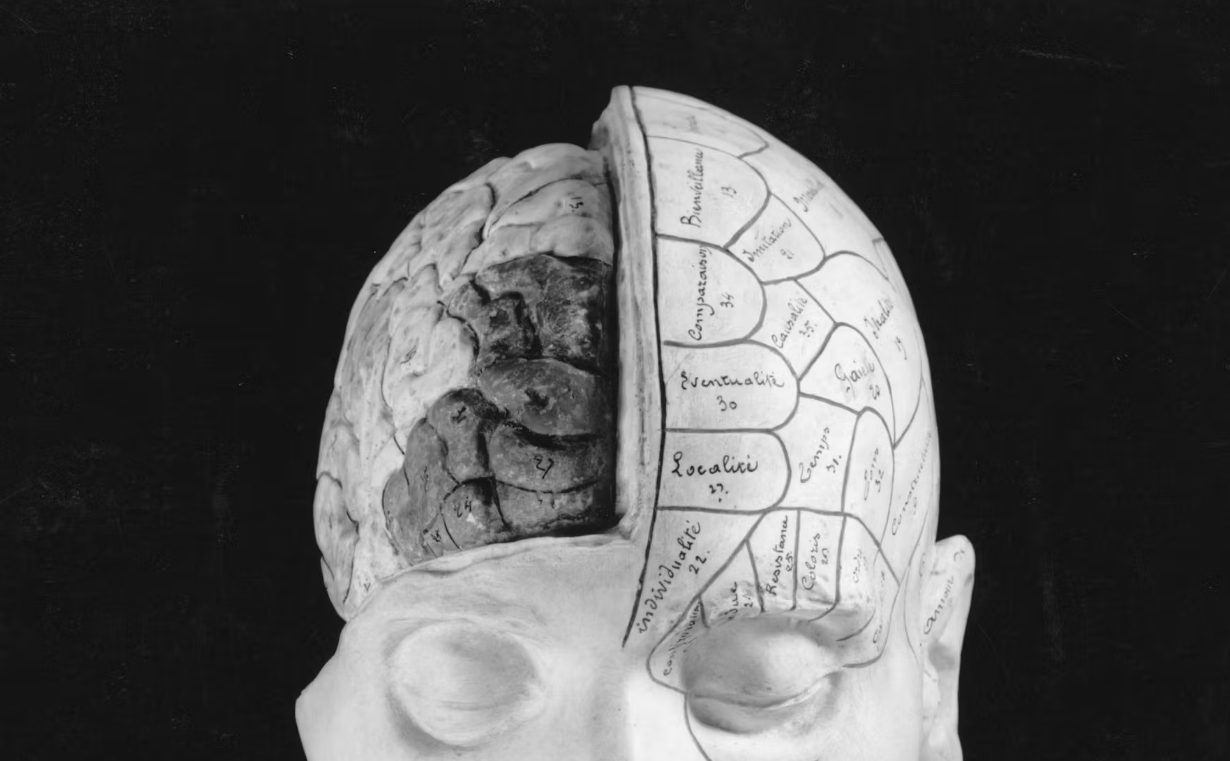
The phrase “chew the cud” means to further chew partly digested food but many of us use it to mean something rather more abstract. The scientific word for this is rumination: A process of breaking big things into smaller parts that can then be dealt with or used. It’s apt that we use the same word for the human tendency to feast and dwell on our troubles. While researchers are still working out exactly what rumination involves, it is generally used to mean excessive, repetitive thinking about personal problems………Continue reading….
By Sarah Sloat
Source: Inverse
.
Critics:
Some common thoughts that are characteristic of ruminative responses are questioning the well-being of oneself and focusing on the possible causes and consequences of one’s depressive symptoms. For example, some ruminative thoughts include “why am I such a loser”, “I’m in such a bad mood” or “I just don’t feel like doing anything”.

Several variations of rumination can be distinguished in various types or forms:
- State rumination: dwelling on the consequences and feelings associated with the failure. State rumination is more common in people who are pessimistic, neurotic, and who have negative attributional styles.[12]
- Action rumination: task-oriented thought processes focused on goal-achievement and correction of mistakes.
- Task-irrelevant rumination: utilizing events or people unassociated with the blocked goal to distract a person from the failure.
- Post-event processing: pervasive detailed reviewing of socially failed or embarrassing activities or situations that subjects perceive even more negatively/anxiety-provoking than they were, and they reinforce with pervasive recollections of similarly biased memories.
- Stress-reactive rumination: a pervasive detailed reviewing of painful experiences that specific stressful events induced and a cognitive bias enhances by memorising these events generally more stressful that they were while triggering depression.
According to Susan Nolen-Hoeksema, women tend to ruminate when they are depressed, whereas men tend to distract themselves. This difference in response style was proposed to explain the higher rates of depression in women compared to men. Research has supported the theory that women have a greater likelihood to ruminate than men, but the magnitude of this difference seems to be small.
The prediction that men are more likely to distract themselves has not been consistently supported in research. A meta-analysis was performed on both the sex differences in rumination of adults and the rumination subtypes “brooding” and “reflection.” Studies show that women’s chances of experiencing depressive symptoms or depression was twice that of men.
The response styles theory (RST) suggests this may be due, to some extent, to higher rates of rumination in women. Brooding can be operationalized as continuous, passive, negative internalized thoughts. It is highly connected to worsening depression. Reflection is neutral, rather than negative, more active observation of self. In the meta-analysis, women showed statistically significant increases in levels of both brooding and reflection, supporting RST.
Interestingly, there was a much smaller sex difference in reflection than brooding. The meta-analyses found similar results across multiple study designs. Although rumination is generally unhealthy and associated with depression, thinking and talking about one’s feelings can be beneficial under the right conditions. According to Pennebaker, healthy self-disclosure can reduce distress and rumination when it leads to greater insight and understanding about the source of one’s problems.
Thus, when people share their feelings with others in the context of supportive relationships, they are likely to experience growth. In contrast, when people repetitively ruminate and dwell on the same problem without making progress, they are likely to experience depression. Co-rumination is a process defined as “excessively discussing personal problems within a dyadic relationship”, a construct that is relatively understudied in both its negative and positive trade-offs.
Extensive research on the effects of rumination, or the tendency to self-reflect, shows that the negative form of rumination (associated with dysphoria) interferes with people’s ability to focus on problem-solving and results in dwelling on negative thoughts about past failures. Evidence from studies suggests that the negative implications of rumination are due to cognitive biases, such as memory and attentional biases, which predispose ruminators to selectively devote attention to negative stimuli.

The organic causes of rumination are not fully understood. Research has identified the activation of certain regions in the brain’s default mode networks as neural substrates of rumination, but the number of brain-imaging studies on rumination is limited. The tendency to negatively ruminate is a stable constant over time and serves as a significant risk factor for clinical depression.
Not only are habitual ruminators more likely to become depressed, but experimental studies have demonstrated that people who are induced to ruminate experience greater depressed mood There is also evidence that rumination is linked to general anxiety, post traumatic stress, binge drinking, eating disorders, and self-injurious behavior. Research suggests that rumination is somewhat associated with a higher frequency of non-suicidal self-injury, and more heavily associated with a history of non-suicidal self injury.
Rumination was originally believed to predict the duration of depressive symptoms. In other words, ruminating about problems was presumed to be a form of memory rehearsal which was believed to actually lengthen the experience of depression. The evidence now suggests that although rumination contributes to depression, it is not necessarily correlated with the duration of symptoms.
Research on the relationships between executive functions and rumination has yielded mixed results. Some studies have observed a negative correlation with two executive functioning abilities, set-shifting and inhibition, but the magnitudes of those relationships are unclear. Another study observed only one relationship between rumination and one executive function, specifically the ability to discard past information from working memory. Other studies, however, found no relationship between rumination and working memory.




Leave a Reply